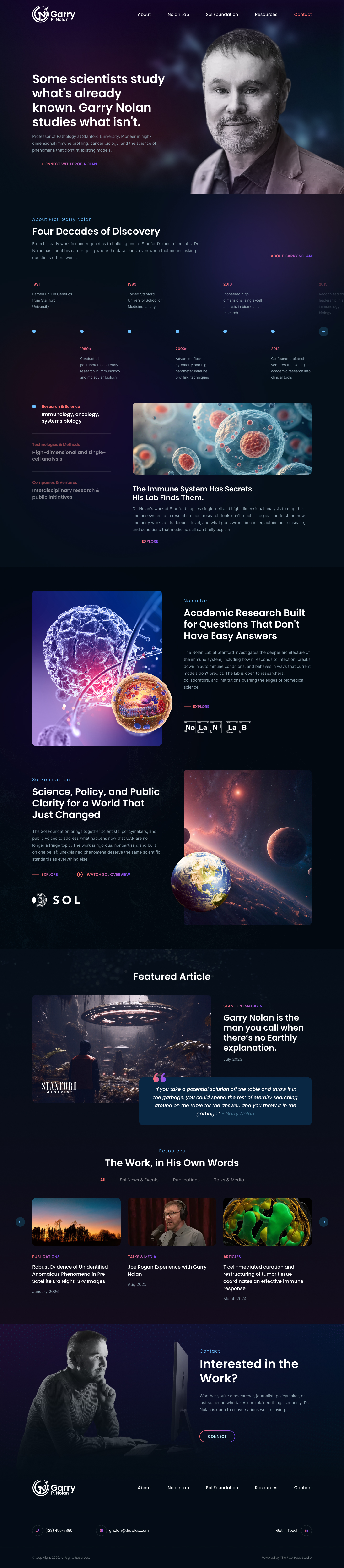
This project was not commissioned by Dr. Garry Nolan. It was built independently by PixelSeed Studio as a concept exploration. No client relationship exists. The design and copy reflect our interpretation of how a scientist of his caliber could be represented online.

Dr. Garry Nolan, Professor of Pathology, Stanford University
Concept only, not commissioned or live
Dr. Garry Nolan is a Stanford professor with over 300 publications, a lab that has redefined how science understands the immune system, and a public profile that crosses immunology, oncology, UAP research, and national policy conversations. He is one of the most cited scientists in his field. He had no personal website. For someone whose work spans that many disciplines and audiences, the absence of a central home online was a real gap. Journalists covering UAP policy, researchers looking to collaborate, students exploring his lab, and institutions considering him for speaking or advisory roles had no single place to understand who he is and what he does. That gap was the brief.
The first decision was tone. Most academic personal websites feel institutional. Cold. A list of credentials and a headshot. That approach would have undersold him. Dr. Nolan's appeal is not just his credentials. It is the combination of rigorous science and the willingness to investigate questions that most of his peers avoid. The website needed to hold both of those things at the same time, serious and credible, but also genuinely curious and unafraid. The second decision was structure. Dr. Nolan operates across three distinct areas: his Stanford research lab, the Sol Foundation, and his broader public science advocacy. The homepage needed to introduce all three without making the visitor feel like they landed on three different websites. The third decision was copy strategy. The copy leads with what only he can say: that he is a scientist who goes where the data leads, even when that makes other scientists uncomfortable.
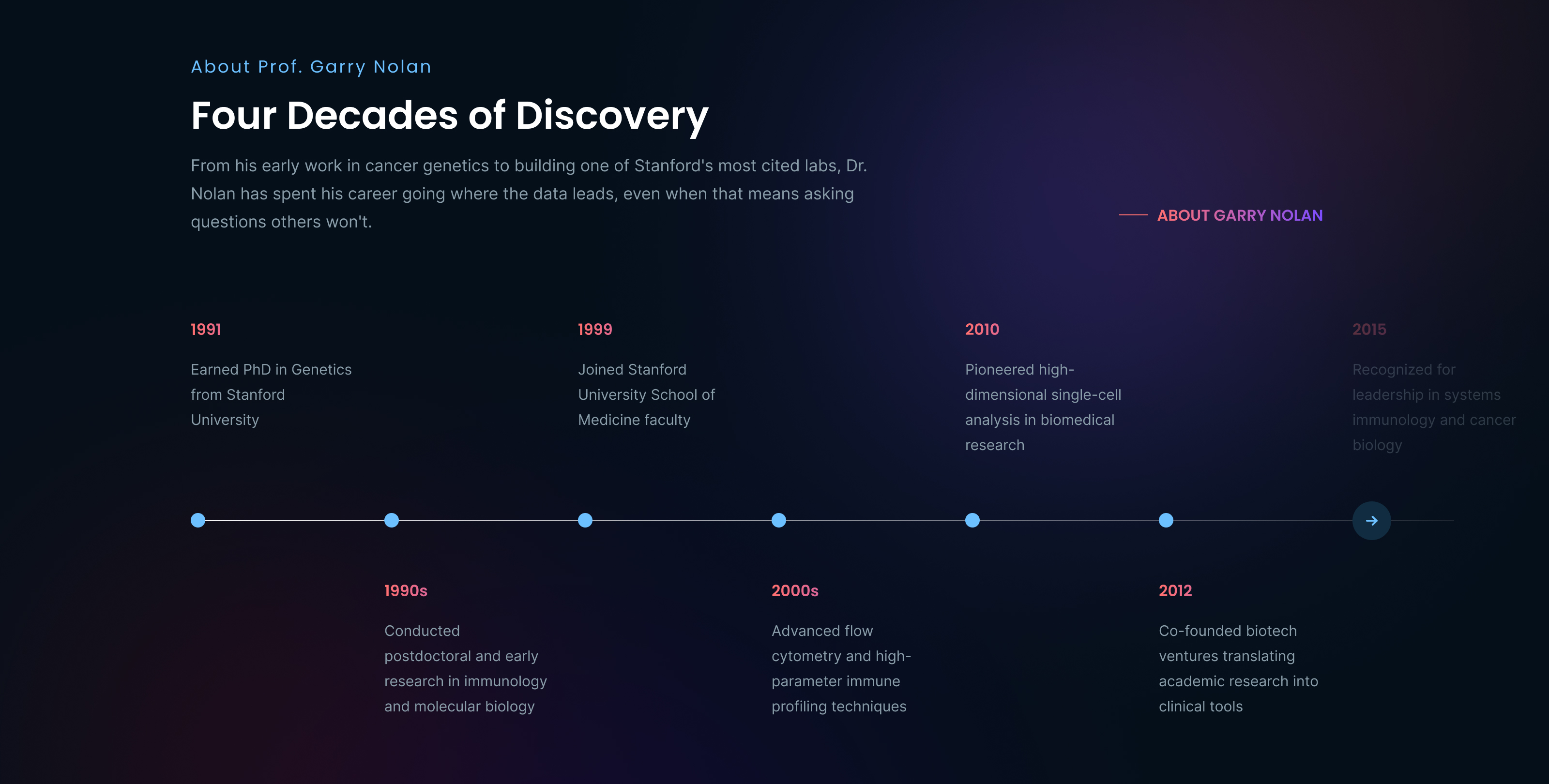
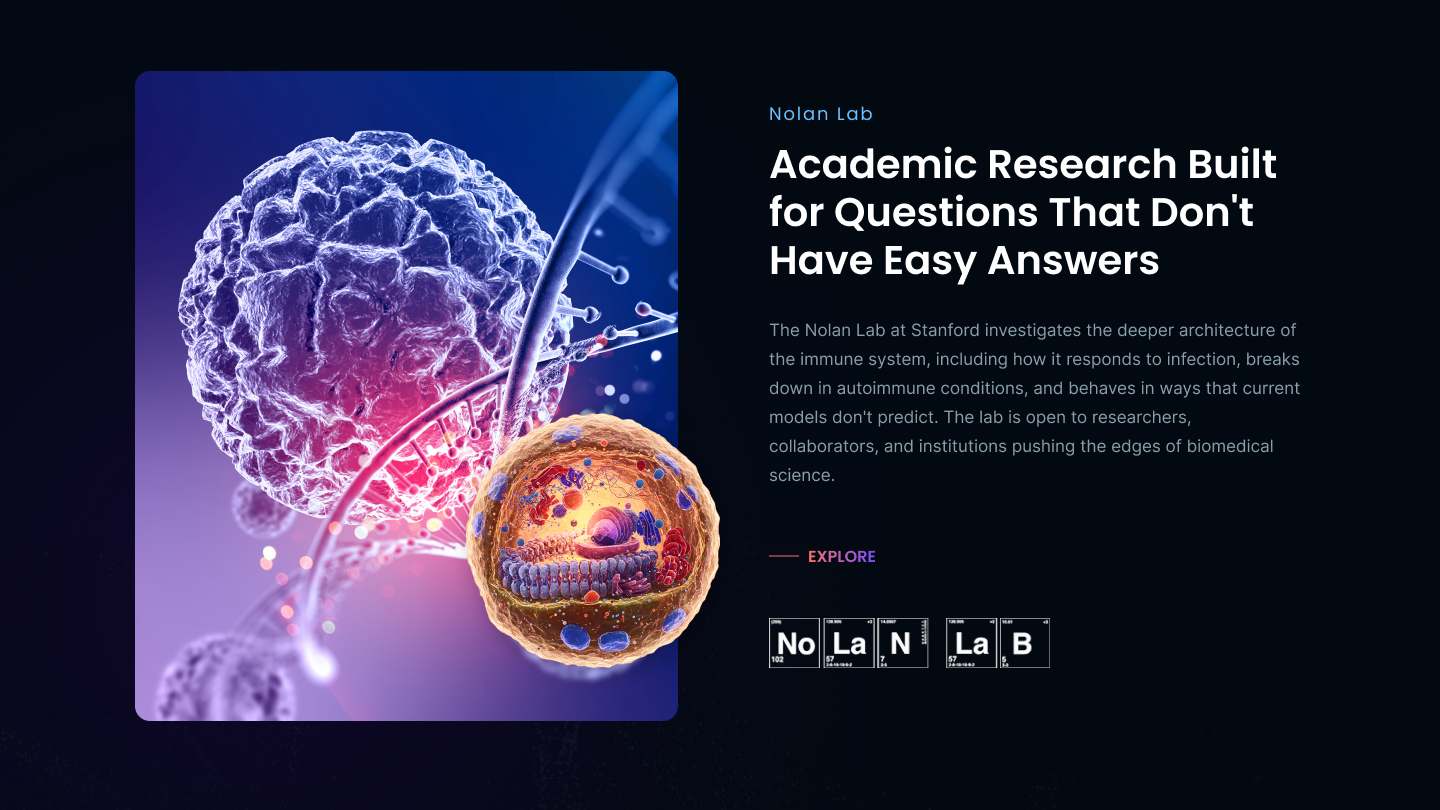
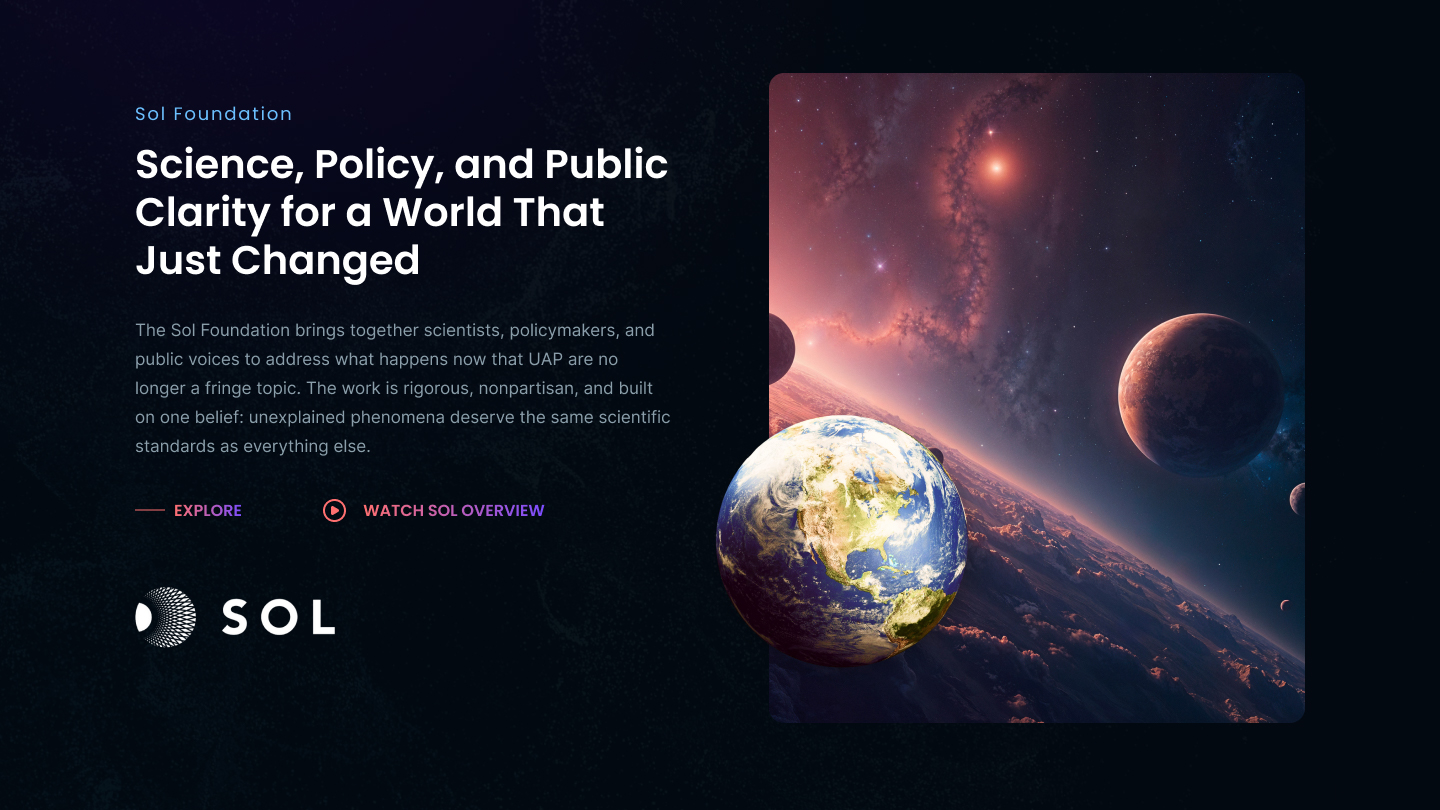
A full homepage concept including visual design and conversion copy across eight sections: hero, career timeline, research and science, Nolan Lab, Sol Foundation, featured press, publications, and a closing CTA. Every section was written to serve a different audience visiting the same page, researchers, journalists, policymakers, and the general public, without making any one group feel like an afterthought.