If your website were a salesperson working for your business twenty-four hours a day, what would you expect from them? You would want them to be clear about what they offer, credible enough that people trust them, easy to reach, responsive on any device, and visible enough that the right people can find them in the first place.
Most business websites fail at least two of those five expectations. This guide covers each one, why it matters, what it looks like in practice, and how to check whether your current site is getting it right.

1. A Clear, Specific Value Proposition
What is a value proposition and why does it matter?
Your homepage headline has one job. It needs to tell a complete stranger, in under five seconds, exactly what your business does and who it helps.
Most headlines fail this test. They are written to sound impressive rather than to communicate clearly. The result is a visitor who reads the headline, feels nothing, and leaves.
A good value proposition is not clever. It is specific. It names the outcome you deliver, the type of client you serve, and why choosing you is the right decision. When your headline is specific enough, the right visitors feel immediately recognized. The wrong visitors self-select out. Both outcomes are good for your business.
Check yours now:
Ask someone outside your business to read your homepage headline cold. Ask them what your business does and who you help. If they hesitate, your headline needs a rewrite before anything else on this list matters.

2. Trust Signals That Actually Work
What trust signals does a business website need?
Before anyone reaches out, they are quietly asking themselves: is this business real, are they good at what they do, and will I be wasting my money?
Your website has to answer all three without the visitor having to ask.
Trust on a website is built through evidence, not claims. Anyone can say they are experienced, reliable, or results-driven. What moves visitors to act is proof they can evaluate for themselves.
The trust signals worth your attention are specific and verifiable. A testimonial that mentions a real outcome carries weight. A photo of the actual person behind the business builds connection. A case study that walks through what happened and what changed gives a prospective client a way to see themselves in your work.
Generic praise, stock photography, and vague service descriptions do the opposite. They signal that the business is not willing or able to show real evidence.
Run this checklist right now:
Do you have at least one testimonial that mentions a specific result, not just general satisfaction? Yes or no?
Is there a real photo of you or your team anywhere on the site? Yes or no?
Is your phone number or email address visible without hunting for it? Yes or no?
Is your site running on HTTPS? Yes or no?
Is there at least one case study or result referenced anywhere on the site? Yes or no?
Every no is a specific fix. None of them require a redesign.

3. Clear Calls to Action on Every Page
What makes a call to action effective?
Your call to action tells a visitor what to do next. Without one, even genuinely interested visitors leave because the next step is not obvious. With a weak one, they hesitate long enough that the moment passes.
The most common mistake is writing calls to action from the business's point of view rather than the visitor's. "Submit your enquiry" describes what the visitor does. "Get your free audit" describes what the visitor gets. The second version converts better because it gives the visitor a reason to click, not just a direction.
Every page on your site should have one clear primary action. Not three options, not a general invitation somewhere at the bottom. One visible, specific next step that tells the visitor exactly what happens when they click.
Check yours now:
Read the label on every call to action button on your site. If the label describes what the visitor does rather than what they receive, rewrite it. That single change across your entire site takes under an hour and can produce an immediate improvement in the number of people who reach out.

4. A Website That Works on Mobile
Why does mobile optimization matter for a business website?
Most visitors are not reading your website at a desk. They are on a phone, probably with one hand, maybe while doing something else. If your site is hard to use on a small screen, most of them will leave before they ever find your contact details.
Test this yourself today. Pull out your phone and visit your own website on a mobile connection. Try to navigate to your services page. Find your phone number or email. Tap your primary call to action button.
If any of that felt slow or awkward, your visitors are experiencing the same thing. This is not a minor inconvenience. It is the reason people leave without reaching out.
One practical fix:
check that your call to action button is large enough to tap with a thumb without zooming in. If it is not, that single change alone will improve the mobile experience immediately.
5. A Solid SEO Foundation
What SEO basics does every business website need?
You can have the clearest messaging, the strongest trust signals, and the most compelling call to action in your industry, and none of it matters if the right people can't find your website in the first place.
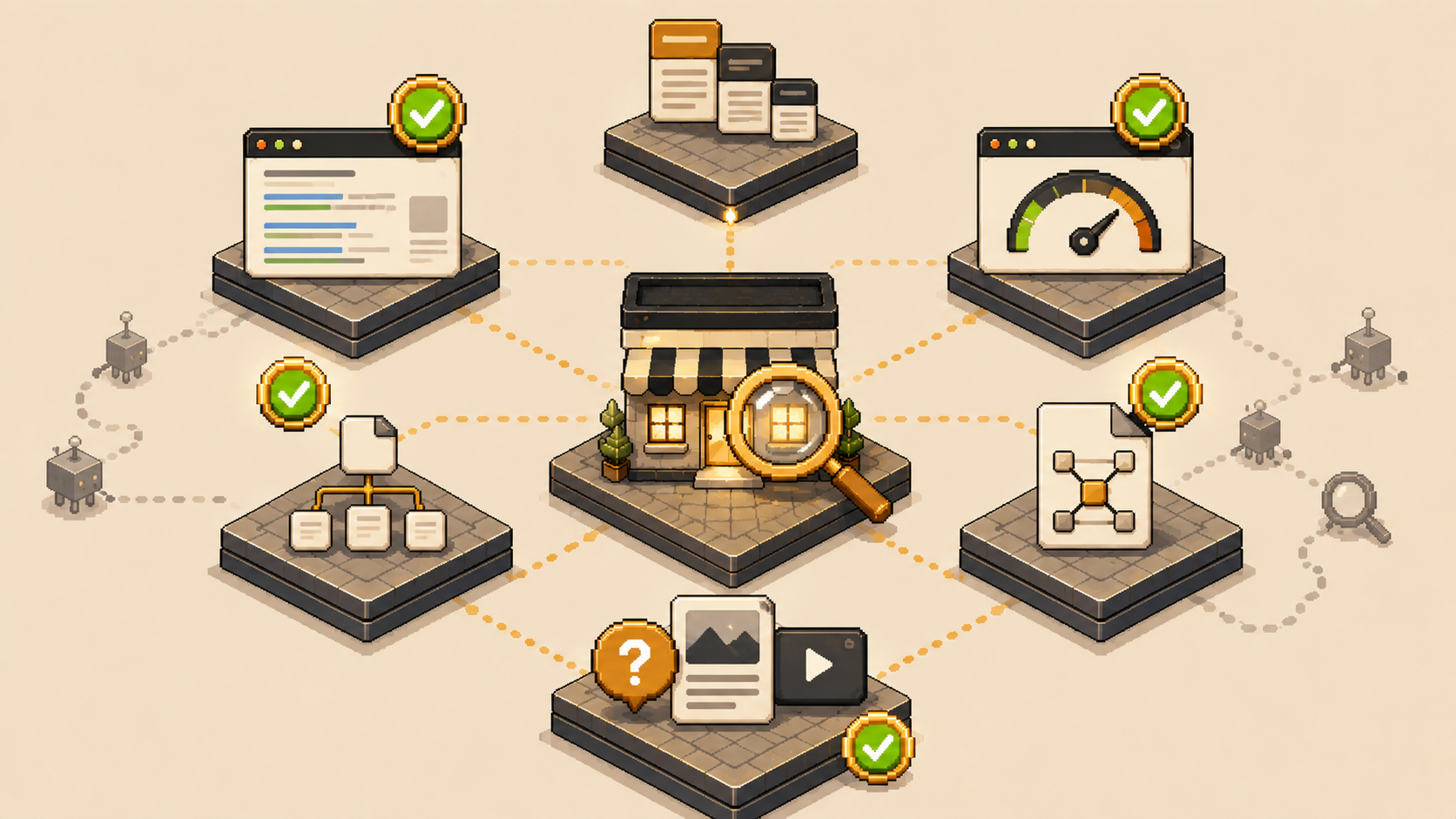
The basics that every professional website should have from launch day include:
Clean heading structure.
Your pages should use H1, H2, and H3 headings in a logical hierarchy that reflects what each section is about. Search engines read these headings as a map of your content.
Properly written page titles and meta descriptions.
The title that appears in the browser tab and the description that appears in search results are separate from your headline. They should be written to describe the page accurately and include the language people actually search for.
Fast load times.
Google's Core Web Vitals measure how quickly your page loads. A professional website should load its main content in under 2.5 seconds. Slow sites rank lower and lose visitors before they arrive.
An XML sitemap.
A sitemap tells search engines what pages exist on your site and how often they are updated. A small technical element that makes a real difference in how thoroughly your site gets indexed.
Content that answers real questions.
Search engines in 2026 increasingly reward pages that provide genuine, specific, helpful answers to the questions people are actually typing. Blog content, FAQ sections, and case studies that address real client questions build search visibility over time in a way that purely promotional content never will.
Free SEO foundation check:
Go to Google Search Console and submit your site if you haven't already. It is free and will tell you exactly how Google sees your pages, what queries are bringing people in, and what technical issues need attention. If you don't have Search Console set up, that is your first task.

Putting It All Together
A business website that has all five of these elements, a clear value proposition, real trust signals, effective calls to action, genuine mobile optimization, and a solid SEO foundation, is in the minority. Most sites have two or three but miss the others.
The businesses that get all five right have a significant and compounding advantage over those that don't. Not because their sites look better. Because they work better, for the visitors who land on them and for the search engines that decide whether to send visitors their way.

Frequently Asked Questions