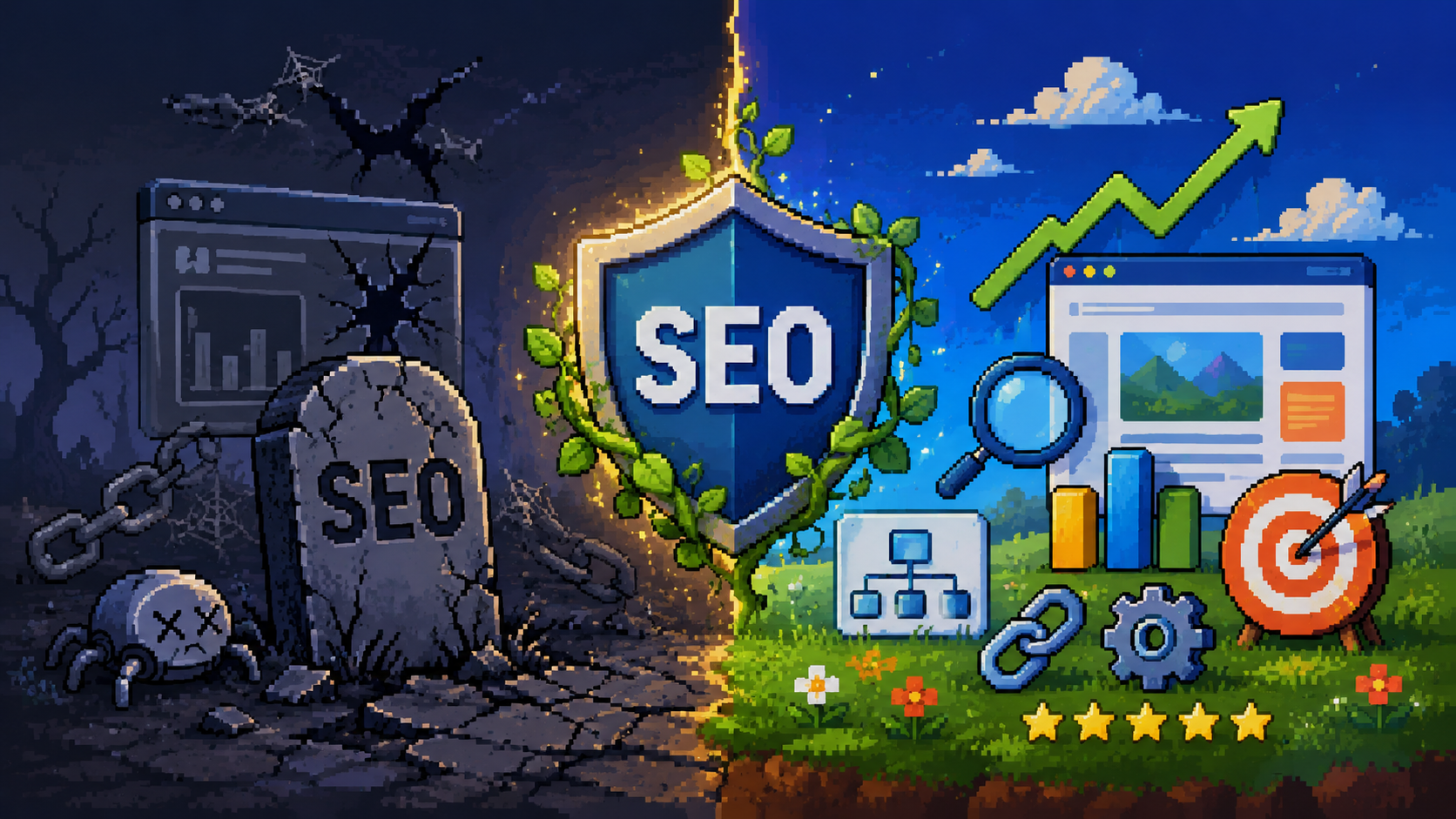
Every few months, someone publishes an article declaring that SEO is dead. That AI is replacing it. That keywords no longer matter. That the entire discipline has been made irrelevant by ChatGPT and Google's AI Overviews.
Every few months, those articles are wrong.
SEO is not dead. But it has changed, and understanding exactly what changed, and what did not, is the most important thing a business owner can know before making any decision about their search visibility strategy in 2026.
Traditional SEO still matters because websites still need to be crawled, indexed, ranked, and trusted. But ranking alone is no longer the only goal.
This article explains what SEO actually does in 2026, why it remains the foundation that everything else is built on, what has genuinely changed, and why abandoning SEO in favor of AI-only optimization is one of the most common and most costly mistakes a business can make right now.

What SEO Is and What It Has Always Done
What is SEO and why does it matter?
Search engine optimization is the practice of making your website understandable, accessible, and trustworthy to the systems that determine whether it gets found. It has never been primarily about tricking algorithms. At its core, it has always been about helping the right people find the right content through search.
Traditional SEO encompasses several core disciplines: keyword research and on-page optimization, technical SEO including site speed, mobile-friendliness, and crawlability, content creation aligned with search intent, link building to increase domain authority, and local SEO for geographic-specific queries. When done well, it drives consistent, compounding organic traffic over time.
These disciplines have not disappeared. They have evolved, in some cases significantly, and they now serve an additional purpose that did not exist three years ago: providing the technical and content foundation that AI search visibility is built on top of.
SEO gets you found. AEO gets you used. Any serious AI visibility strategy starts by respecting what traditional SEO still does exceptionally well. SEO remains the foundation for crawlability, indexation, internal link architecture, keyword-to-page mapping, topical authority, backlinks, site performance, structured navigation, and conversion-driving landing pages. In other words, SEO is still the operating system underneath discoverability.
What Has Genuinely Changed
How has SEO changed in 2026?
The changes are real and significant. Pretending they are not would be as wrong as declaring SEO dead.
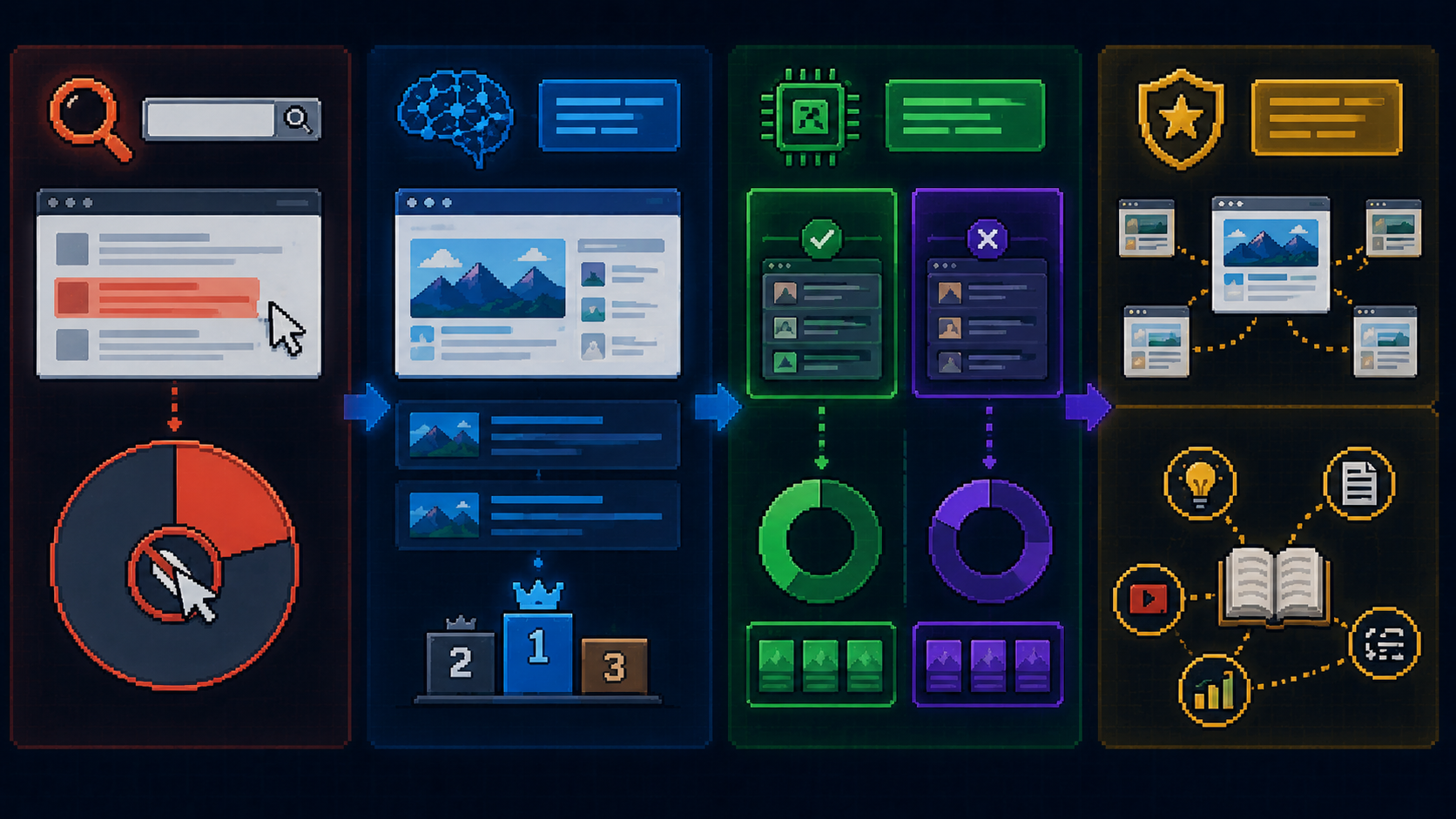
Zero-click searches have increased dramatically. Zero-click behavior has increased significantly. A large and growing proportion of searches now resolve on the results page itself, with buyers reading the AI-generated answer and making a decision without clicking through to any website. The implication for businesses is not that SEO has stopped working. It is that what used to be measured in clicks now also needs to be measured in citations and brand appearances inside those AI-generated answers. This means that ranking on page one of Google no longer reliably translates to the same volume of website traffic it once did. Buyers are getting answers directly on the search results page and making decisions without ever clicking through.
AI Overviews have changed what position one means. The AI Overview has consumed what was once position zero. When an AI Overview appears, it pushes the standard organic search results far down the page. Most users find exactly what they need in the AI-generated box and never scroll down to look at the traditional links. This means if you are ranking number one in standard organic search but your competitor is being cited in the AI Overview, your competitor is getting the vast majority of the traffic.
AI citations and Google rankings have diverged. Only 38% of pages cited in AI Overviews also rank in the top ten of traditional search, down from 76% just seven months prior. This means SEO rank no longer guarantees AI visibility. You need both strategies running in parallel.
Topical authority matters more than individual keywords. The shift from keyword optimization to topical authority is the most significant change in how Google evaluates content. Rather than asking "does this page target the right keyword," Google increasingly asks "does this website demonstrate genuine, deep expertise in this subject area?" Publishing a single page targeting a keyword is a much weaker strategy than building a cluster of interconnected articles that demonstrate genuine expertise across a subject area. The site that covers a topic from multiple angles, answering different questions at different stages of the buyer's journey, signals to both Google and AI tools that it genuinely owns the subject. A single well-ranked page does not.
What Has Not Changed
What SEO fundamentals still apply in 2026?
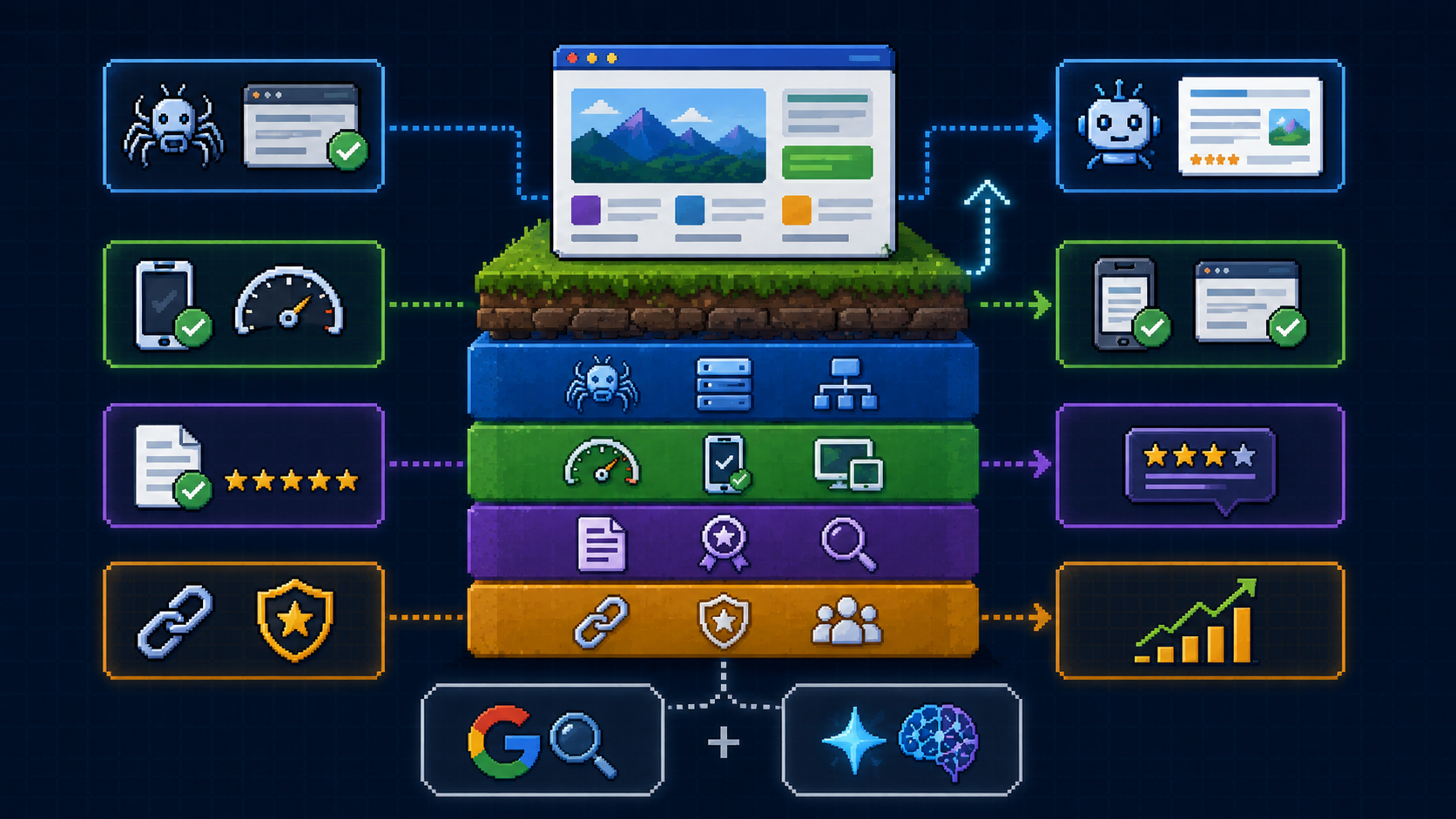
AI search versus traditional SEO is a layering story, not a replacement one. The existing foundation still matters, and the new optimization layer sits directly on top of it. E-E-A-T, entities, schema, and intent still win across both traditional and AI search surfaces.
The fundamentals that remain unchanged:
Technical crawlability. If Google cannot read your pages, they will not rank. If AI crawlers cannot read your pages, you will not be cited. Crawlability is the prerequisite for all forms of search visibility.
Page speed and mobile optimization. Google's Core Web Vitals are confirmed ranking factors. Slow, mobile-unfriendly sites rank lower in traditional search and receive lower-quality signals in AI evaluation. This has not changed and will not change.
Content quality and specificity. Thin, generic content has never ranked well for anything meaningful. In 2026, the definition of quality has expanded to include extractability for AI tools, but the underlying requirement for genuine helpfulness and specificity remains the same.
Authority signals. Backlinks are less dominant than they once were, but credibility signals from other sources still matter. Backlinks still matter, but reputation and brand mentions matter more than ever. The strongest results come from expert-led, AI-optimized content, not mass AI output.
Why Abandoning SEO for AI-Only Optimization Is a Mistake
Can I just focus on AI visibility and ignore traditional SEO?
No. And the reason is structural, not strategic preference.
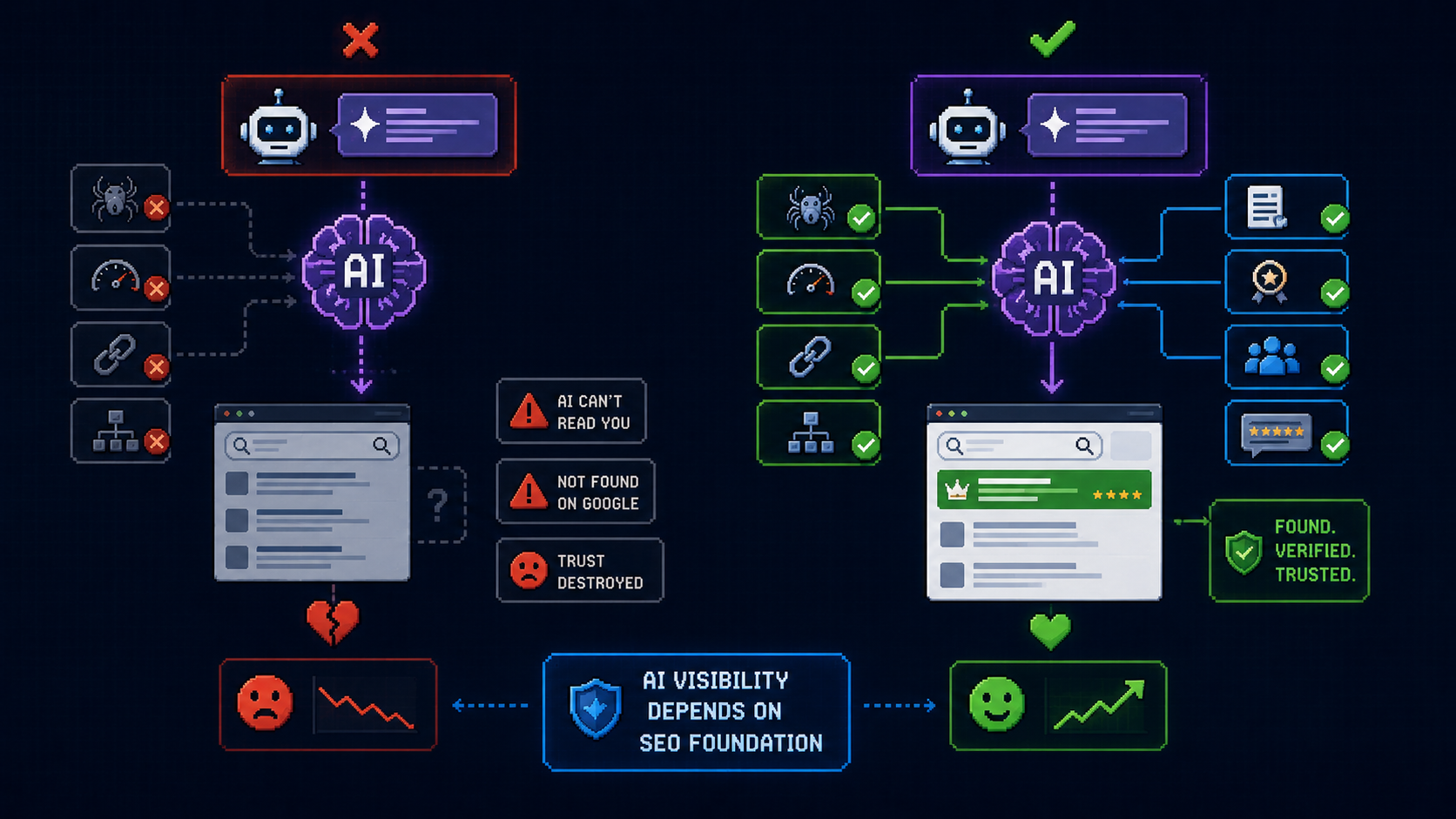
AI systems rely entirely on human-made web content, authority signals, and SEO foundations. Without SEO, AI has nothing reliable to summarize. Without SEO and humans, AI has nothing to summarize, and brands would disappear from AI answers entirely.
AI tools do not generate their knowledge independently. They read the web. They index websites. They evaluate authority using signals that substantially overlap with traditional SEO signals. A website that has abandoned technical SEO, producing slow, poorly structured, uncrawlable pages, is a website that AI tools cannot read or trust regardless of how well the content is formatted.
A buyer who cannot find you on Google after seeing you in an AI answer assumes the AI hallucinated. AI without strong organic SEO leaves the validation step empty.
This is a pattern that plays out consistently: a buyer sees a business cited in an AI answer, then searches for that business on Google to verify, and expects to find them. If the website does not appear credibly in Google search for the business name or relevant terms, the buyer's trust drops. The AI citation produced interest. The SEO absence destroyed it.
The Right Way to Think About SEO in 2026
What should my SEO strategy look like in 2026?
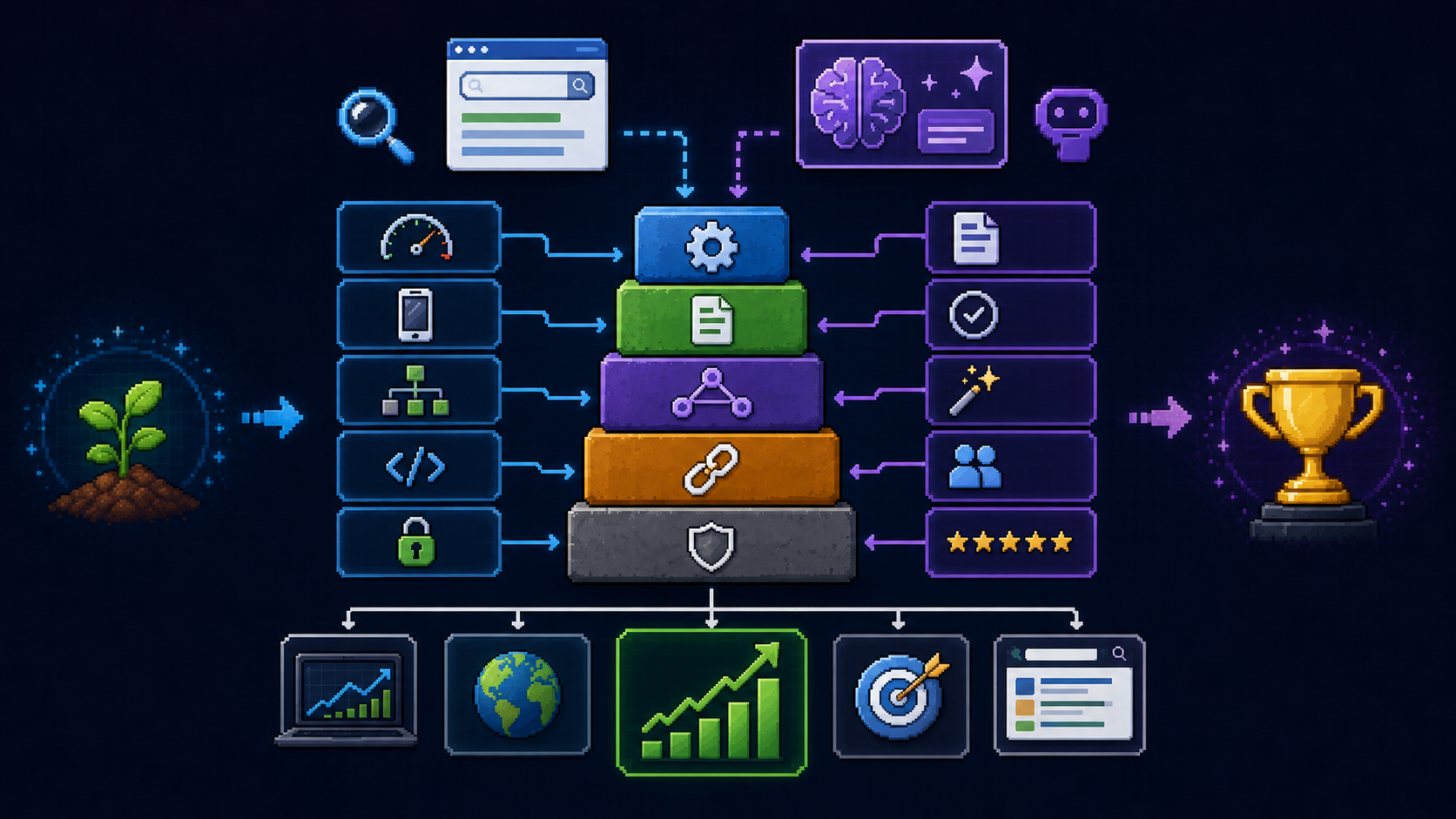
SEO and AI visibility are built on the same foundation, which is why investing in one strengthens the other. The technical work that makes your site crawlable and fast serves both Google and AI tools. The content structure that earns featured snippets also improves AI citation eligibility. The schema markup that generates Google rich results also signals authority to AI recommendation systems.
This is not a coincidence. It is architecture. AI tools read the web. They index pages. They evaluate credibility using signals that overlap substantially with what Google has always measured. A business that has invested in solid SEO foundations is already most of the way toward AI visibility. The remaining distance is covered by content structure and answer-formatting, not by starting from scratch.
The businesses winning in search in 2026 are not the ones who chose between SEO and AI visibility. They are the ones who understood that these are the same investment executed at two levels simultaneously.
The practical implication is that SEO strategy in 2026 is not a choice between traditional optimization and AI optimization. It is one integrated strategy that serves both simultaneously.
Technical SEO (fast load times, mobile optimization, clean heading structure, proper crawlability) is the foundation that serves both Google and AI tools.
Content quality and topical authority serve both Google rankings and AI citation eligibility.
Schema markup serves both Google rich results and AI extraction.
External authority signals serve both backlink profiles and AI credibility evaluation.
The businesses winning in search in 2026 are not the ones who chose between SEO and AI visibility. They are the ones who understood that these are the same strategy executed at two levels simultaneously.
Total search volume (Google plus AI combined) has actually grown 26% worldwide. Traditional search is not dying. But the mechanics of how users interact with results have fundamentally changed. Fewer clicks. Higher intent. Greater reward for the brands that get cited.

Frequently Asked Questions