Freelancer, agency, or a small studio somewhere in between?
In the Philippines, you'll find all three, and none is automatically the better choice. A skilled freelancer can be perfect for one project, while a studio or larger agency may make more sense for another.
The better question isn't "Which type of provider is best?"
It's "Which provider is right for what my business actually needs?"
Here's how the three options differ, followed by 12 questions that can tell you more than a polished portfolio alone.
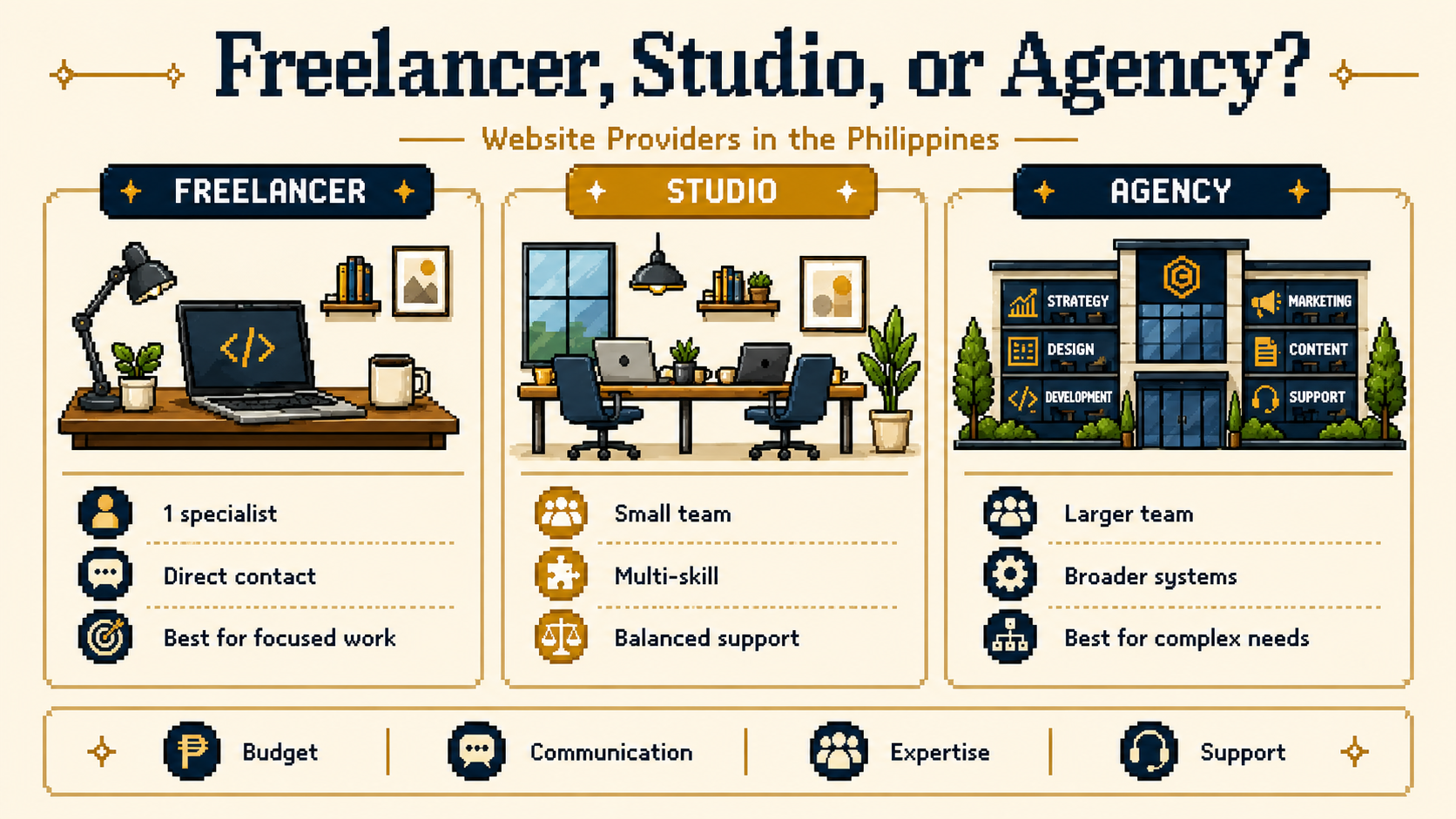
Freelancer, Studio, or Agency: What's Different in the Philippines?
Businesses in the Philippines have a wide range of options when hiring someone to build a website.
You'll find independent Filipino freelancers working directly with local and international clients, small specialist studios combining several disciplines, and larger agencies with dedicated teams for strategy, design, development, content, and marketing.
Because those businesses operate very differently, their pricing can vary considerably too.
If budget is one of your main considerations, read our guide on how much a website costs in the Philippines.
But price shouldn't be the only factor.
The type of provider you choose affects who you communicate with, who actually does the work, what expertise is included, how quickly decisions get made, and what happens after the website launches.
Freelance Web Designers
Freelancers work independently, which can mean lower overhead and direct communication with the person actually doing the work.
For a focused project, such as a landing page, a small brochure website, or a specific design or development task, a skilled freelancer can be an excellent choice.
The trade-off is that strategy, design, development, SEO, and support may all depend on one person's availability and skill set.
That isn't automatically a problem. You simply need to understand which parts of the project they handle themselves and which parts, if any, require outside specialists.
Larger Web Design Agencies
Larger agencies can offer broader teams, established processes, and specialists across different disciplines.
That can be valuable for complex websites requiring multiple people, integrations, large amounts of content, custom development, or ongoing marketing support.
The trade-off can be higher costs and more layers between you and the people actually doing the work.
Again, neither is automatically good or bad. For a larger organization or more complex project, that additional structure may be exactly what's needed.
Small Specialist Studios
Small studios usually sit somewhere between an independent freelancer and a larger agency.
You may still communicate directly with the people doing the strategy, design, development, or SEO, while having more than one specialist involved in the project.
This can work well for small and midsize businesses that need several disciplines but don't necessarily need a large agency team.
The right choice depends on your project.
A freelancer may be ideal for a focused website or specific task. A studio or agency may make more sense when the work requires several disciplines, such as strategy, copywriting, design, development, SEO, and ongoing support.
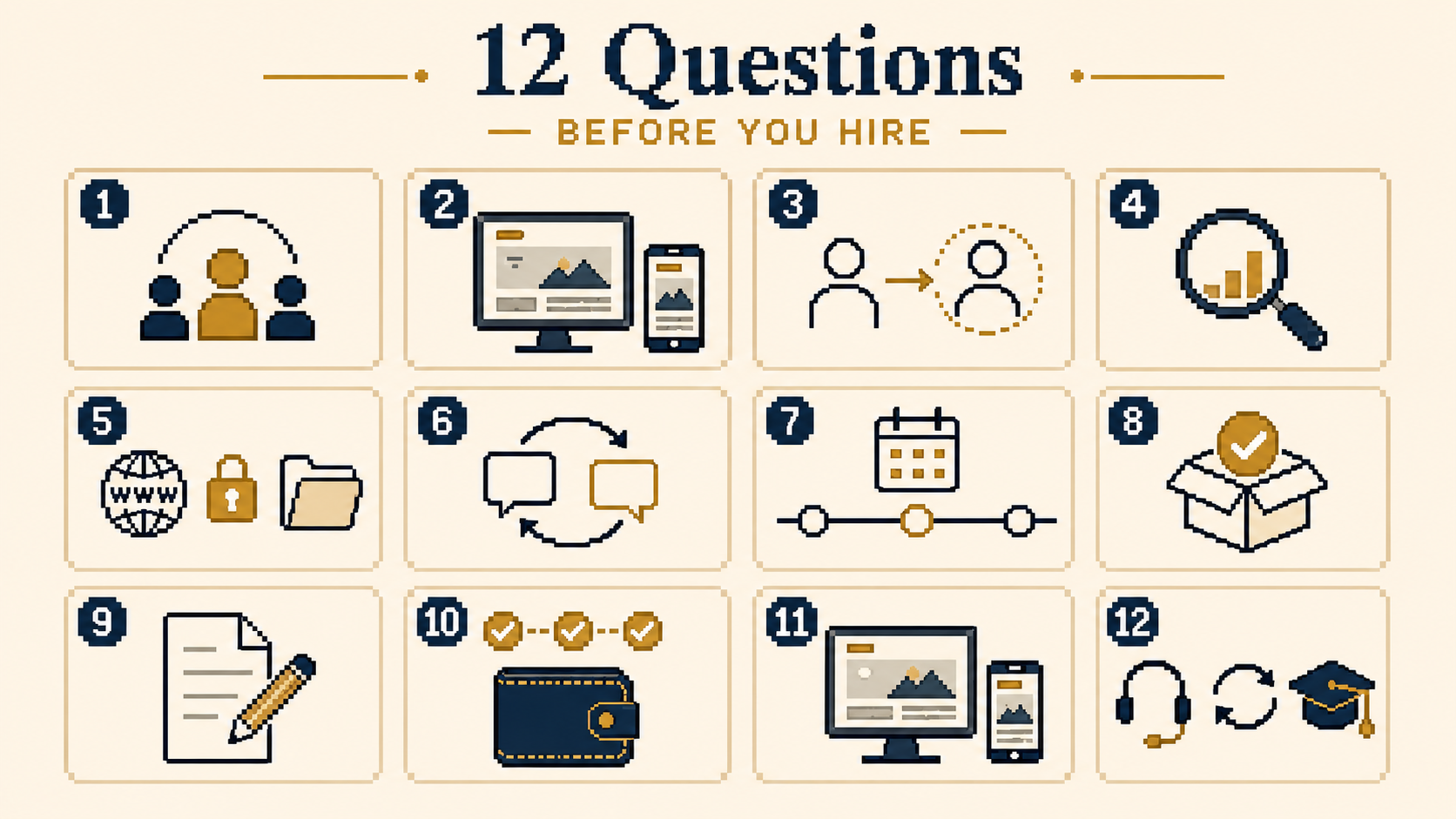
12 Questions to Ask Before You Hire a Web Designer
Whether you're talking to a freelancer, studio, or agency, ask the same questions.
The answers will tell you far more than the label on the provider's website.
1. Who Will Actually Be Doing My Work?
Ask who will be involved after you sign the agreement.
Will the person you're speaking with design the website? Will someone else develop it? Is SEO handled internally? Is any part of the project outsourced?
There's nothing inherently wrong with having several people involved. You simply want to know who is responsible for what.
A good provider should be able to explain this clearly.
2. Can I See Three Live Websites You Built, Not Just Screenshots?
A portfolio screenshot can show you what a website looked like when it was photographed.
A live website tells you much more.
Open it on your phone. Click through the navigation. Read the content. Try the forms. See whether it's easy to understand what the business actually does.
You're not only evaluating how attractive the design is. You're evaluating whether the finished website works as a real business website.
3. What Happens If Someone Becomes Unavailable?
This question is particularly important when you're hiring an individual freelancer, but it's worth asking any provider.
If the person responsible for your website becomes unavailable for a few days or weeks, what happens to the project?
A freelancer may have a backup plan or trusted collaborators. A studio or agency may have another team member who can step in.
You're not looking for a perfect answer. You're looking for evidence that the provider has thought about project continuity.
4. Is SEO Included, or Is That a Separate Cost?
Don't assume "website design" automatically includes SEO.
Ask exactly what is included.
Does the project include page titles and meta descriptions? Heading structure? Search-friendly page architecture? Indexing setup? Redirects if you're replacing an existing site?
A site that looks finished but was never set up for search is a different product from one built around visibility, clear messaging, and conversion.
If SEO matters to your business, get the scope in writing.
5. Who Owns the Website, Domain, Accounts, and Content?
Ask who controls the important parts of the website after handover.
That includes your domain, website platform account, website content, analytics, images you've paid for, and any other essential accounts used to operate the site.
Different platforms handle ownership and access differently, so don't assume you'll receive a folder containing every "website file."
The important question is simpler:
Will you have the access and ownership you need to operate your website without being permanently dependent on the provider?
Clarify that before the project starts.
6. What's Your Revision Process?
"Unlimited revisions" can sound reassuring, but a clearly defined revision process is often better for both sides.
Ask when you'll review the work, how feedback is collected, how many revision rounds are included, and what happens if the scope changes significantly.
A structured process helps prevent projects from getting stuck in an endless cycle of small changes.
7. How Long Will This Actually Take?
A provider should be able to give you a realistic estimate based on the scope.
That doesn't mean every website must launch on an exact date months in advance. Projects can be delayed by content, feedback, approvals, or unexpected technical problems.
But you should understand the expected stages.
For example:
Strategy → content → design → development → review → launch.
Ask what could delay the project and what they need from you to keep it moving.
8. What's Not Included in This Price?
This may be one of the most useful questions on the list.
Ask directly.
Does the quote exclude copywriting? Stock photography? Hosting? Domain renewal? SEO? Additional pages? Premium plugins? Photography? Ongoing maintenance?
A lower quote isn't necessarily worse if the scope is smaller.
The problem happens when you discover what's missing after the project has already started.
A confident provider should be comfortable telling you both what's included and what's not.
9. Do You Write the Copy, or Do I Need to Provide It?
Don't leave this until the design stage.
Some web designers expect you to provide finished text for every page. Others will edit what you provide. Some studios and agencies include research, positioning, messaging, and complete website copywriting.
Those are different levels of service and can affect the price significantly.
Ask who is responsible for the words before the project begins.
10. What Does the Payment Structure Look Like?
Website projects are often paid in stages rather than entirely at the end.
Milestone payments can protect both sides by tying payments to project progress.
For example, at The PixelSeed Studio, our projects are split into 40% upfront, 30% at design approval, and 30% before handover.
Other reputable freelancers, studios, and agencies may use different structures.
The exact percentages matter less than having clear payment terms, milestones, and expectations before work begins.
11. Can I See Your Own Website?
A web designer's own website is worth looking at because it's one of the projects they have the most control over.
Is it clear what they do?
Does it work well on mobile?
Can you easily find examples of their work?
Does the website explain their process, experience, or services?
Does it feel current and maintained?
One imperfection doesn't mean someone can't build a good website. But their own site can give you useful clues about what they prioritize.
12. What Happens After Launch?
Launch isn't necessarily the end of the relationship.
Ask what happens if you need to update something later.
Who handles technical issues? Can you edit the website yourself? Is training included? Is ongoing support available? What happens when the platform, plugins, or integrations need updating?
You may not need ongoing support at all.
But it's better to understand your options before launch than discover them when something needs fixing.
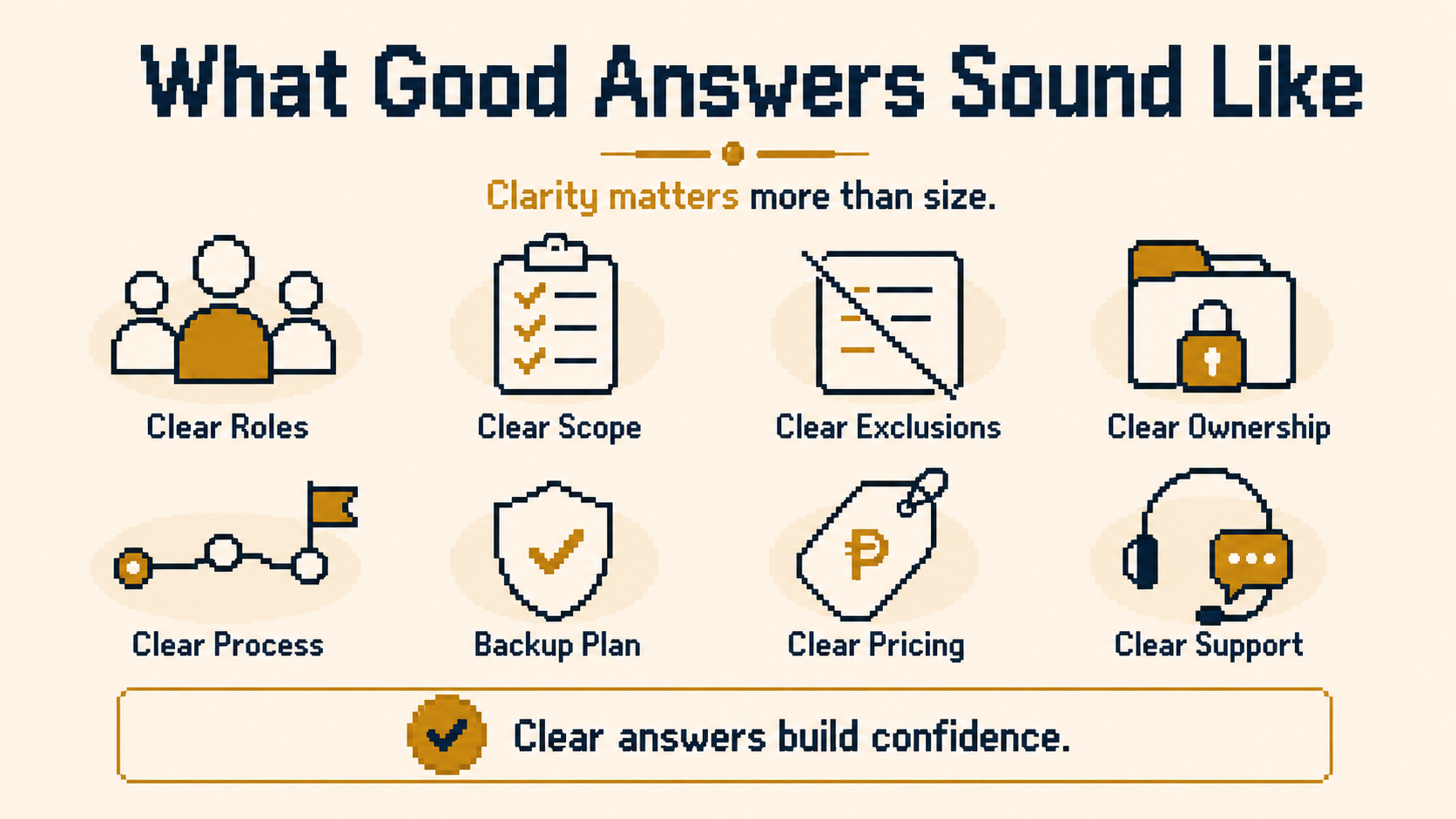
What Good Answers Actually Sound Like
You don't need every provider to give you the same answer.
That's not the point.
A freelancer may tell you they handle design and development themselves but partner with an SEO specialist.
A studio may have two or three specialists working directly on your project.
An agency may have a project manager coordinating a larger team.
All three can be perfectly reasonable.
What you're looking for is clarity.
Who does the work? What's included? What's excluded? What do you own? How does the project move forward? What happens when something goes wrong?
If those answers are clear, the size of the provider becomes much less important.
Red Flags to Pay Attention To
One imperfect answer shouldn't automatically disqualify someone.
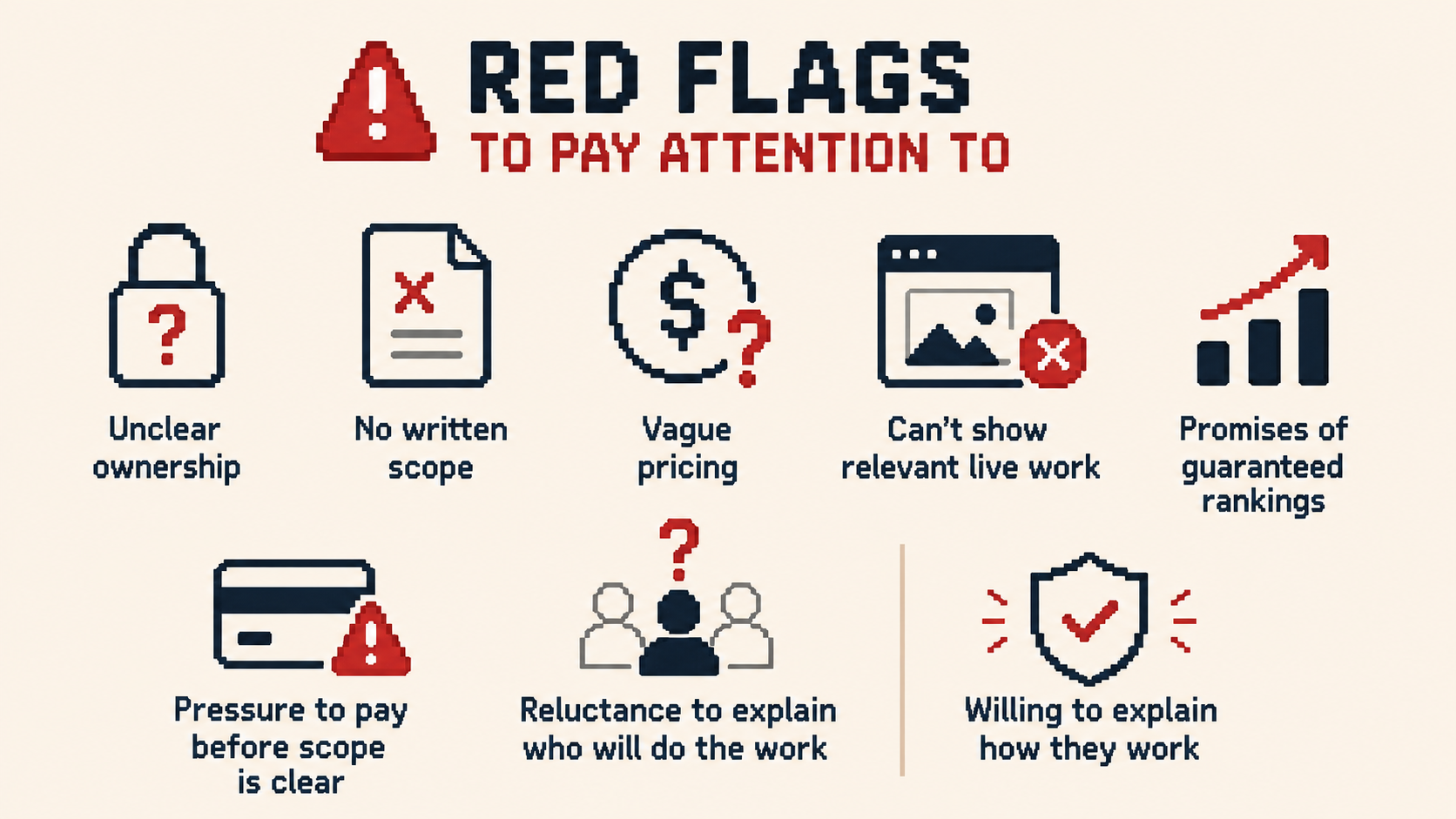
But be cautious if you repeatedly encounter things like:
- Unclear website or account ownership
- No written scope
- Vague pricing
- An inability to show relevant live work
- Promises of guaranteed Google rankings
- Pressure to pay before the scope is clear
- Reluctance to explain who will actually do the work
Good providers don't need to have an answer for every possible situation.
They should, however, be willing to explain how they work.
Our Perspective as a Small Philippine Web Design Studio
At The PixelSeed Studio, we've seen this decision from more than one side.
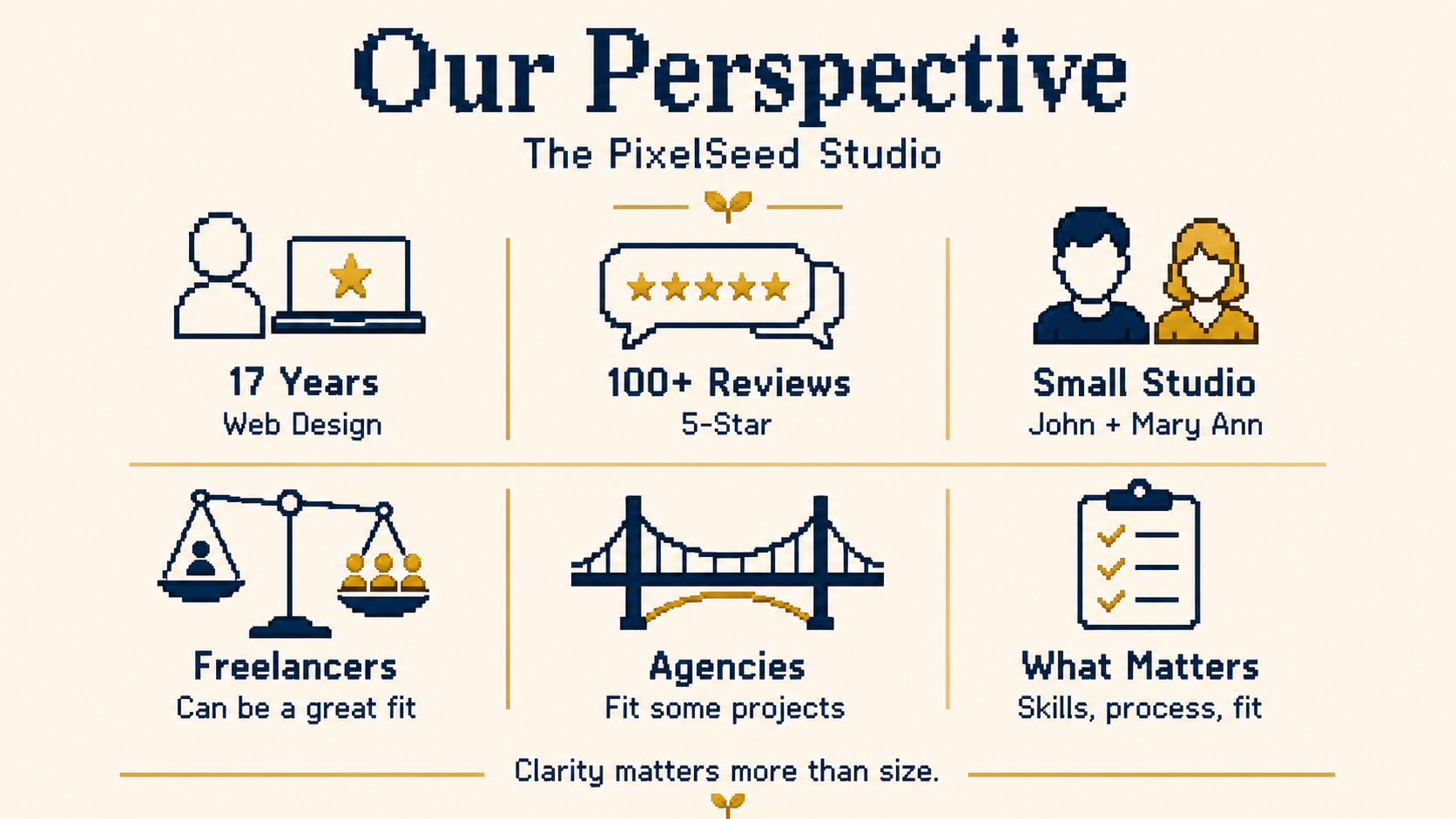
John brings 17 years of independent web design experience and more than 100 five-star client reviews. Today, The PixelSeed Studio operates as a small specialist studio, with John focused on website strategy, design, and development, and Mary Ann focused on SEO and search visibility.
That experience is also why we don't think "freelancer versus agency" is the most useful question by itself.
We've seen excellent independent freelancers. We've seen projects where a larger team makes more sense. And we've built The PixelSeed Studio around the space between the two.
What matters is whether the people you're hiring have the right skills for the work, a clear process for delivering it, and a scope that matches what your business actually needs.
The Bottom Line
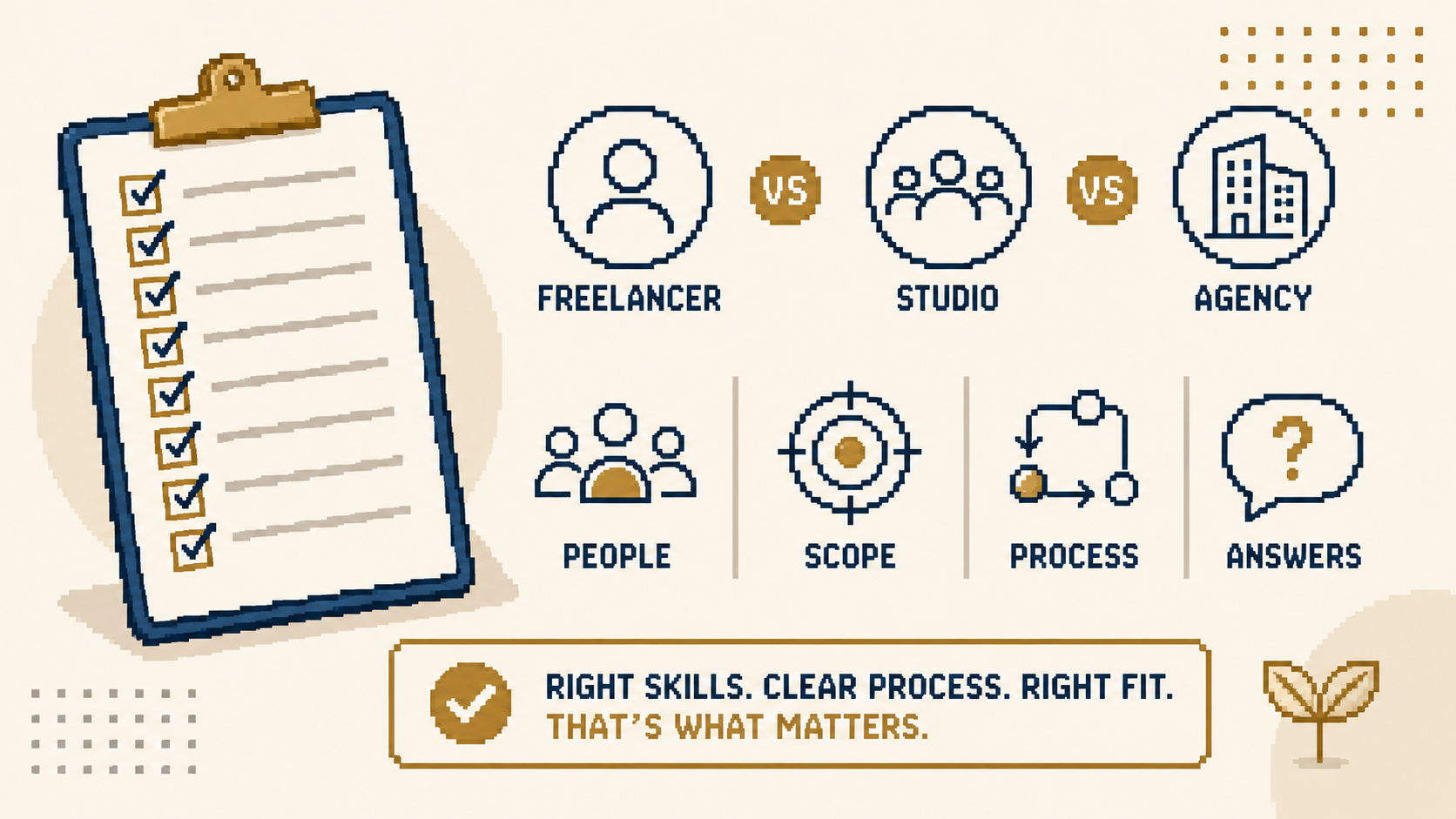
Freelancer, agency, or studio isn't really the decision.
The people, scope, process, and answers are.
Ask these 12 questions before signing anything. Compare providers based on what they're actually offering rather than their size or the number at the bottom of the proposal.
If you're comparing providers in the Philippines and budget is part of the decision, read How Much Does a Website Cost in the Philippines?.
And if you'd like to see how a small specialist studio approaches strategy, web design, SEO, and search visibility, see how The PixelSeed Studio works with businesses in the Philippines.

Frequently Asked Questions