This question gets more vague answers than almost any other in the web design process. "It depends." "A few weeks." "Could be a month or two." Designers hedge because the timeline genuinely varies. But that doesn't mean the answer can't be specific. It just means you need to understand what the variables actually are.
This guide gives you realistic timelines broken down by project type, explains what causes delays, and tells you what you can do to keep your project on schedule.
The Realistic Range by Project Type
How long does it take to build a website professionally?
Based on 2026 industry data across different project types, here is where timelines consistently land:
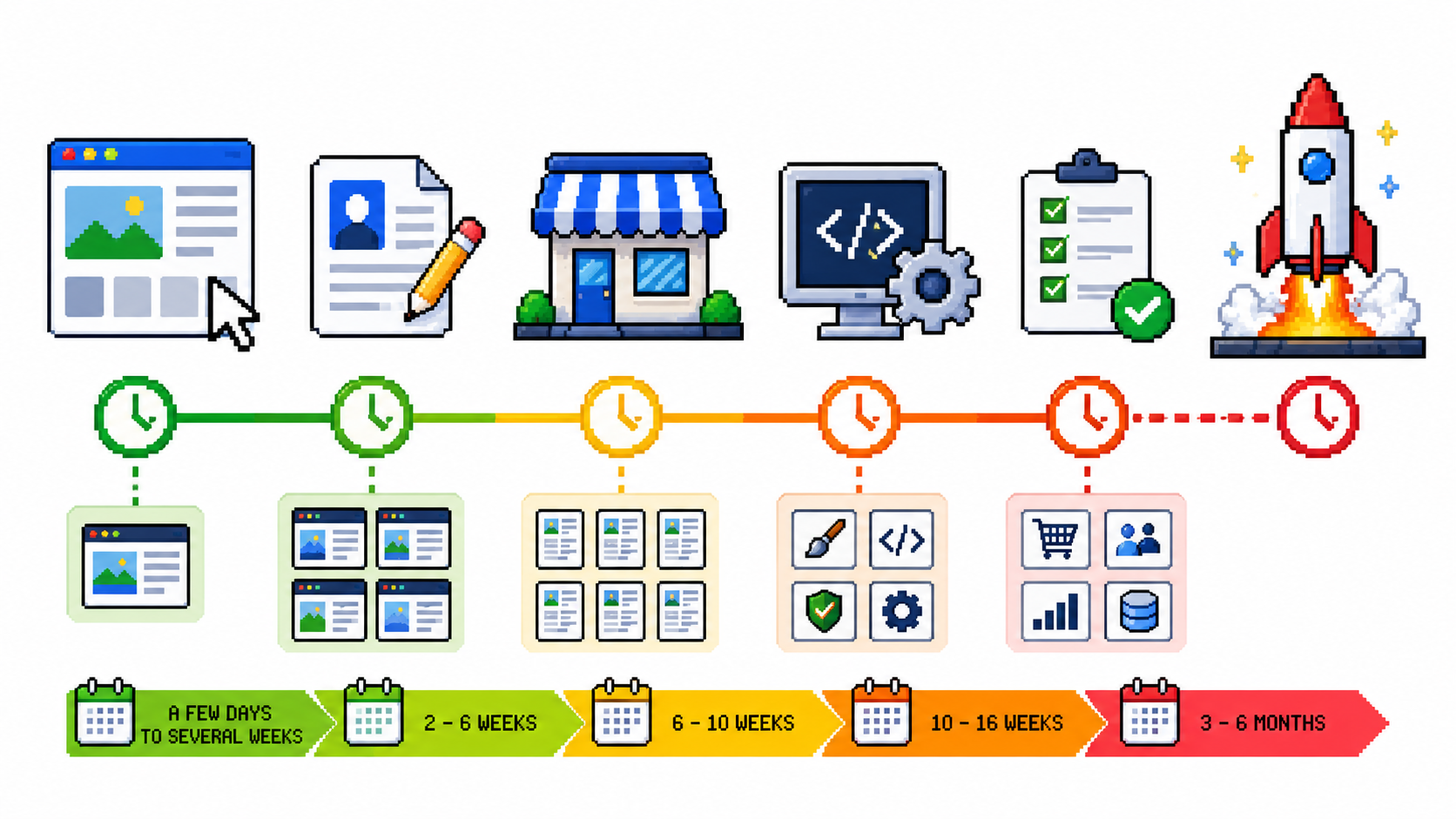
DIY on a platform:
A few days to several weeks depending on your technical comfort and how much time you can dedicate. You control the pace entirely.
Freelancer, standard service website (5 to 8 pages):
Two to six weeks for a focused, professional process. Most freelance projects run toward the longer end because designers juggle multiple clients and client feedback rounds add days at each stage.
Boutique agency, standard service website:
Six to ten weeks from first meeting to launch. This includes discovery, strategy, design review, development, content integration, testing, and launch preparation. The timeline is similar when working remotely with a web design studio in the Philippines, although project scope, content readiness, and feedback speed can still affect the schedule.
Boutique agency, more complex site:
Ten to sixteen weeks minimum for sites with more than ten pages, custom functionality, or e-commerce.
Large agency, mid-market build:
Three to six months for a thorough process with a larger team.
The industry standard for a professional website across all types is four to twelve weeks. Projects quoted at two weeks either have very tight scope or are cutting corners somewhere. Projects that stretch past sixteen weeks for a standard service site usually have a process problem or a content problem on one side or both.

What the Phases Actually Look Like
What are the stages of building a professional website?
Understanding the phases helps you see why a proper build takes the time it does and where the gaps tend to appear.
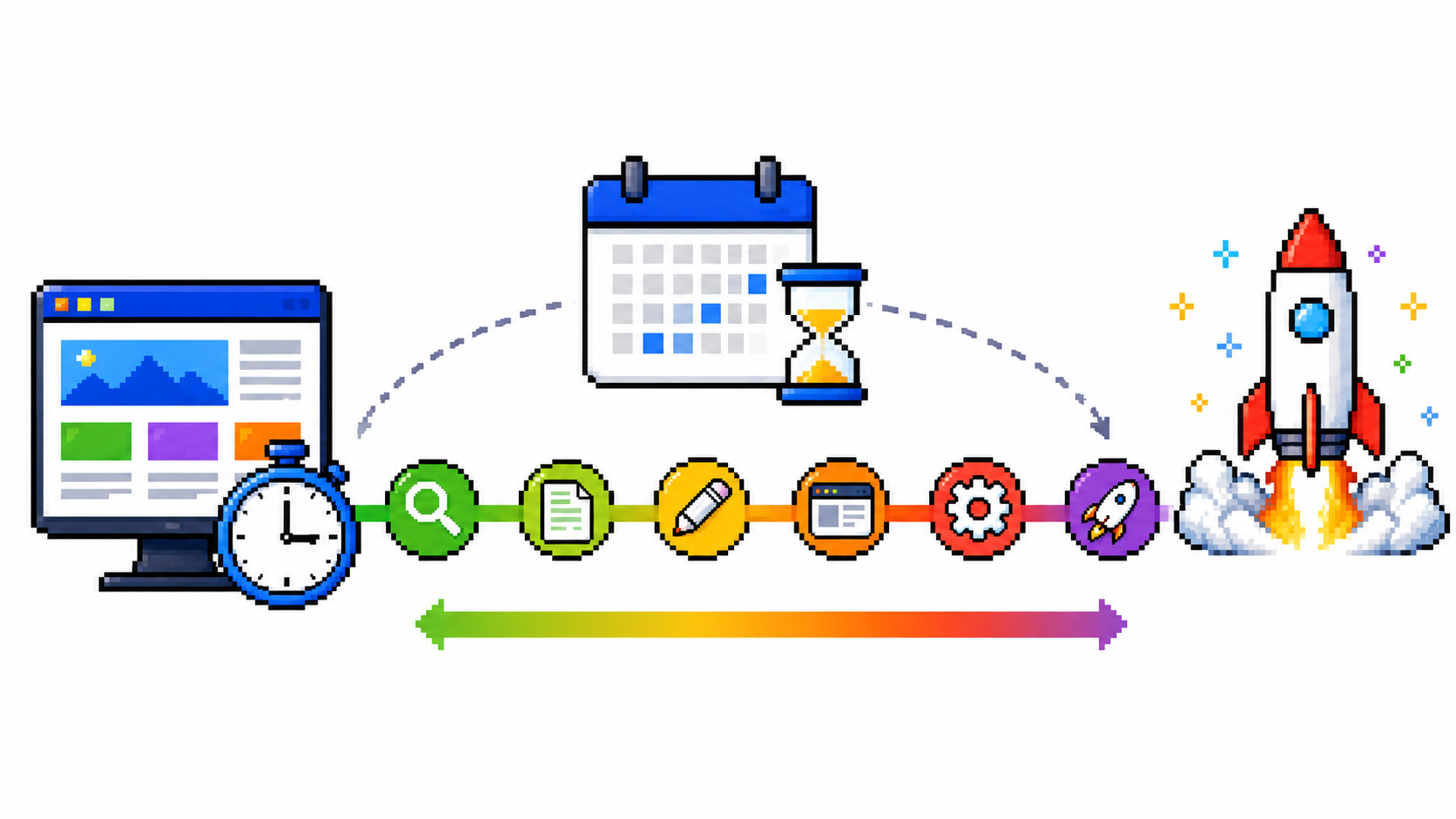
Discovery and strategy (one to two weeks). The designer learns your business: who your clients are, what you offer, how you differ from competitors, and what the website needs to accomplish. Skipping this phase doesn't save time. It costs time in revision rounds later when the design doesn't match what you actually needed.
Content and messaging (one to three weeks, runs parallel). Either you write the copy or the designer's team does. This phase runs in parallel with design work and is the most common cause of timeline delays.
Design (one to two weeks). The visual design of the homepage, key interior pages, mobile layouts, and the design system. Typically includes one to two rounds of review and revision.
Development (one to three weeks). The approved design gets built into a functioning website. Pages are coded, the CMS is configured, and functionality is implemented.
Content integration (three to five days). Your actual copy, images, and media get placed into the built site. If content isn't ready at this stage, this is where projects stall.
Testing and quality assurance (three to five days). The site is tested across devices and browsers. Forms, load speed, navigation, and SEO elements are all verified before launch.
Launch (one to two days). The site goes live. DNS is updated. Analytics are verified. A brief monitoring period follows.

Why Projects Go Longer Than Planned
What causes website projects to run over timeline?
The number one cause, by a significant margin, is content.
A website cannot launch without content. Copy has to be written. Photos have to be sourced or shot. If the business owner is responsible for providing content and that content is late, every subsequent phase shifts accordingly.
The practical reality: most business owners underestimate how long it takes to write clear, specific, conversion-focused website copy. It is harder than most people expect. And it tends to get deprioritized against the daily demands of running a business.
If you are providing your own content, treat it as a project with its own deadline and start working on it before the design phase begins, not after it ends.
Other common causes of timeline extension:
Scope additions mid-project.
Deciding to add a blog, case study section, or new service page after the project has started adds weeks. Every addition after the project begins costs more time than it would have cost to include at the start.
Slow feedback rounds.
Every design review has a review window. If feedback takes a week to come when three days was expected, the project shifts a week. Multiply that by three or four review rounds and a six-week project becomes a ten-week one.
Unclear approvals.
"Looks good to me" followed by "actually, can we change the whole homepage layout" three stages later is a pattern that adds weeks. Clear, specific feedback at each review stage keeps projects on track.
What You Can Do to Keep Your Project on Schedule
How can I help my website project stay on time?
Most timeline project delays are client-side. That is not a criticism. It is an opportunity. The business owner who actively manages their contribution keeps projects running significantly faster.
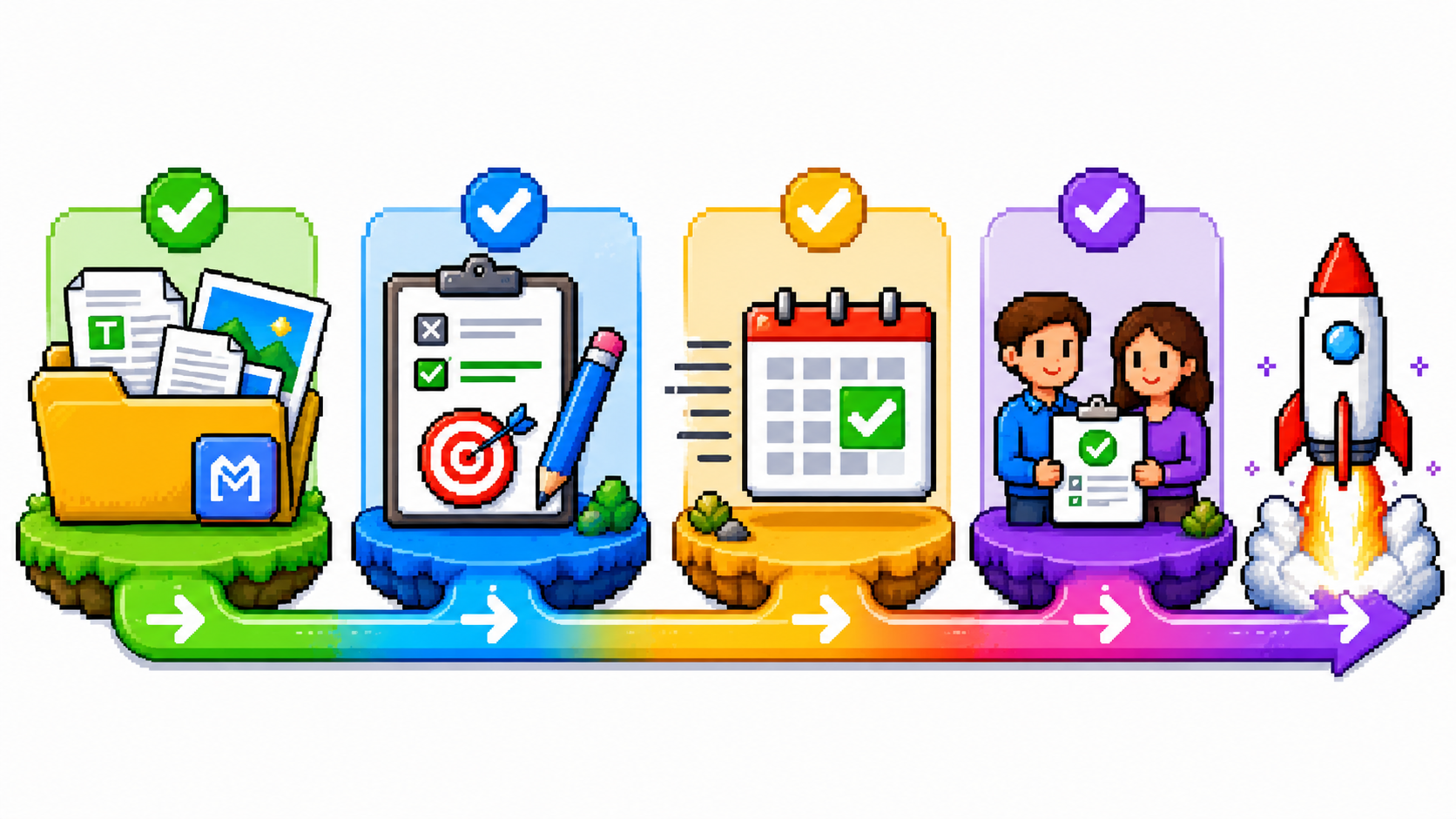
Prepare your content before the project starts.
Gather every page's text, every photo, your logo files, and any existing brand guidelines before the first meeting.
Give specific feedback.
"I don't like this" is not useful feedback. "The headline doesn't mention our specific service area and I think it should" is. Specific feedback produces clear revisions. Vague feedback produces repeated rounds of guessing.
Respect the review windows.
If your designer asks for feedback by Friday, give it by Friday. The project pauses while it waits for you.
Limit your decision-makers.
The more people who have input on the website, the longer the project takes. Assign one or two internal decision-makers. Consolidate all feedback before sending it to the designer.
Project readiness checklist:
before your project starts, confirm you have
Homepage copy drafted or a copywriter briefed
Professional photography available or a shoot scheduled
Logo files in vector format
A clear list of services and what each includes
One or two designated decision-makers identified
A rough launch date that is realistic given your availability
A designer who receives a client who has done this preparation moves significantly faster than one who doesn't.

Frequently Asked Questions