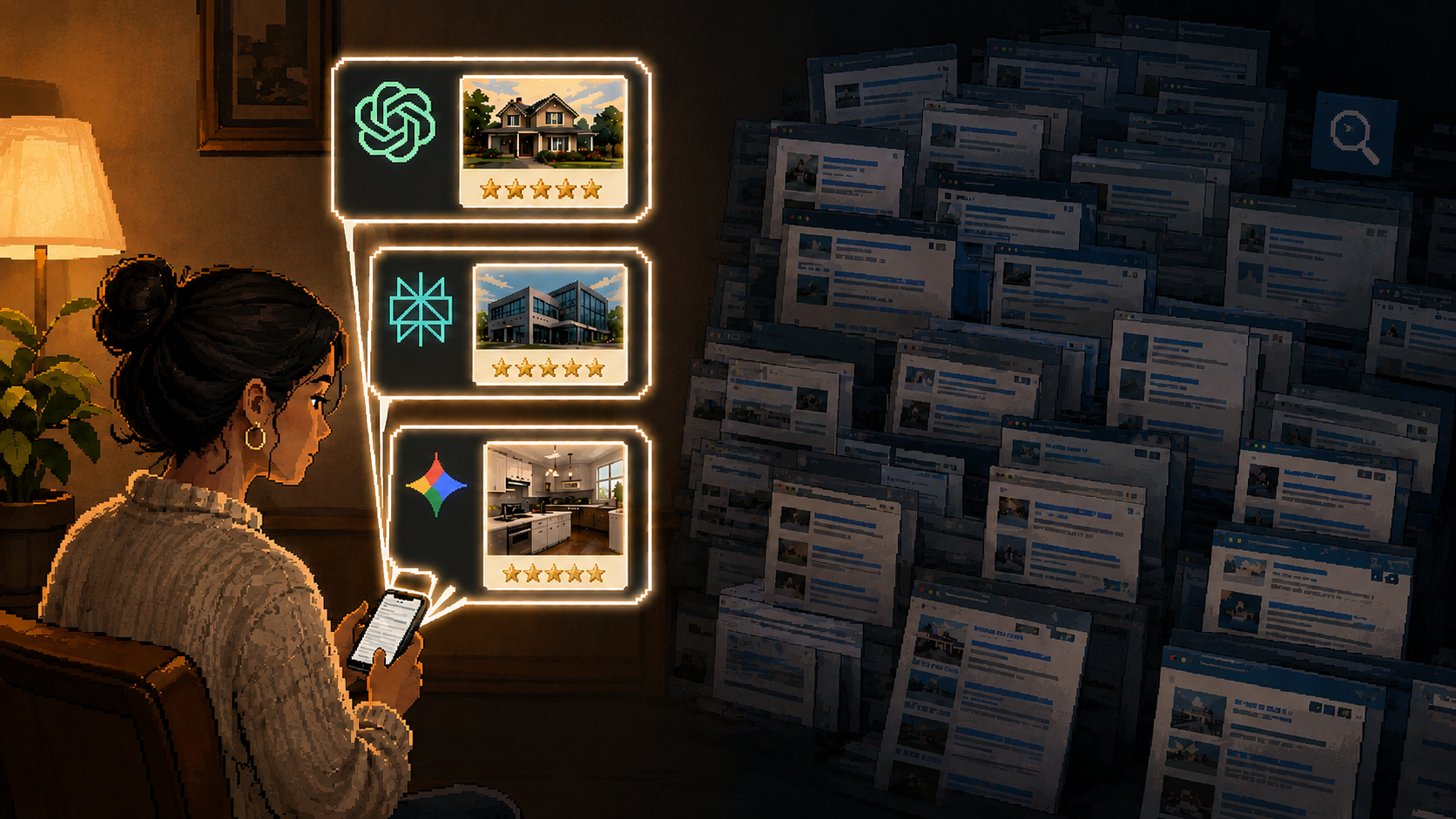
Not long ago, every buyer started the same way. They had a problem. They opened Google. They typed a few words. They got ten links. They clicked, compared, and decided.
That process still happens. But something has been added to the beginning of it, and for a growing number of buyers, the something that has been added is where the real decision gets made.
AI search is the practice of getting answers to questions directly from AI tools like ChatGPT, Perplexity, and Gemini rather than clicking through a list of search results. When someone asks an AI which business to hire, the AI gives one or two recommendations, not ten options. If your business is not one of them, you are invisible to that buyer.
This is not a future shift. It is happening right now. And most business owners are completely unaware that a growing category of their potential clients is making preliminary decisions about which businesses to consider before they ever open a search results page.
What AI Search Actually Is
What is AI search and how is it different from Google?
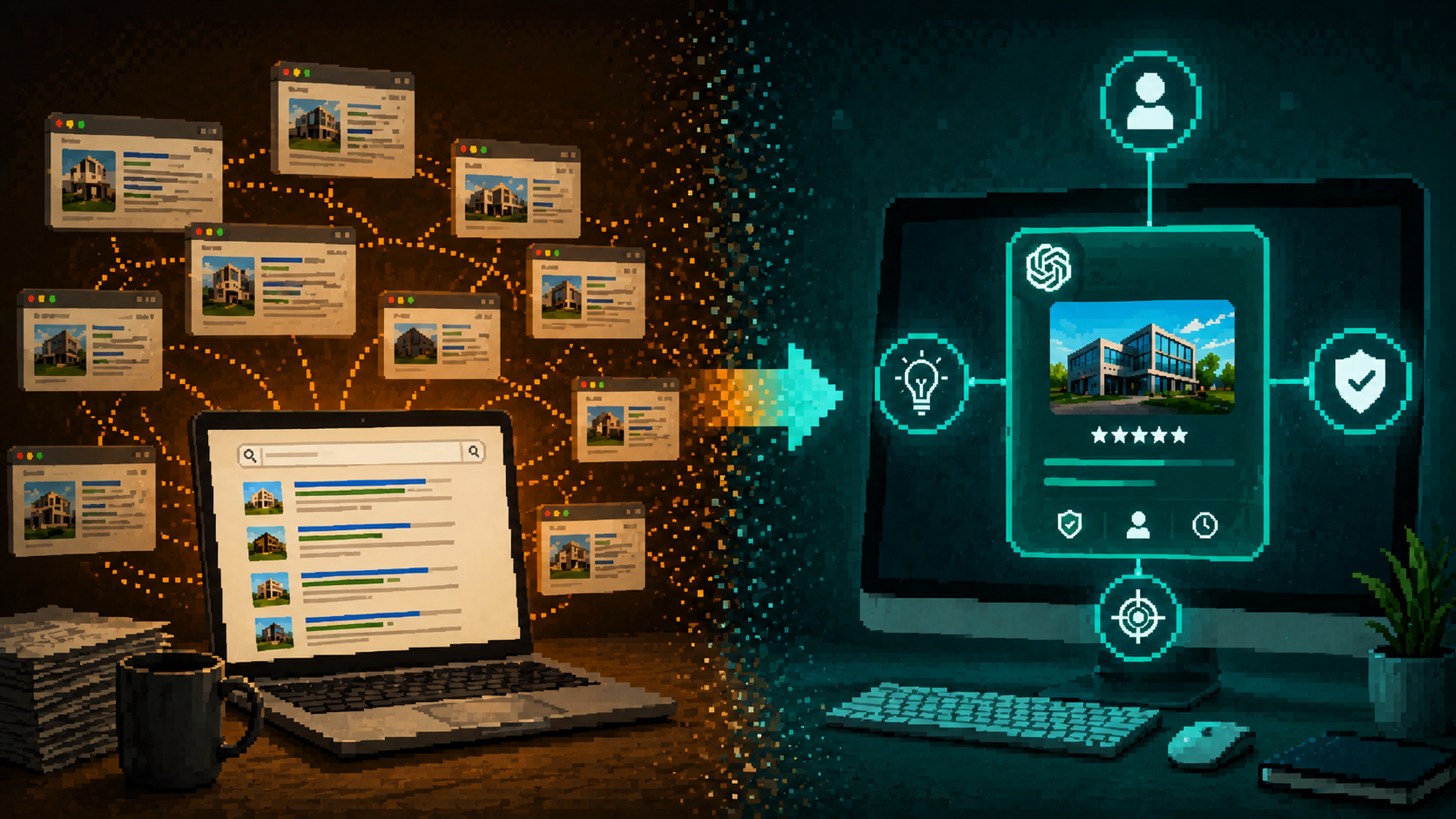
Google is a list engine. You type a query and Google returns a ranked list of links for you to evaluate. The user does the comparison work. Multiple businesses appear. Multiple businesses get a chance at the click.
AI search is a recommendation engine. You ask a question and the AI synthesizes everything it knows from across the internet to give you a direct, specific answer. Not a list to evaluate. A recommendation to act on.
When someone asks ChatGPT "who should I hire to redesign my business website," ChatGPT does not return ten links. It gives a specific answer. It might name one or two studios or designers it considers authoritative and credible based on everything it has read about the topic. If your business is named, you are in that conversation. If it is not, you do not exist for that buyer in that moment.
AI-generated answers now appear at the top of a significant and growing proportion of Google searches, particularly for the longer, more specific queries buyers use when they are deep in research. For many of those queries, buyers find what they need in the AI summary and never scroll to the standard results.
This means that even within Google itself, the behavior has shifted. Buyers are getting answers directly on the search results page. The click to a website happens later in the journey, with much higher intent, or sometimes not at all.
How Many People Are Actually Using This
How many people are using AI tools to find businesses?
The scale of adoption in 2026 is the thing that makes this urgent rather than theoretical.
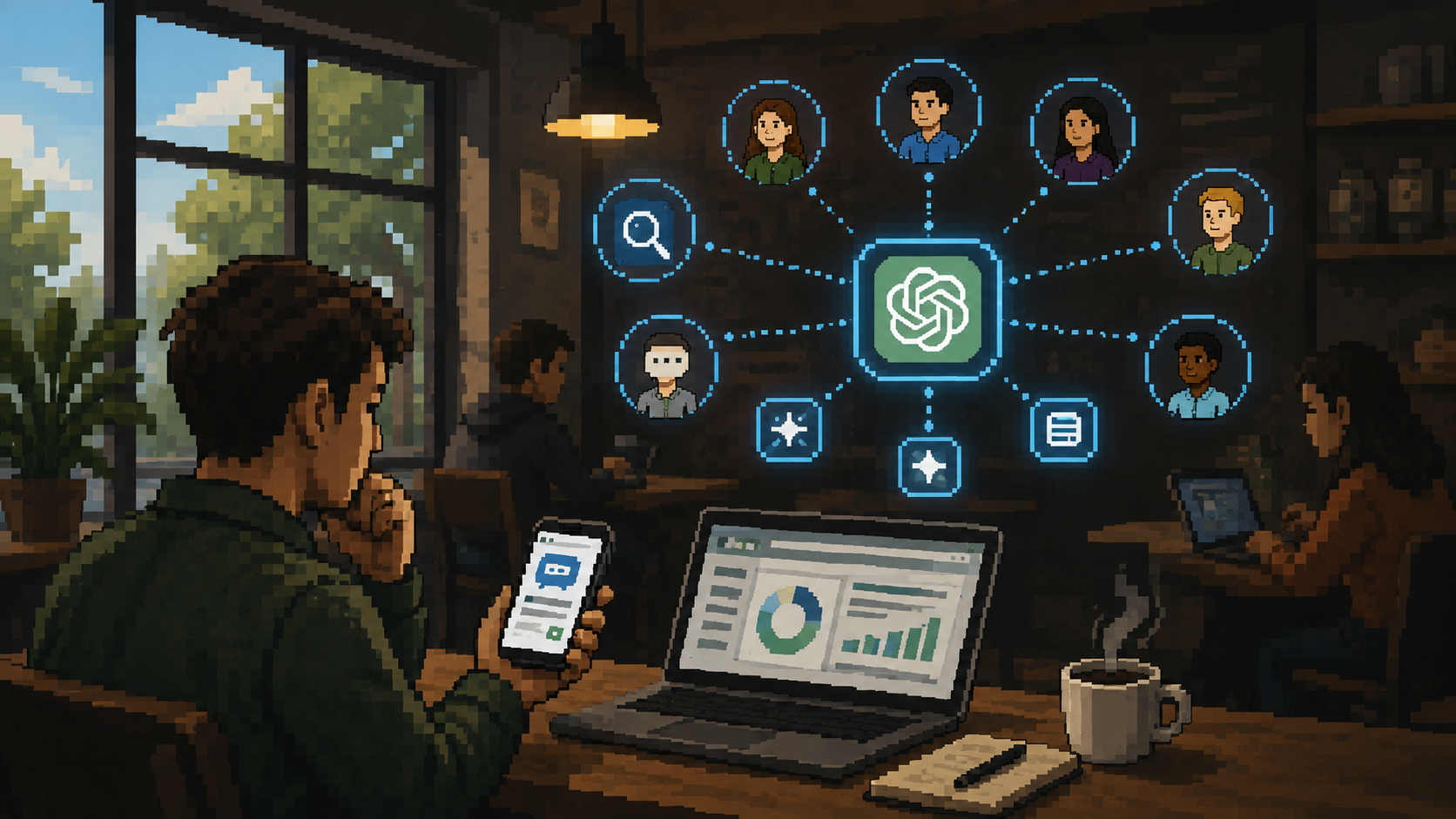
ChatGPT has reached 800 million monthly active users and Perplexity AI has grown to 45 million users. These are not niche platforms anymore. They are mainstream research tools used by a significant and growing proportion of buyers across every industry.
The majority of business buyers in most service categories now use AI tools at some point in their research process. For the categories most likely to search before buying, including professional services, web design, consulting, and agencies, AI tool use is significantly above the average.
90% of B2B buyers now use generative AI tools during their purchasing journey and half of them start their research in ChatGPT or similar platforms instead of Google.
For service businesses, the implication is direct. The buyers most likely to hire you, the ones doing serious research before making a decision, are the ones most likely to be using AI tools as part of that research.
What Happens When a Buyer Asks AI About Your Category
What happens when a potential client asks ChatGPT about my industry?
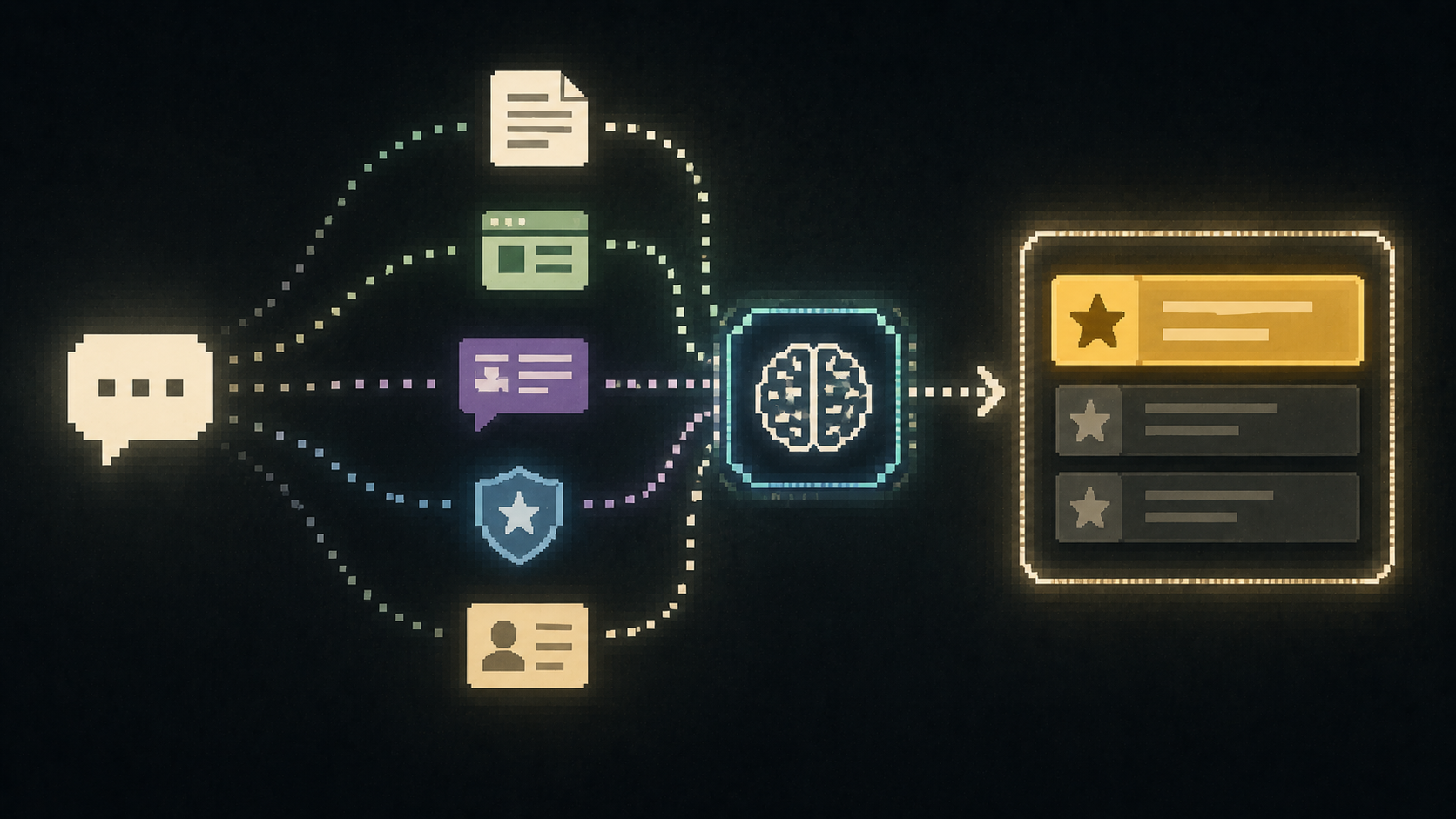
When a buyer asks an AI tool a question about your service category, the AI draws from everything it has indexed across the internet to construct an answer it considers authoritative and trustworthy. The businesses it recommends are the ones with the strongest combination of content depth, structured information, verified authority signals, and consistent presence across multiple sources the AI trusts.
The AI has pre-filtered options, validated recommendations against multiple sources, and delivered a curated answer. The buyer's decision is half-made before they ever reach your website.
This is why the conversion rate for AI-referred visitors is so dramatically higher than for traditional search visitors. They arrive at your website already convinced you are worth considering.
AI search traffic converts at 14.2% compared to Google organic's 2.8%, a 5.1x advantage. Claude users convert at 16.8%, ChatGPT at 14.2%, and Perplexity at 12.4%.
Why Your Google Ranking Does Not Help You Here
Why does my Google ranking not help me in AI search?
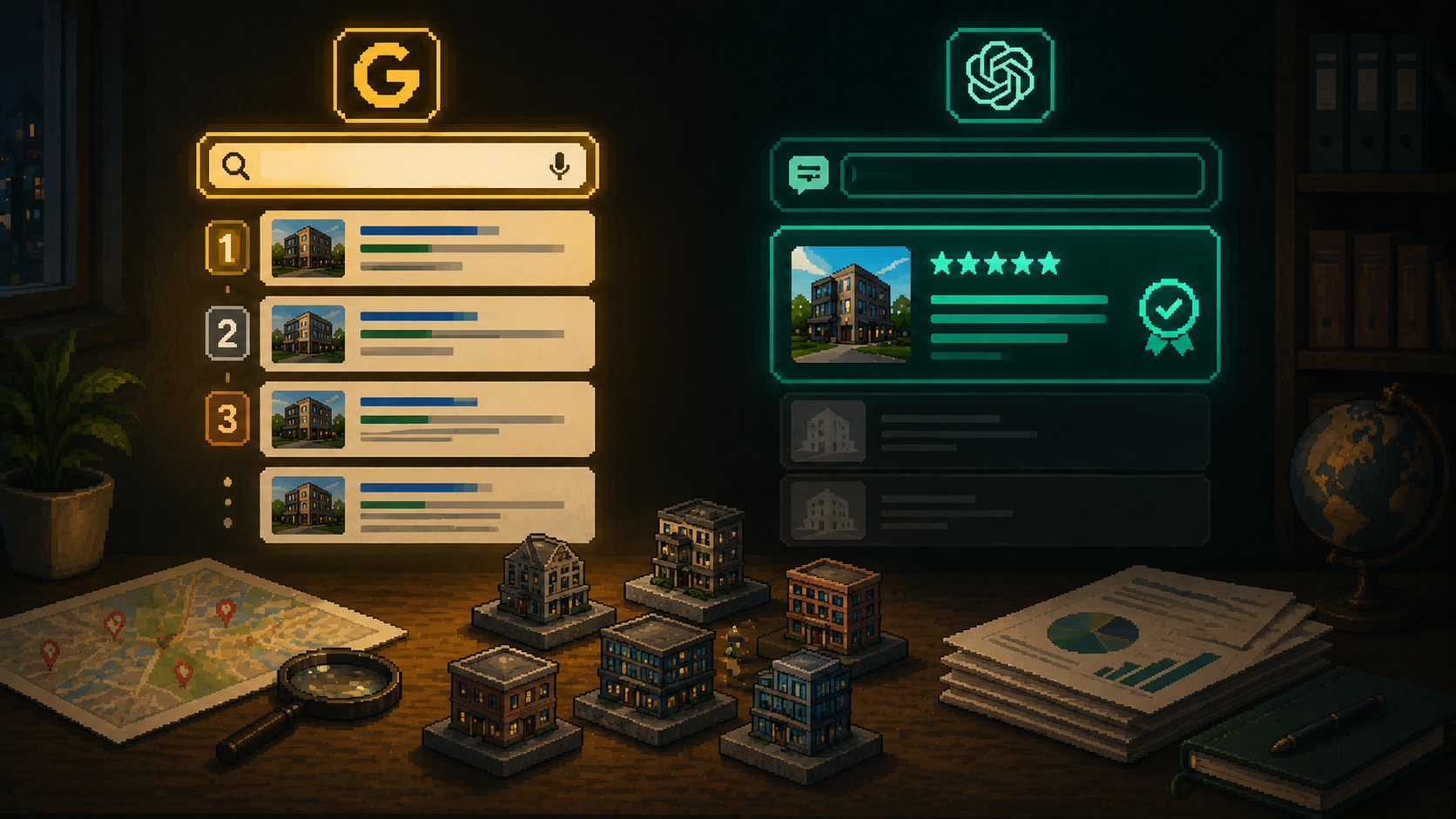
Being on the first page of Google and being recommended by ChatGPT are two different outcomes that require two different strategies. A business can rank number one on Google for its primary keyword and be completely absent from every AI recommendation in its category.
SOCi found ChatGPT recommends just 1.2% of business locations compared to 35.9% in Google's local results. Strong Google performance does not predict AI visibility, and each requires separate tracking.
The reason is structural. Google ranks pages based on technical factors, keyword relevance, and backlink authority. AI tools build their recommendations based on a more complex combination: the depth and specificity of content, the structure of information on the page, the consistency of the business's signals across multiple platforms the AI reads, and the presence of the business in sources the AI considers authoritative.
The DIY AI Visibility Check: Do This Right Now
How do I check if my business shows up in AI search?
This takes ten minutes. You do not need any tools or subscriptions.
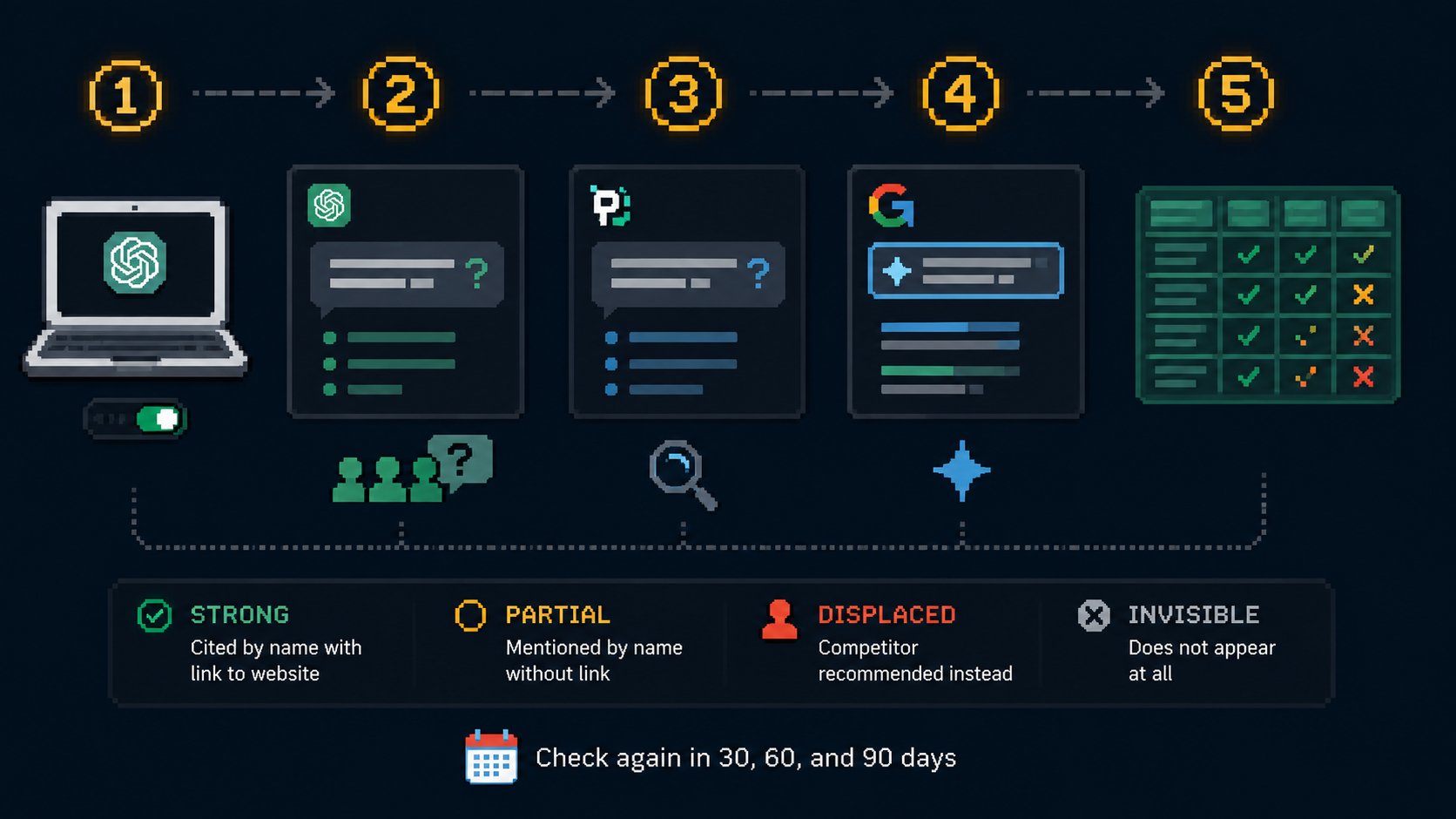
Step 1: Open ChatGPT at chat.openai.com with web search enabled if available.
Step 2: Type five questions your ideal clients might actually ask. Be specific. Not "web design" but "who builds good websites for service businesses" or "what should I look for when hiring a web design studio for my small business."
Step 3: Repeat the same five questions in Perplexity at perplexity.ai. Perplexity shows its sources directly, so you can see exactly which websites it is drawing from.
Step 4: Repeat in Google. Type the same queries and look at what appears in the AI Overview section at the top of the results page.
Step 5: Record your results.
Strong: Your business is cited by name with a link to your website.
Partial: Your business is mentioned by name but without a link.
Displaced: A specific competitor is recommended in your place.
Invisible: Your business does not appear at all.
Run this check and record your result for each platform. That record is your baseline. Everything you do to build AI visibility should be measured against it by checking again in thirty, sixty, and ninety days.
Why Acting Now Matters
Is AI search going to keep growing or is this just a trend?
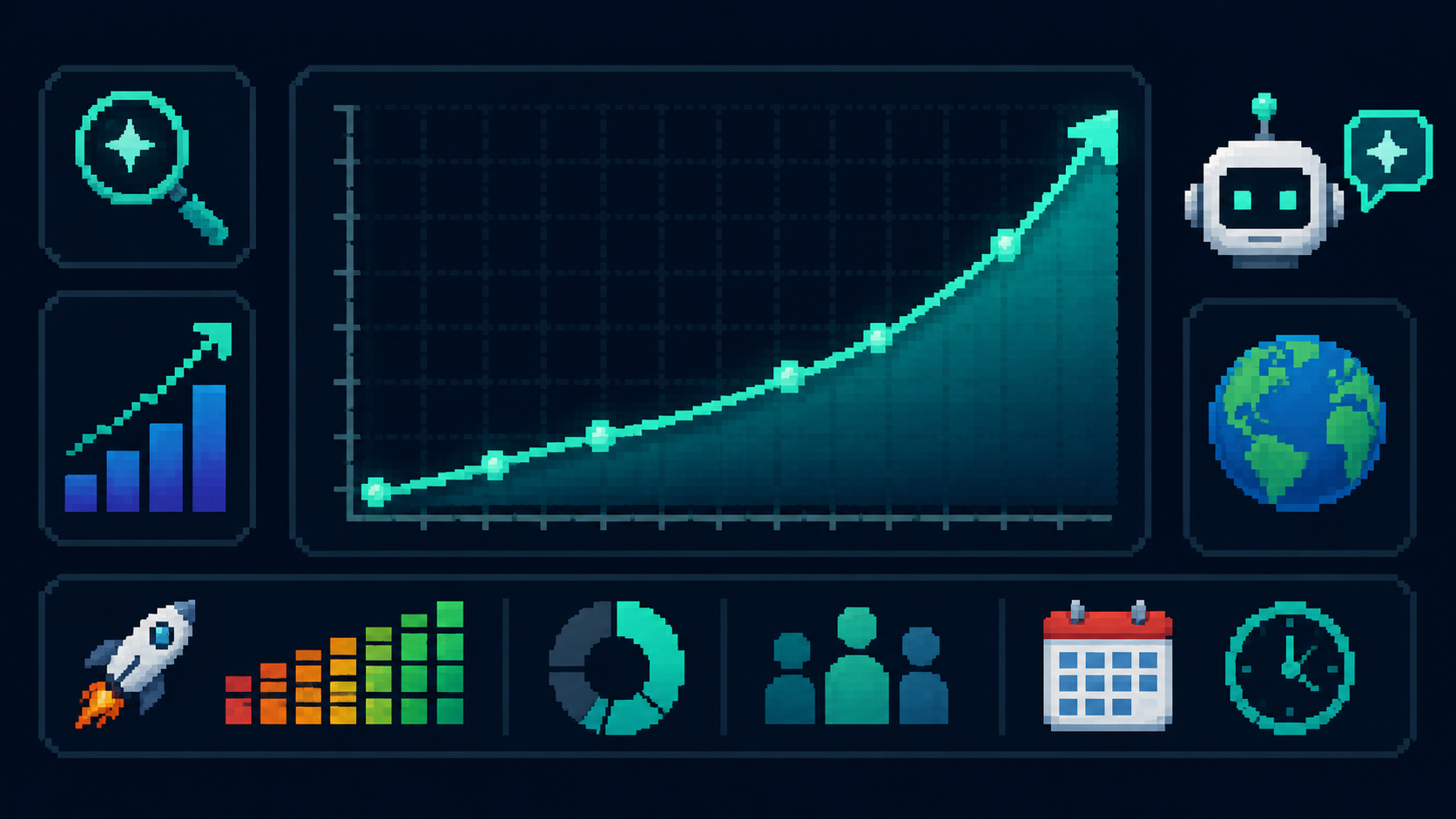
Gartner projects 25% of total search volume will shift to AI interfaces by the end of 2026. Semrush projects AI search channels will drive as much business value as traditional search by 2027 and surpass it shortly after.
Only 25.7% of marketers are actively developing content for AI citation today. That is a first-mover window. It is open now. It will not stay open at current valuations.
The businesses building AI visibility today are not chasing a trend. They are establishing a presence in a channel that is growing faster than any other in the history of digital marketing, at a moment when most of their competitors have not yet started.

Frequently Asked Questions