Most business owners who discover they are not showing up in AI search assume the problem is that AI tools simply have not gotten around to them yet. That they are too small. That they need to wait.
None of those are the real reason.
A business is invisible to AI search when its website does not give AI tools the four things they need to recommend it: permission to read the site, content specific enough to extract as a direct answer, consistent business information across the web, and external verification from sources the AI already trusts.
Every one of those is a specific, fixable problem. This article walks through each one so you can identify which is causing yours.

The Biggest Surprise: Your Google Rankings Have Almost Nothing to Do With It
Why is my business not showing up in ChatGPT even though I rank on Google?
This is the question we hear most often when business owners first audit their AI visibility. They have invested in SEO. They rank on page one. And then they open ChatGPT, ask a question about their category, and their business does not appear anywhere.
A 2026 study analyzing nearly 350,000 business locations found that ChatGPT recommended only a small fraction of them, while Google's local results featured a much larger proportion. The two systems measure different things and draw from different signals. A business can be well-represented in one and completely absent from the other.
The reason is that Google and AI tools use different signals to evaluate sources. Google rewards keyword relevance, technical structure, and backlink authority. AI tools evaluate a more complex combination: the specificity and depth of your content, the extractability of your answers, the consistency of your business information across every platform the AI reads, and the presence of external verification from sources the AI already considers trustworthy.
You can satisfy all of Google's requirements and still fail all of the AI requirements simultaneously.
Reason 1: AI Crawlers Are Blocked From Reading Your Website
Are AI crawlers allowed to read my website?
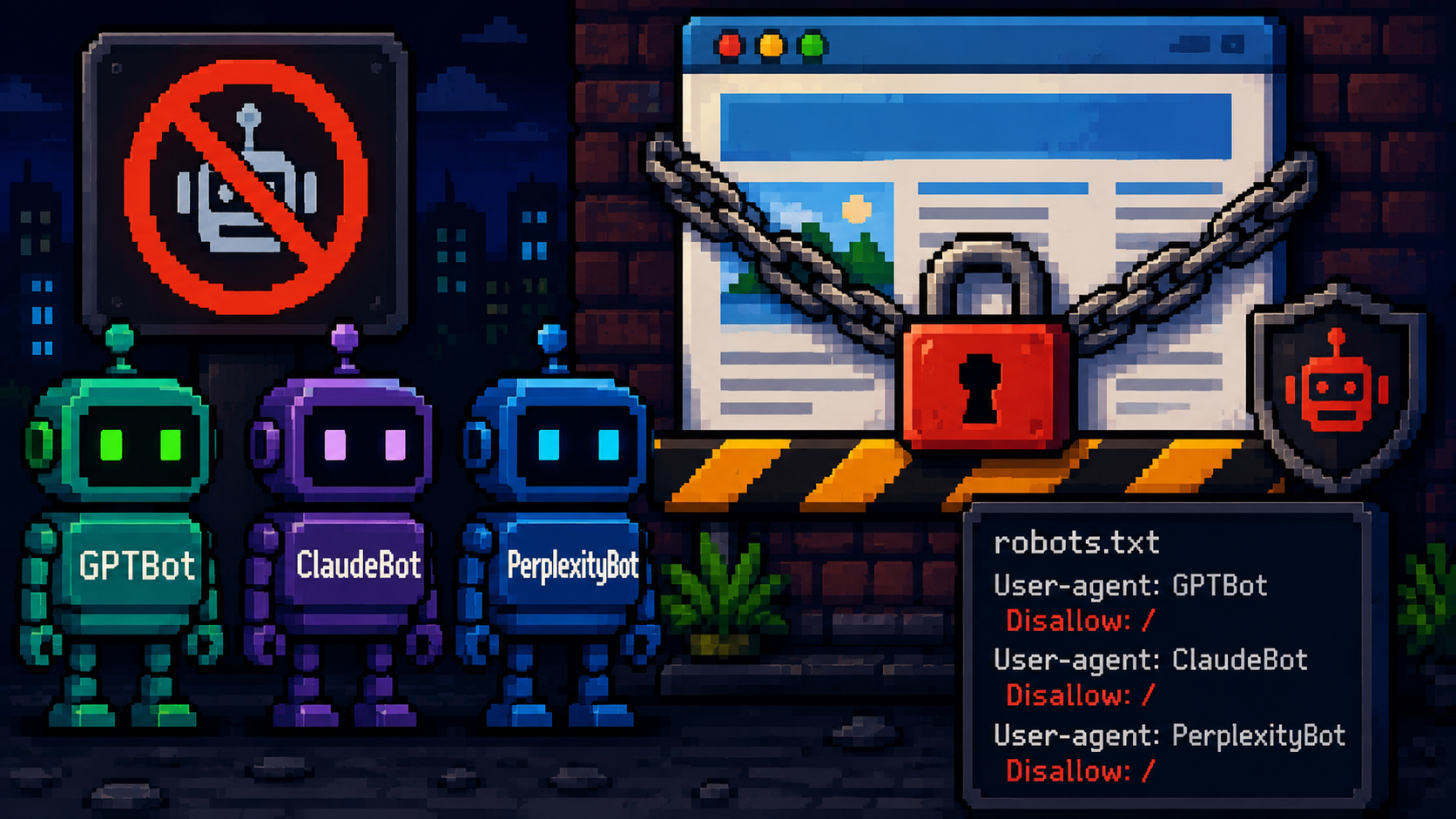
Every AI tool that recommends businesses based on web content uses automated programs called crawlers to read websites and index their content. These crawlers have specific names: GPTBot from OpenAI, ClaudeBot from Anthropic, PerplexityBot from Perplexity.
A file on your website called robots.txt tells crawlers which pages they are allowed to visit and which ones to skip. Many websites were configured before AI crawlers existed, using settings that block all unknown bots. Those settings now block AI tools from reading your content entirely.
If AI crawlers cannot read your website, you cannot appear in AI-generated recommendations regardless of how good your content is.
Check this right now:
Type your website URL followed by /robots.txt in your browser. Look for any line that says Disallow: / without a specific path listed beneath a GPTBot, ClaudeBot, or PerplexityBot section. If you see that pattern, AI tools are blocked from reading your entire site. This is a developer fix that takes under ten minutes and is one of the highest-impact single changes you can make for AI visibility.
Reason 2: Your Content Is Too Vague for AI Tools to Extract a Useful Answer
What does AI-extractable content mean and does my site have it?
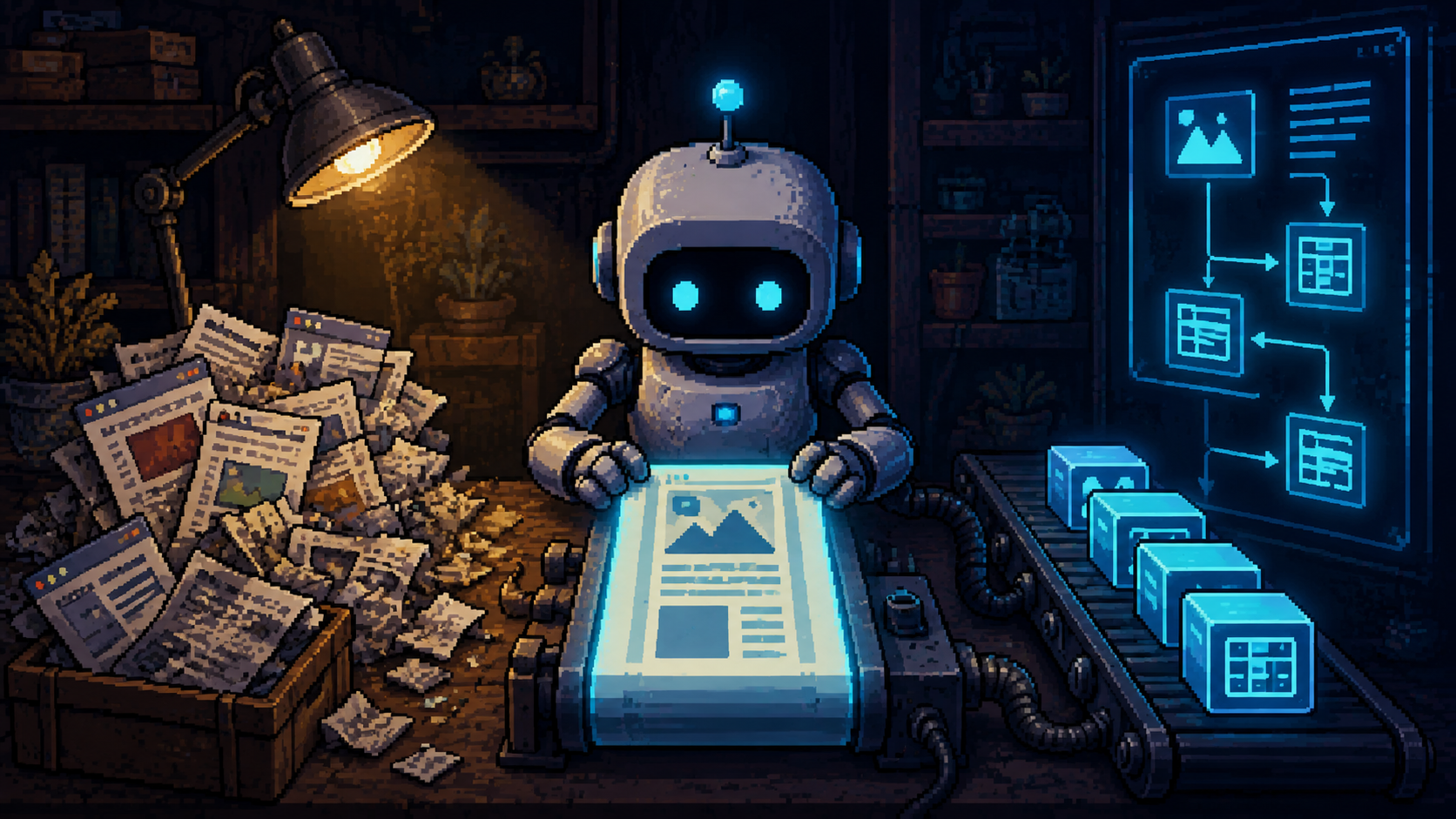
AI tools cite content when they can extract a complete, direct, standalone answer from a specific section of a page. They do not cite content they have to interpret, infer, or piece together from multiple places.
Content that AI tools can extract has these specific characteristics: every major section answers one specific question directly, the answer appears in the first sentence of the section, and the answer is complete enough to make sense without the surrounding context. Specific facts, numbers, or named claims are included rather than vague general statements.
Content that AI tools cannot extract looks like this: "We offer a range of comprehensive web design services tailored to meet the unique needs of each of our clients." This paragraph says nothing extractable. An AI tool reading this page has nothing to cite.
LLMs read homepage content, not navigation menus. State immediately who you are for and what you offer. Visible FAQs with eight to ten well-answered questions in a visible spot signal expertise.
Check this on your homepage right now:
Find any paragraph and ask: could this paragraph be lifted out of context and stand alone as a complete, specific, useful answer to a question someone might ask? If the answer is no for most of your paragraphs, your content is not structured for AI extraction.
Reason 3: Your Business Information Is Inconsistent Across the Web
Why does inconsistent business information hurt my AI visibility?
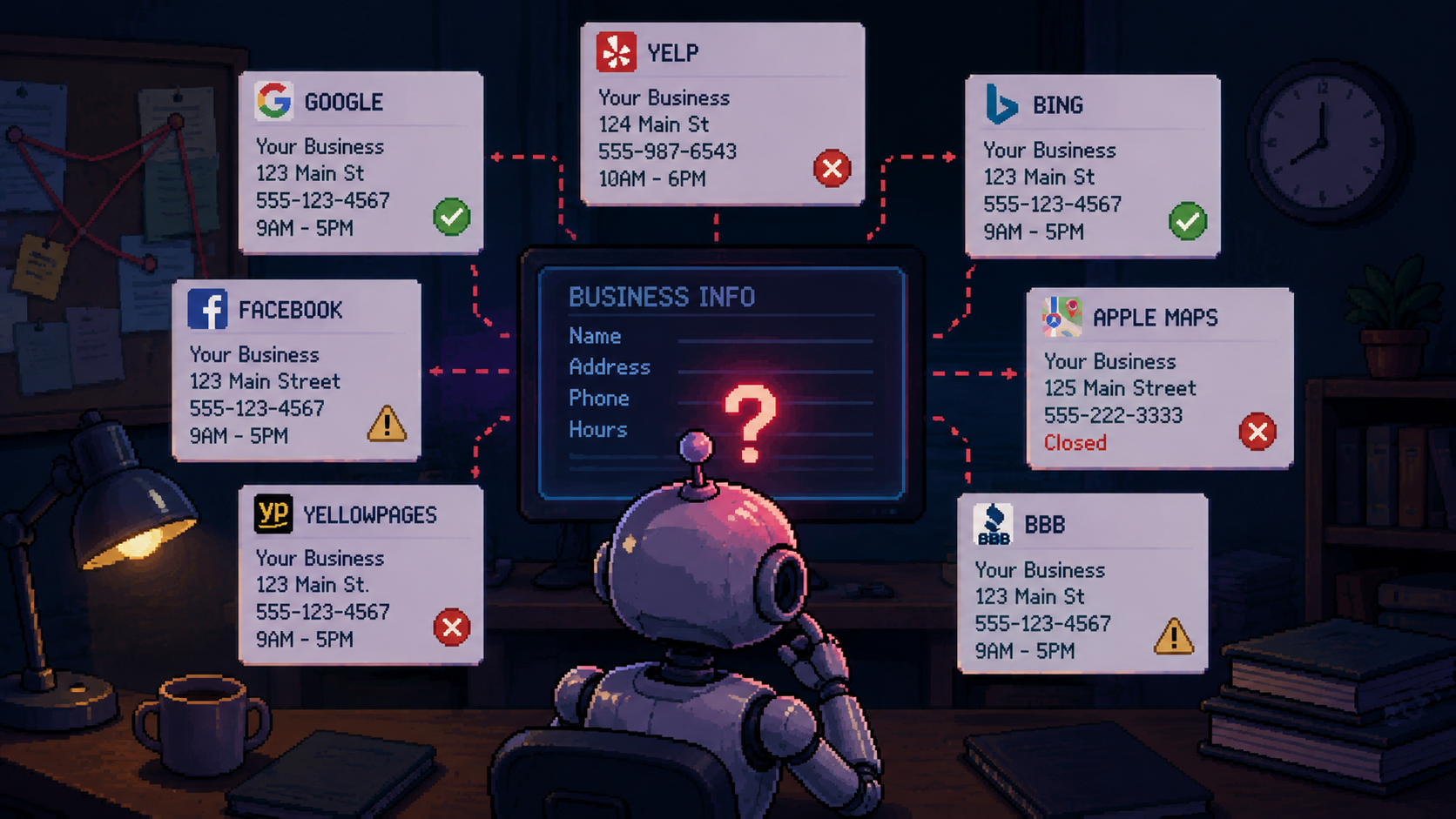
AI tools do not only read your website. They build their understanding of your business from every source they index: your Google Business Profile, your LinkedIn page, your presence in industry directories, any press mentions, any review platform listings. When all of these say different things, the AI sees a confused picture and reduces its confidence in recommending your business.
Different addresses, conflicting service descriptions, outdated team pages, or contradictory information across directories confuse AI models just as much as they confuse human customers.
Check yours in three minutes:
Search your exact business name in Google. Look at the first five results. Does the name, address, phone number, and service description appear the same way across your website, your Google Business Profile, and any directory listings? If any of those differ, you have an inconsistency problem that is actively reducing your AI visibility.

Reason 4: No Schema Markup to Tell AI Tools What Your Business Is
What is schema markup and does it affect AI visibility?
Schema markup is a layer of code added to your website that tells AI tools and search engines explicitly what your content represents. Without it, AI tools have to infer. With it, they know.
Without schema, an AI tool reading your website sees a page full of text and has to guess: is this a business? What kind? What services does it offer? Where is it located?
With schema markup, the AI tool reads explicit machine-readable signals. In 2026, schema is not optional anymore. It is foundational infrastructure. Without structured data, AI systems have to guess. With it, they can classify your content far more accurately.
Check whether your site has schema right now:
Go to search.google.com/test/rich-results and enter your homepage URL. If no structured data is detected, AI tools are guessing about what your business is and does.

Reason 5: No Third-Party Sources Mention Your Business
Why do external mentions affect AI visibility?
AI tools are designed to recommend businesses they can verify from multiple sources. Your own website telling the AI you are credible is worth something. Other websites, directories, publications, and platforms saying the same thing is worth significantly more.
Your business is not cited enough in the sources ChatGPT trusts. AI models build their recommendations from web content they consider authoritative including industry publications, review sites, well-structured FAQ pages, and data-rich guides.
AI systems use reviews as a filter, not just a ranking factor. If your ratings do not cross a certain threshold, you may be filtered out of recommendations regardless of your other signals.
Reason 6: Your Content Does Not Answer the Questions Buyers Actually Ask
What kind of content gets recommended by AI tools?
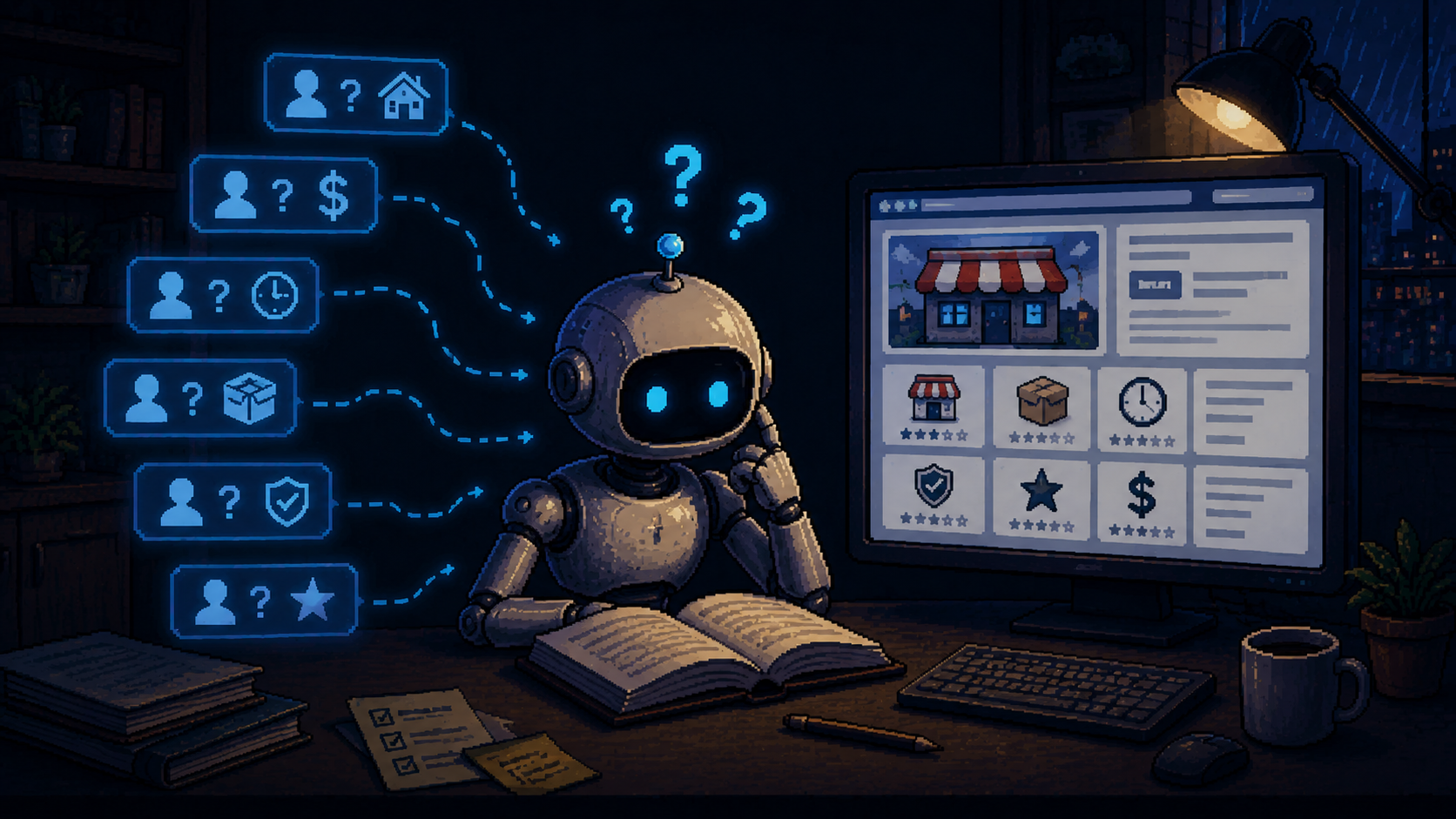
The final and most fixable reason businesses are invisible in AI search is that their content does not address the specific questions buyers are actually typing into AI tools.
Most business websites are written to describe what the business does from the business's perspective. These statements are not answering questions. They are making claims. AI tools cite content that answers questions. Specific questions with specific answers.
Your buyers are searching things like "how long does it take to build a website," "how much should I pay for a web designer," and "what questions should I ask before hiring a web design agency." If your website does not have specific, direct, complete answers to those questions, AI tools have nothing to cite when those queries come in.
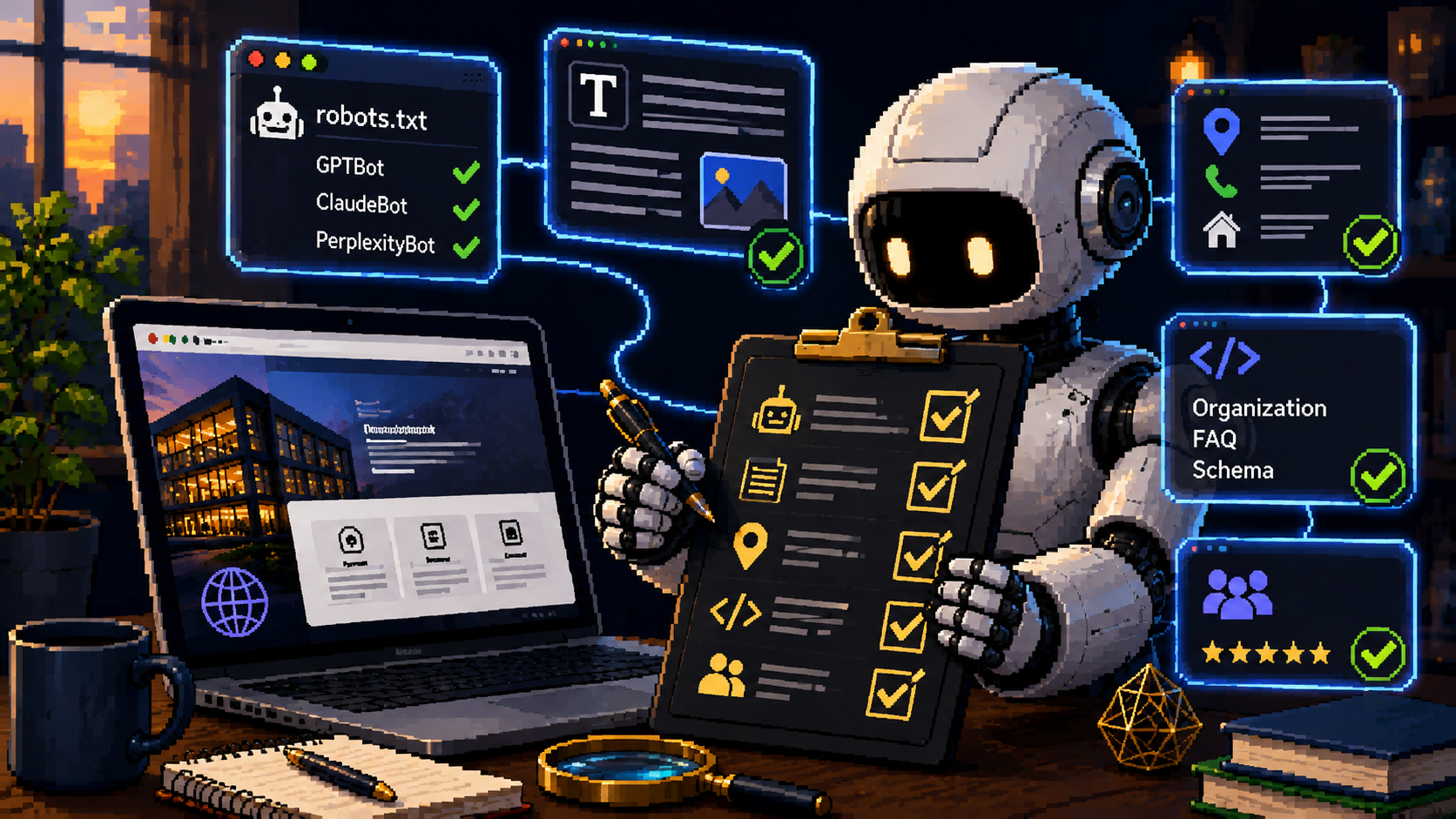
Your AI Invisibility Checklist
Run through these five checks on your own site. Any no is a specific, fixable problem.
Check 1: Robots.txt
Go to yourwebsite.com/robots.txt. Confirm that GPTBot, ClaudeBot, and PerplexityBot are not blocked. If any AI crawlers are disallowed, fix this first.
Check 2: Extractable content
Find any paragraph on your homepage. Ask: could this stand alone as a complete answer to a specific question? If most paragraphs fail this test, your content needs restructuring.
Check 3: NAP consistency
Search your business name and compare your name, address, phone number, and service description across your website, Google Business Profile, and any directory listings. Any inconsistency is an AI visibility problem.
Check 4: Schema markup
Run your homepage through search.google.com/test/rich-results. If no structured data is detected, add Organization schema and FAQ schema before anything else.
Check 5: External mentions
Search your business name in Google and count how many third-party sources mention you. If the number is fewer than five, external verification is a gap to prioritize.

Frequently Asked Questions