
Here is a situation that confuses almost every business owner who shops for a website: you get two quotes for what sounds like the same project. One is $3,000. One is $8,000. Both promise a professional website. Both have portfolios that look reasonably impressive.
The instinct is to take the lower number unless the higher one can clearly justify the gap. But the gap almost never gets explained well because most business owners don't yet have the framework to ask the right questions.
Website pricing reflects the cost of the work and the thinking behind it. Two quotes at the same price are almost never the same product. This article gives you the framework to understand why.
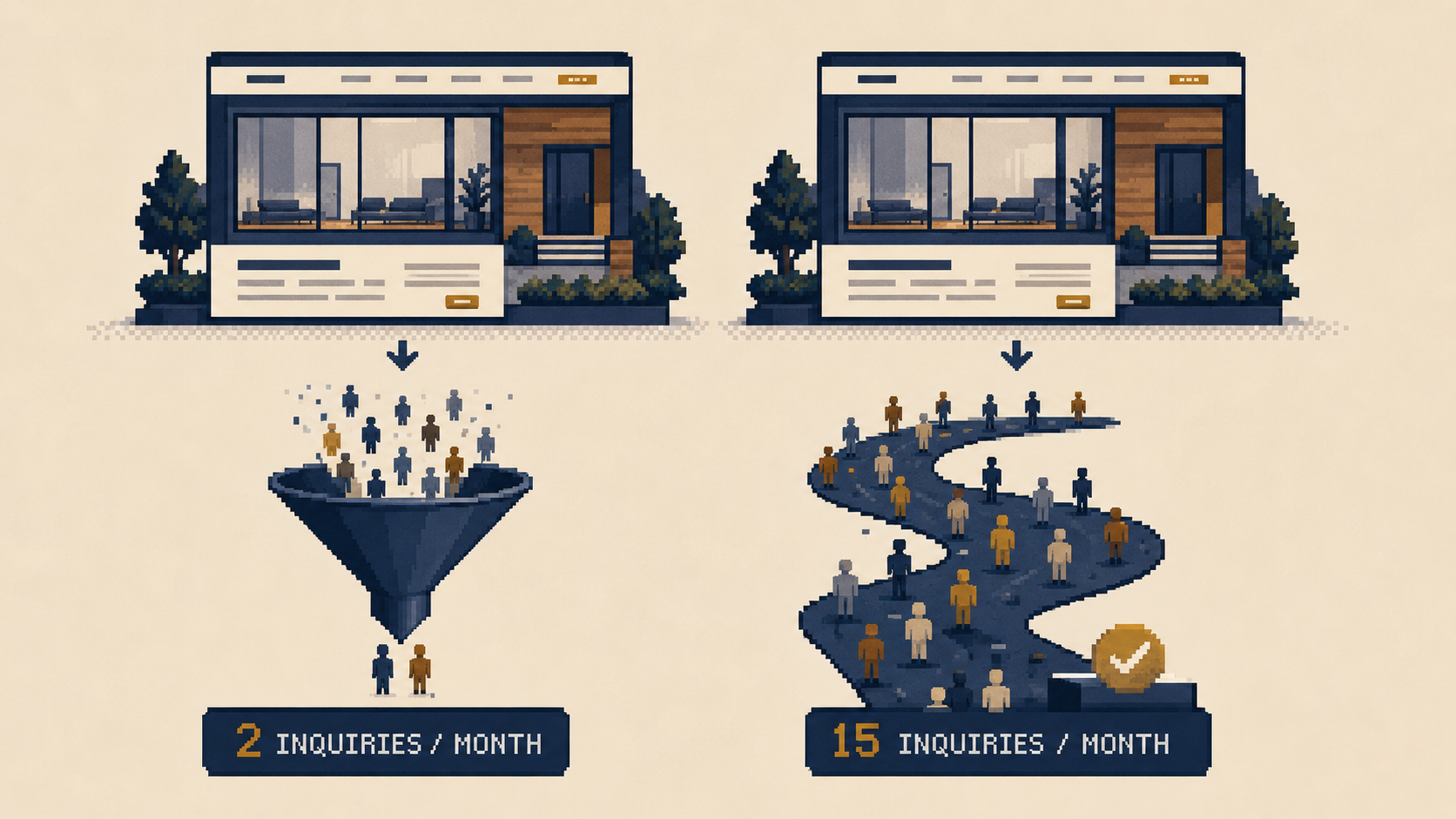
Two Websites That Look Identical Can Perform Completely Differently
Why do two websites at the same price produce different results?
A website is not a single product with a standard specification. It is a bundle of decisions, each of which affects performance in ways that don't show up in screenshots.
Two websites can use the same platform, have the same number of pages, look visually similar, and cost the same amount. One generates fifteen inquiries a month. The other generates two. The difference is not visible in the design. It is in the strategy underneath it.
The factors that separate a website that converts from one that doesn't are rarely the ones people assume. It is not the number of pages. It is not the color palette. It is the strategy behind the messaging, the precision of the conversion path, the quality of the SEO foundation, and whether the site was built around the visitor's decision-making process or around the designer's preferences.

What You Are Actually Paying for at Each Price Point
What does the price of a website actually represent?
When you pay a lower price for a website, you are typically buying less of one or more of the following things.
Strategic discovery.
Time spent understanding your business, your clients, your competitors, and your goals before a single design decision is made. Budget builds skip this almost entirely. Professional builds treat it as the foundation of everything.
Custom design.
A template customized with your branding looks like a professional website. It does not perform like one built for your specific audience and conversion path. The difference in performance is real, even when the visual difference is hard to spot.
Copywriting and messaging.
Many quotes include design but not words. The words are doing most of the conversion work. A beautifully designed site with weak, generic copy will not convert visitors into clients. If the quote doesn't include copywriting, add a realistic estimate to your comparison.
SEO foundation.
A properly structured website has SEO built into its architecture from the beginning: logical heading hierarchy, clean URLs, proper metadata, fast load times, and a sitemap. A site built without this foundation can look identical to one with it and rank nowhere in search.
Time and iteration.
Better outcomes require more rounds of strategic revision, more testing, more refinement. A quote that includes one revision round and a four-week timeline cannot produce the same output as one that includes a proper discovery process and six to eight weeks of thoughtful iteration.
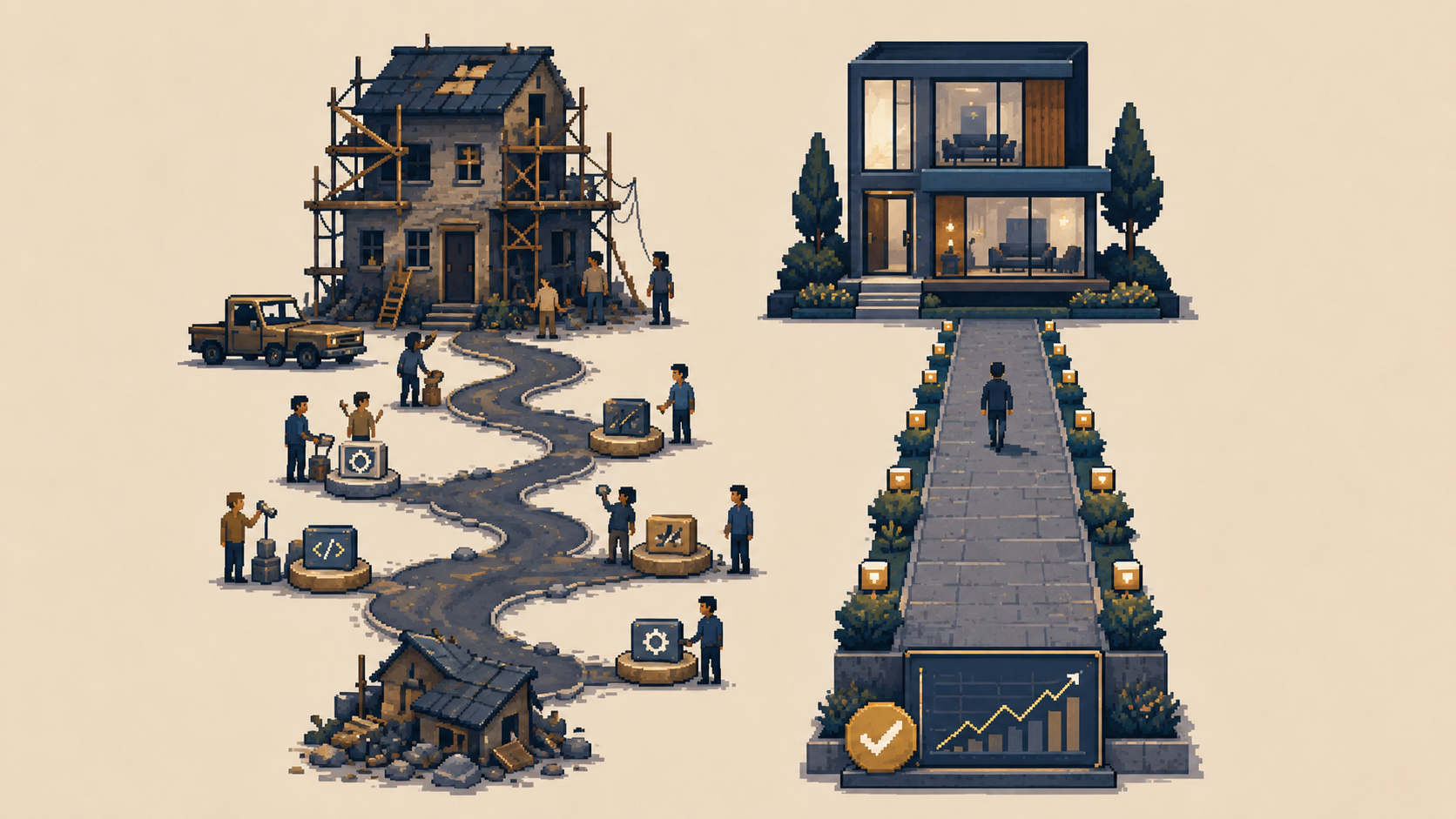
What Cheap Actually Costs Over Time
Is a cheap website actually cheaper?
In the short term, yes. Over twelve to thirty-six months, often not.
The common pattern: a business owner spends $1,500 to $2,500 on an entry-level build. The site looks reasonable at launch. Over the following year, it doesn't rank in search, it doesn't convert visitors at a meaningful rate, and the business owner starts adding patches. A freelancer fixes the mobile layout. An SEO consultant restructures the page content. Another developer improves the load time.
By month eighteen, $2,000 to $4,000 has been spent in additions on top of the original build. The site still underperforms. The eventual decision is a full rebuild at $6,000 to $10,000.
Total spent: $9,000 to $16,500. All for a result that a proper first build at $6,000 to $8,000 would have delivered from day one, along with eighteen months of better performance.
Businesses that invest in professional website design see an average ROI of 200% within the first year. Businesses that go the cheap route spend an average of three times their initial investment fixing problems and eventually rebuilding.
How to Compare Quotes That Look the Same
What should I look at when comparing web design quotes?
Stop comparing on price. Start comparing on scope and evidence.
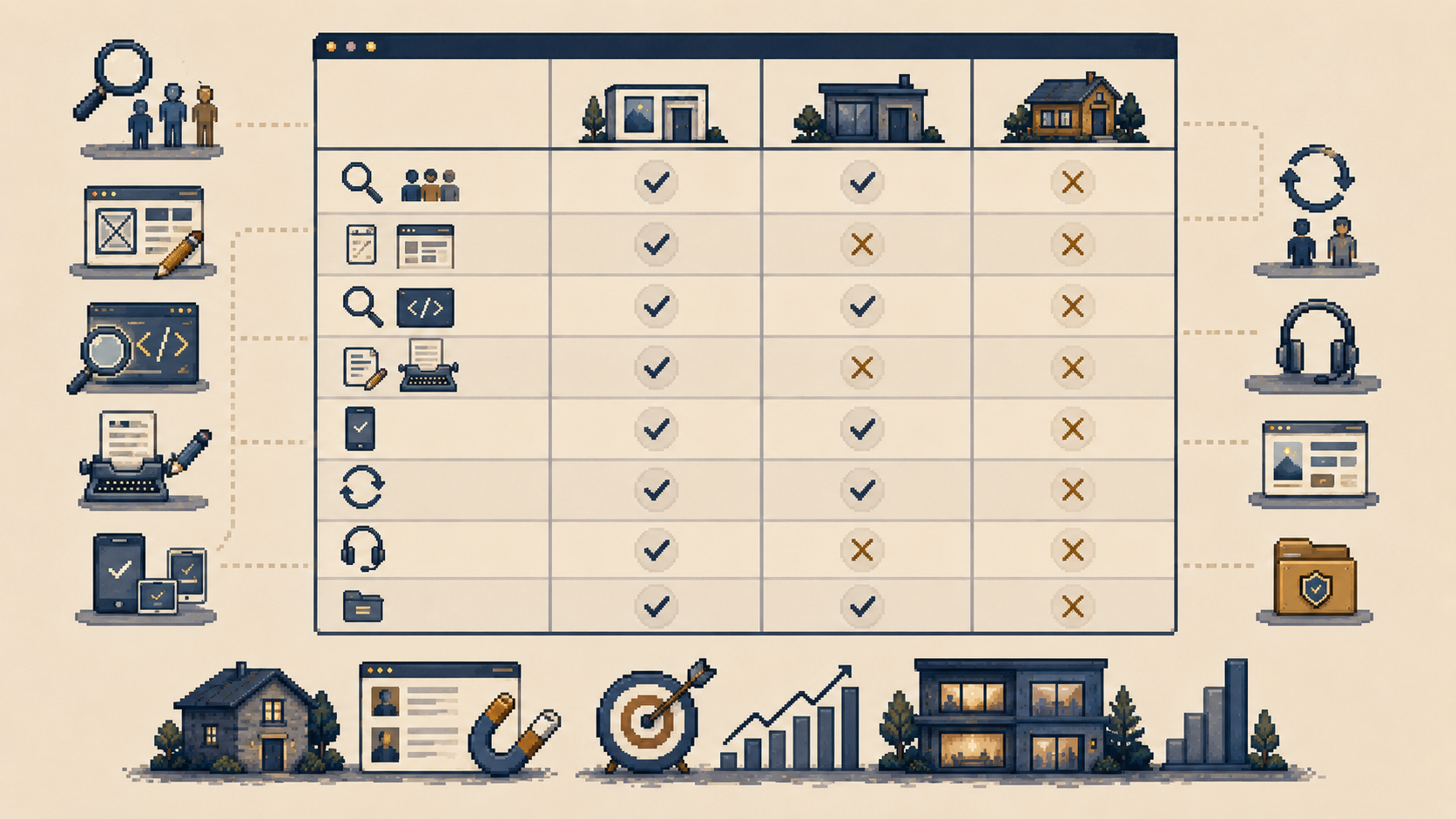
For each quote you receive, find out what is included and what is not. Cover these specifically: discovery and strategy, custom design or template, copywriting, SEO setup, mobile optimization, revision rounds, post-launch support, and who owns everything when it is done.
Then look at each designer's portfolio not for visual style but for business outcomes. Ask what happened after they built those sites. Did the client see more inquiries? Better rankings? Measurable improvements in conversion?
Side-by-side comparison tool:
Create a simple table. Columns for each designer. Rows for each of these: strategy included, custom design or template, SEO foundation included, copywriting included, mobile optimization tested, revision rounds, post-launch support duration, full ownership confirmed. Fill in yes or no for each cell. The quote that wins the most yeses is almost always the better investment regardless of its price position.

Frequently Asked Questions