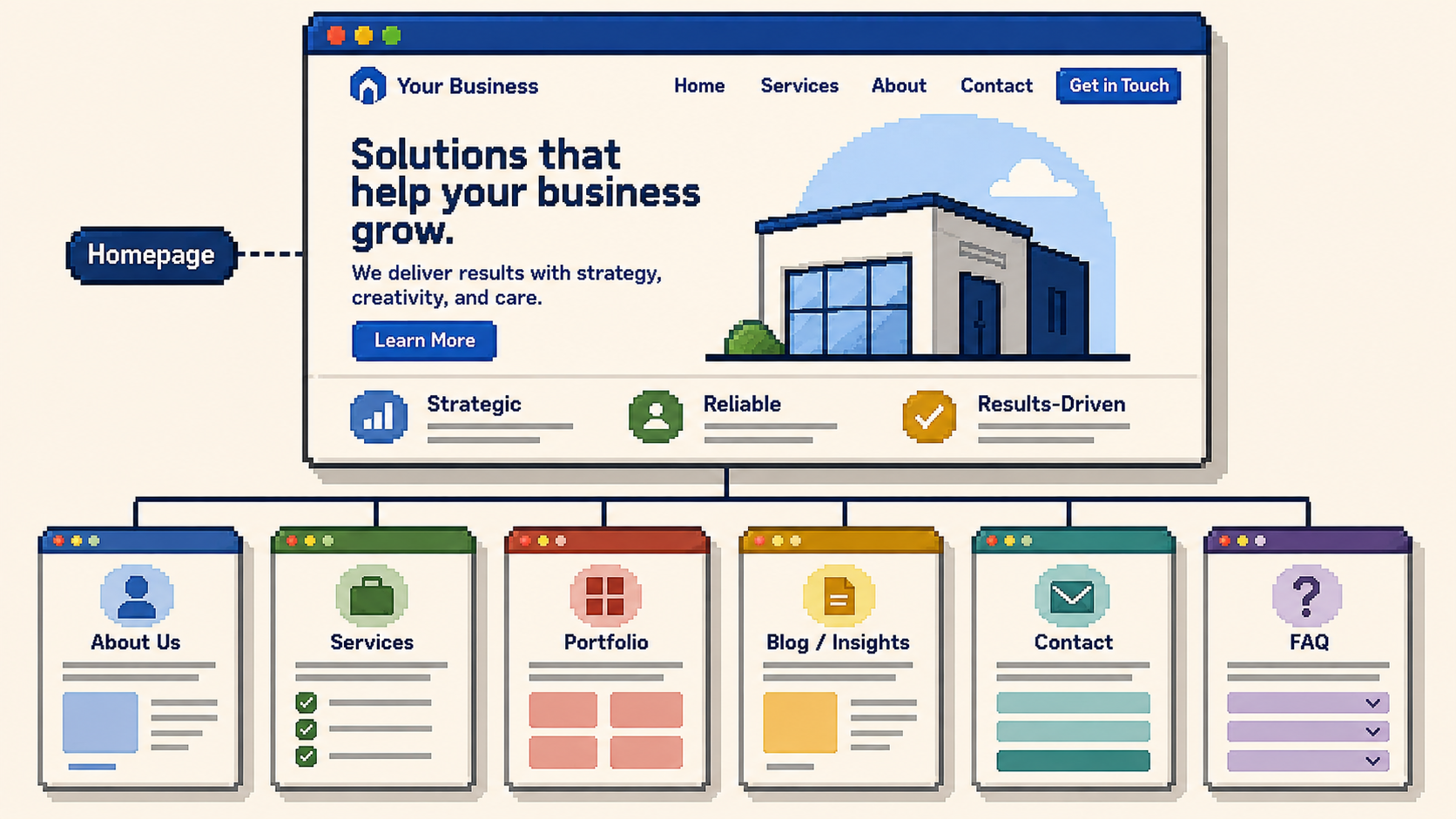
Most small business websites need between five and ten core pages.
A very simple service business may only need four, while a company with multiple services, locations, or audiences may need considerably more. The right number depends on what visitors need to understand, trust, and contact the business.
That is the part many business owners get backwards.
They begin by asking, “How many pages should my website have?” when the better question is:
What does a visitor need to see before they trust my business enough to get in touch?
Your page count should come from answering that question honestly, not from how many pages a template includes or how large a competitor’s website appears to be.
How Many Pages Does a Typical Small Business Website Need?
There is no universal number, but these ranges provide a practical starting point.
A practical starting point looks like this:
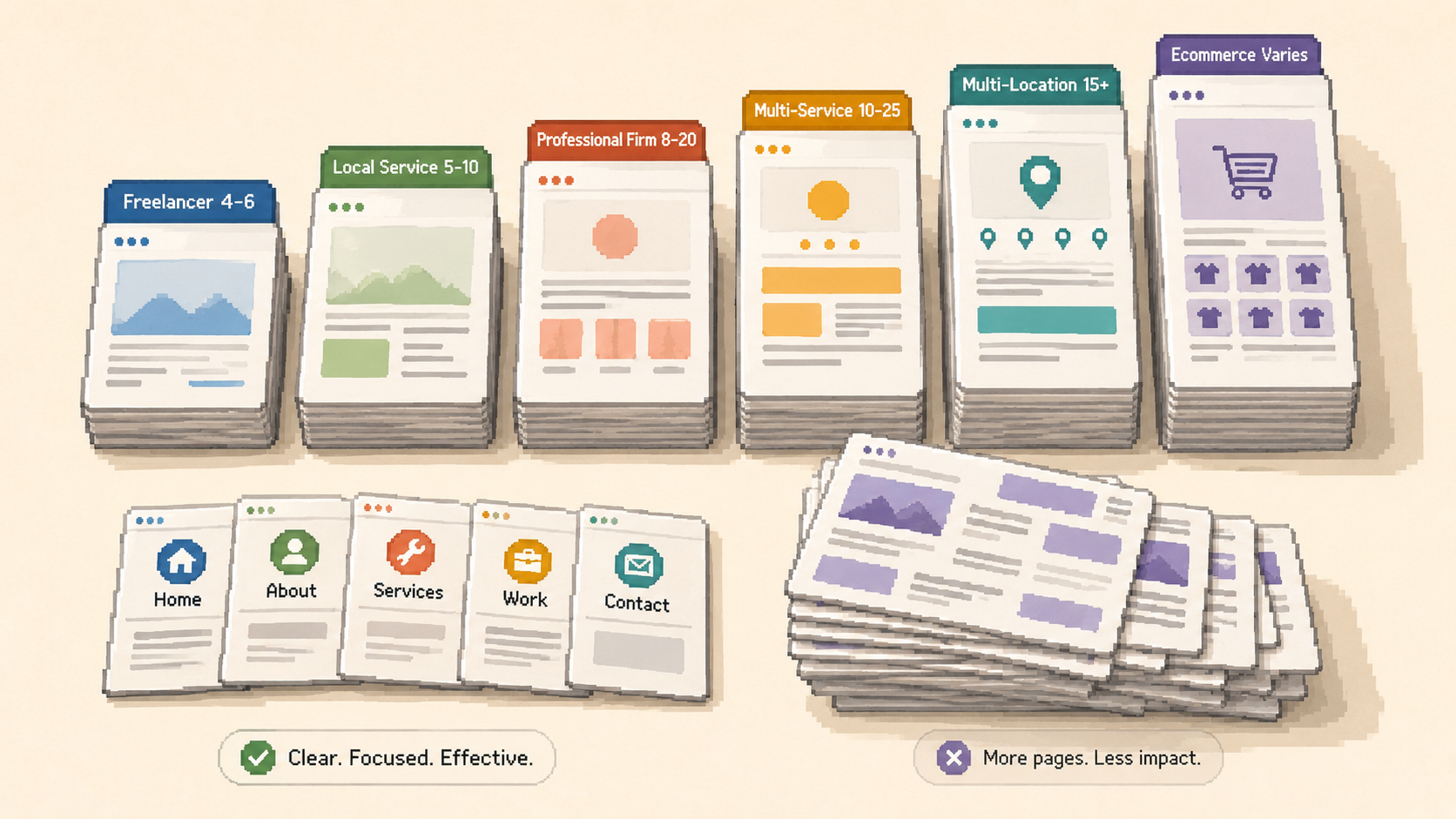
- Freelancer or consultant: 4 to 6 pages
- Local service business: 5 to 10 pages
- Professional service firm: 8 to 20 pages
- Multi-service business: 10 to 25 pages
- Multi-location business: 15 or more pages
- Ecommerce business: Depends on the number of products and categories
These ranges are practical planning guidelines based on common small business website structures and our experience reviewing service-business websites. They are not fixed industry standards.
The right number depends on the services offered, locations served, customer questions, search demand, and the amount of information someone needs before making contact.
A focused five-page website can perform better than a twenty-page website when the smaller site is clearer, more useful, and easier to navigate.
What We Usually Find When Reviewing Small Business Websites
Across the websites we have reviewed at The PixelSeed Studio, having too few pages is rarely the main problem.
More often, we find homepages trying to communicate too many ideas at once, service pages repeating the same message, and contact paths that make reaching out unnecessarily difficult.
We have also reviewed relatively small websites that explain their services more clearly than competitors with much larger sites.
The difference is usually not the number of pages. It is whether each page has a clear audience, a distinct purpose, useful information, and an obvious next step.
What Four Pages Does Every Small Business Website Need?
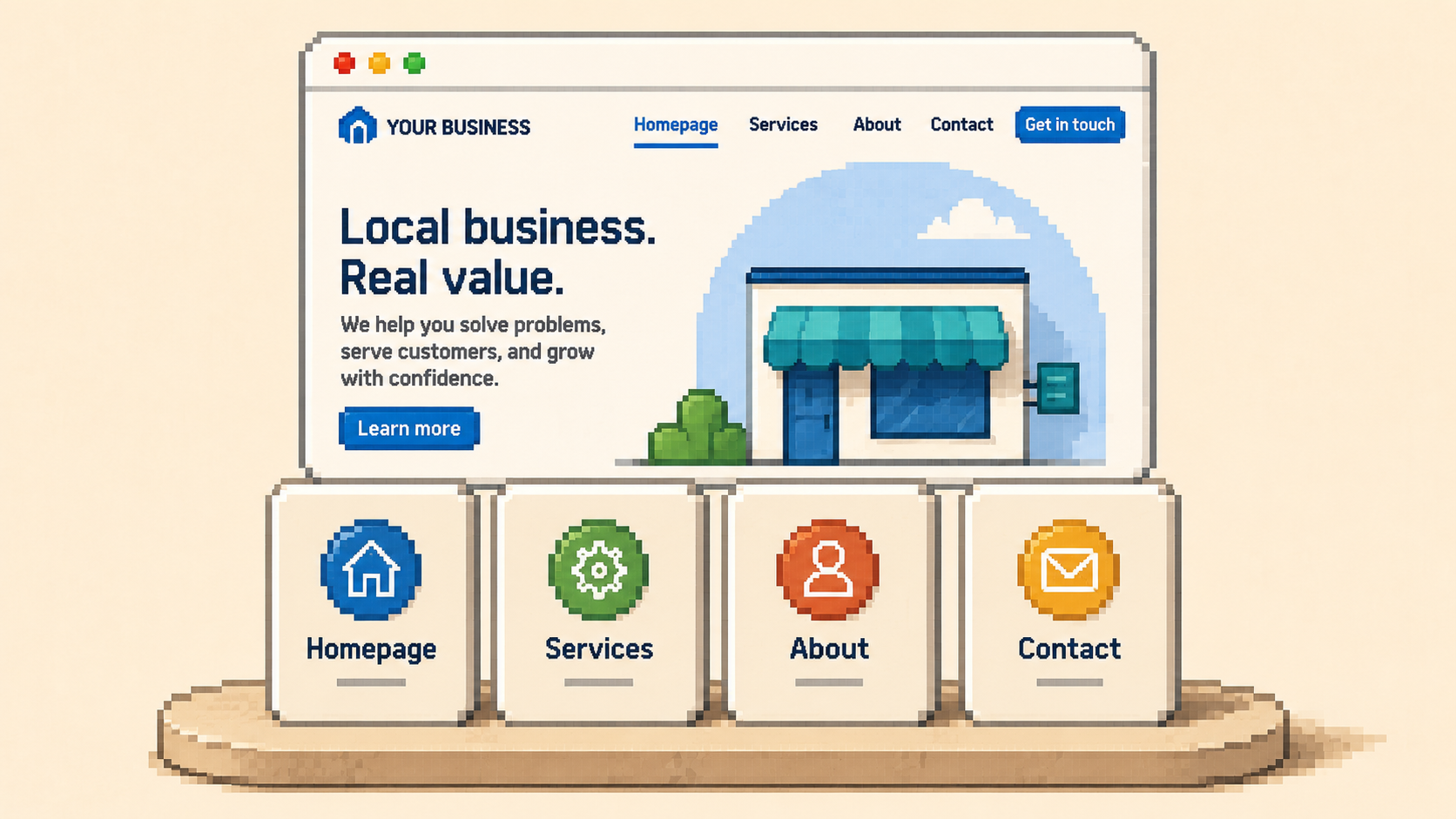
For many small service businesses, four pages form the minimum practical foundation.
These pages explain the business, build trust, describe the services, and provide a clear next step.
1. A Homepage
Your homepage should carry the weight of a first conversation, not function as a table of contents.
Its first job is to help visitors quickly understand:
- What you do
- Who you help
- What problem you solve
- Why they should trust you
- What they should do next
Ideally, visitors should understand the first three points before scrolling beyond the opening section.
Homepages that try to explain everything at once often end up communicating nothing clearly. The goal is not to place every detail on the homepage. It is to give visitors enough clarity and confidence to continue.
A good homepage guides people toward the most relevant service, proof, or contact option.
2. A Services Page
A strong services page names the client’s problem before describing the service.
Visitors are not browsing your website like a menu. They are trying to determine whether you can solve the specific issue that brought them there.
A services page built around internal department names, technical jargon, or vague labels makes that decision harder.
Organize the page around:
- The problems clients are experiencing
- The service you provide
- Who the service is for
- What the process involves
- What result the client can expect
- What they should do next
The language should reflect how clients describe the problem, not only how your business describes the service.
3. An About Page
Your about page should answer one central question:
Can I trust these people with my money, time, or business?
Years in business and a mission statement can help, but they are rarely enough on their own.
Trust usually comes from specifics.
Explain:
- Who you have worked with
- What experience you bring
- What you do differently
- How you approach the work
- Why you use that approach
- Who clients will actually communicate with
For many service businesses, clients are not only choosing a company. They are choosing the people they will work with.
A strong about page makes the business feel more credible, more personal, and easier to trust.
4. A Contact Page
Your contact page should make reaching out feel simple and predictable.
This sounds obvious, but it is still one of the pages many businesses get wrong.
Common problems include:
- Too many form fields
- No explanation of what happens after submission
- Missing business hours
- A phone number hidden in the footer
- No indication of response time
- No alternative way to get in touch
- A form that asks for unnecessary information
Reduce unnecessary friction and explain what happens next.
For example:
Complete the form and we will respond within one business day. We will review your request, ask any necessary questions, and recommend the most appropriate next step.
Clear expectations make contacting the business feel less uncertain.
These four pages form a practical foundation. Without enough information to explain the business, establish trust, and provide a clear next step, a website may function more like a digital business card than a reliable source of leads.
When Should a Business Add More Website Pages?
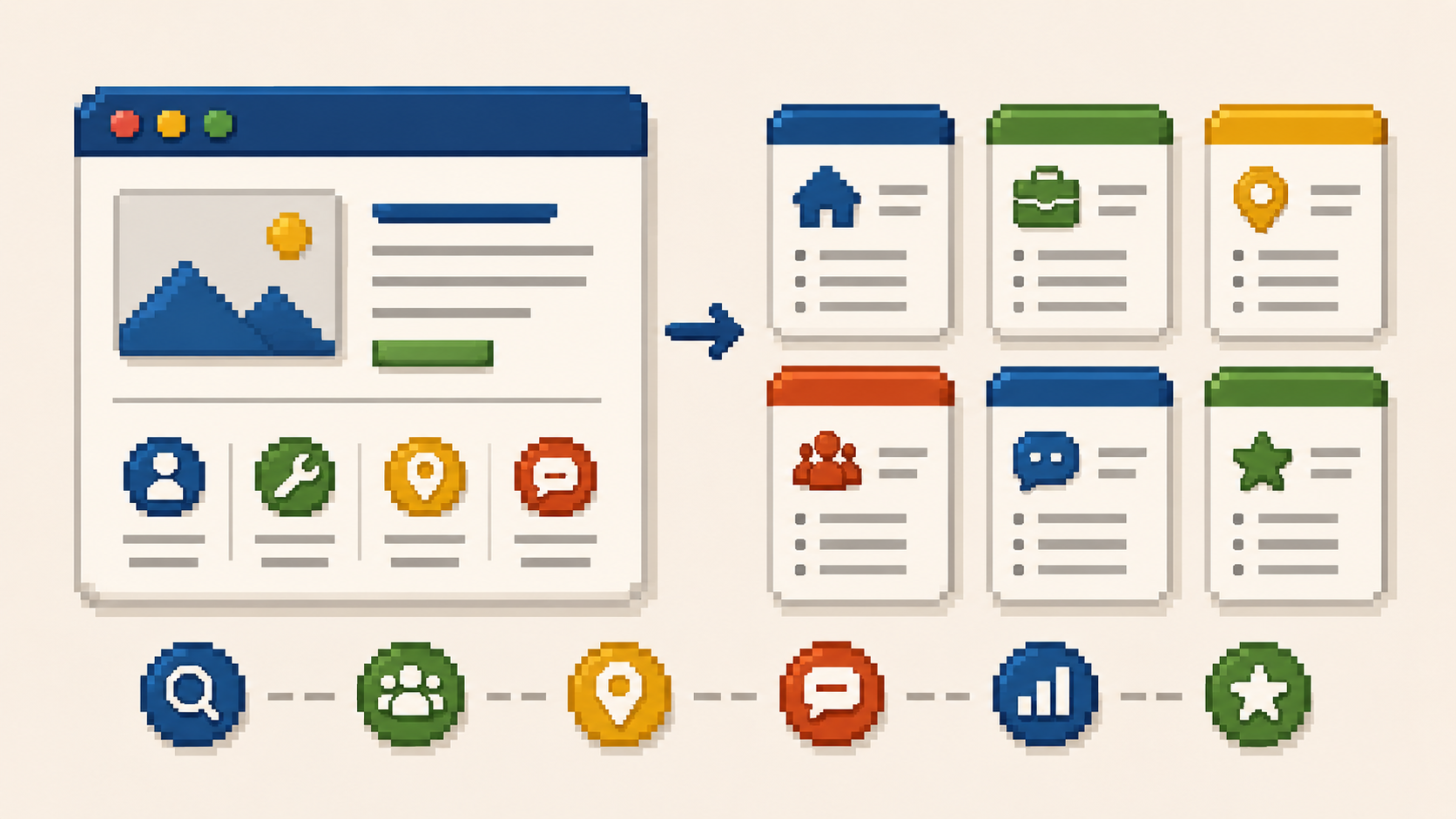
Once the core pages are strong, every additional page should serve a clear purpose.
A page may deserve a place on the website when it:
- Helps visitors understand a service
- Answers an important question
- Addresses a distinct audience
- Supports a meaningful search
- Provides proof
- Serves a specific location
- Moves visitors closer to contacting the business
Pages should not be added simply because they came with a website template.
Does Every Service Need Its Own Page?
No.
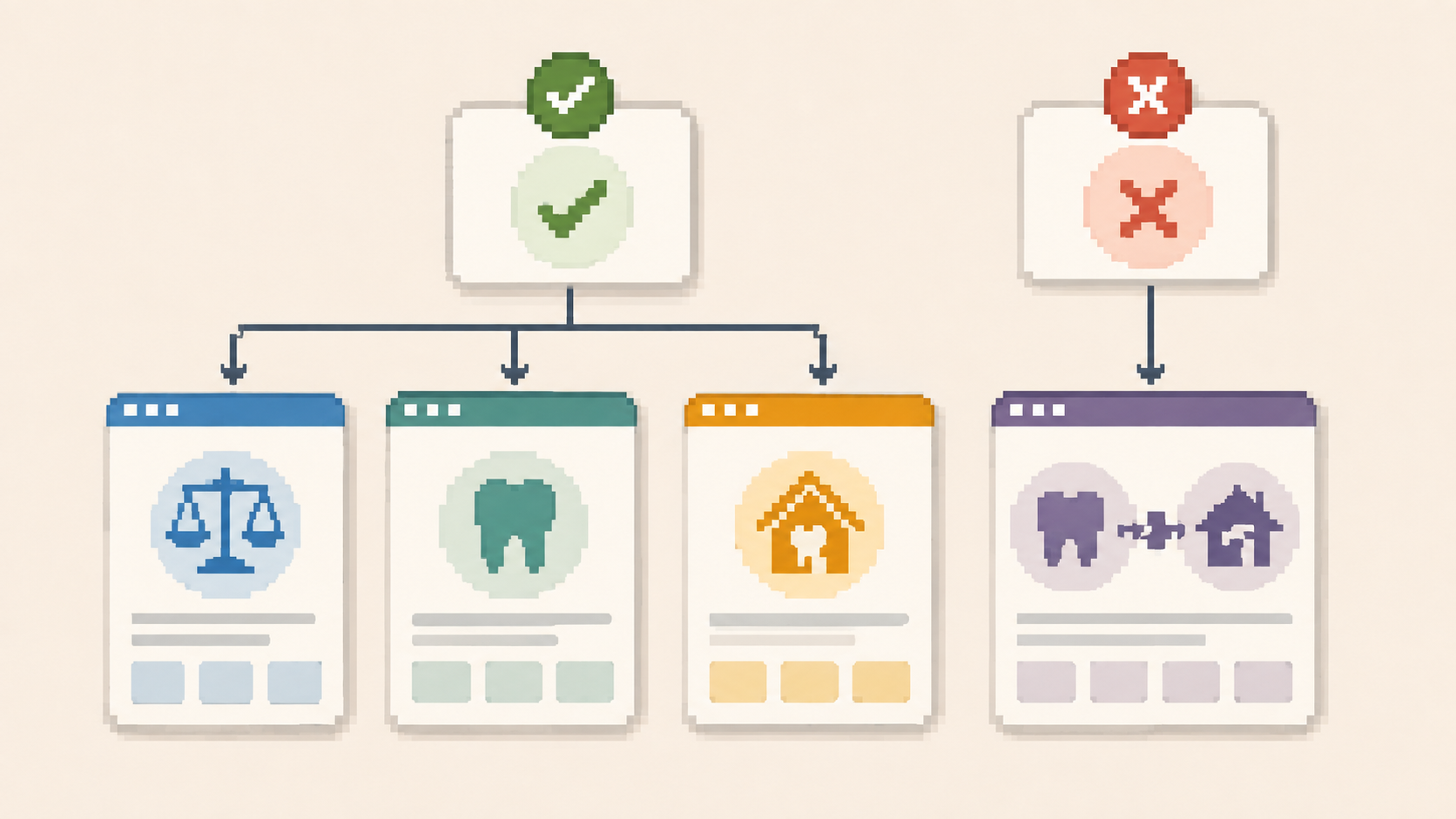
A service should usually have its own page when it solves a distinct problem, targets a meaningful search intent, or needs a different message from your other services.
For example, a law firm may need separate pages for:
- Personal injury
- Employment law
- Family law
- Estate planning
Each service addresses a different client situation and may require different explanations, proof, and calls to action.
A dentist may need separate pages for:
- Emergency dentistry
- Dental implants
- Cosmetic dentistry
- Invisalign
- Preventive care
A contractor may need separate pages for:
- Commercial construction
- Home renovations
- Roofing
- Electrical work
- Project management
However, splitting closely related services into separate pages simply to make the website appear larger can weaken the site.
Thin or repetitive pages compete for attention without giving visitors or search engines anything meaningfully different.
When one page can explain two closely related services clearly and thoroughly, keeping them together may be the better option.
Do Case Studies and Portfolio Pages Help?
Yes, especially for service businesses.
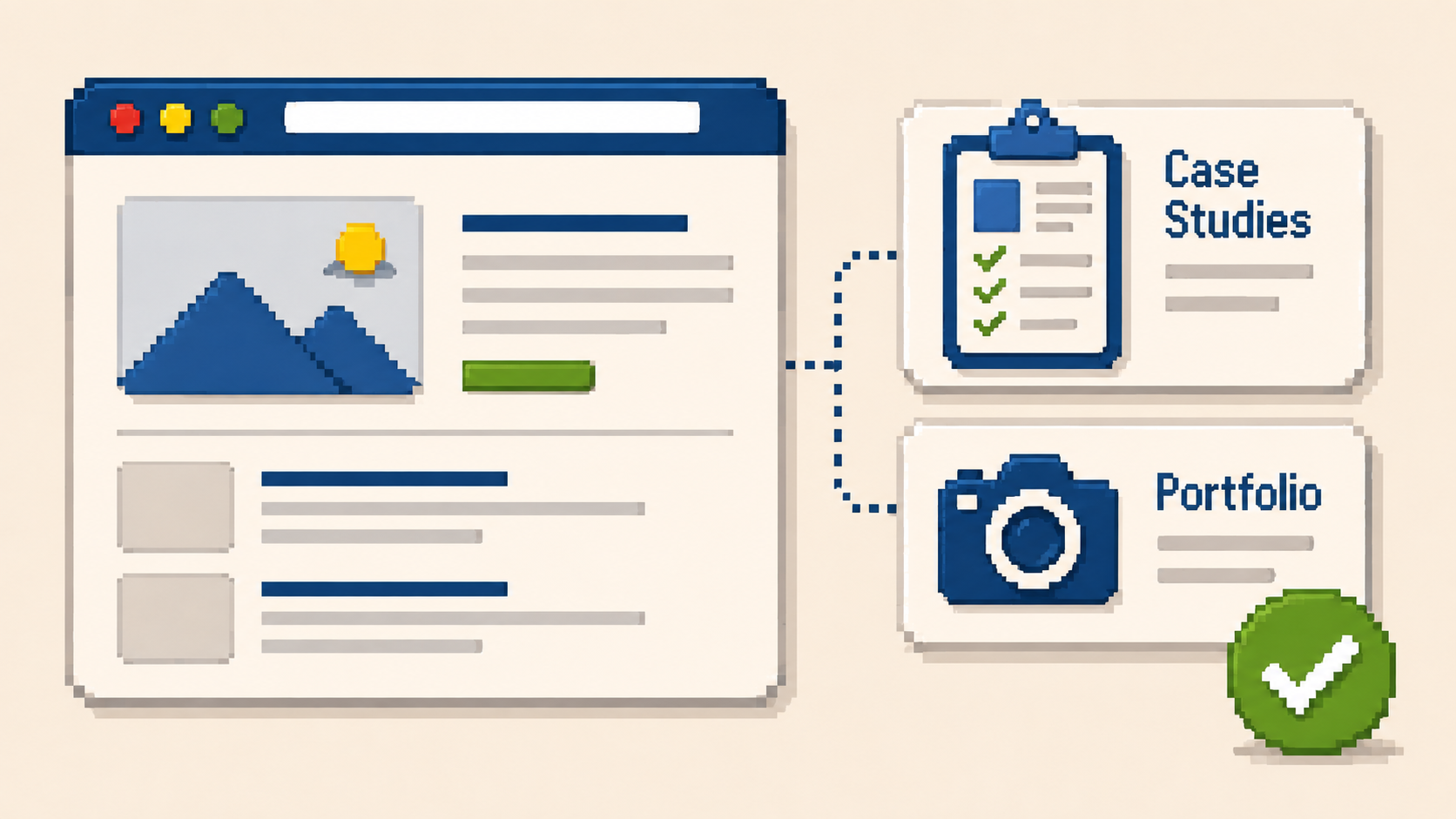
A case study or portfolio page can be one of the strongest trust-building additions a website can make because it replaces a claim with evidence.
Instead of saying that you deliver good results, you can show:
- The client’s original situation
- The problem they needed to solve
- What you did
- Why you chose that approach
- What changed afterward
A useful case study does more than display attractive work. It explains the thinking, process, and outcome behind it.
For businesses where results are difficult to measure, project details, client feedback, before-and-after comparisons, or process improvements can still provide meaningful proof.
Does a Small Business Website Need a Blog?
A blog is useful when the business is serious about building visibility in Google and AI-powered search tools.
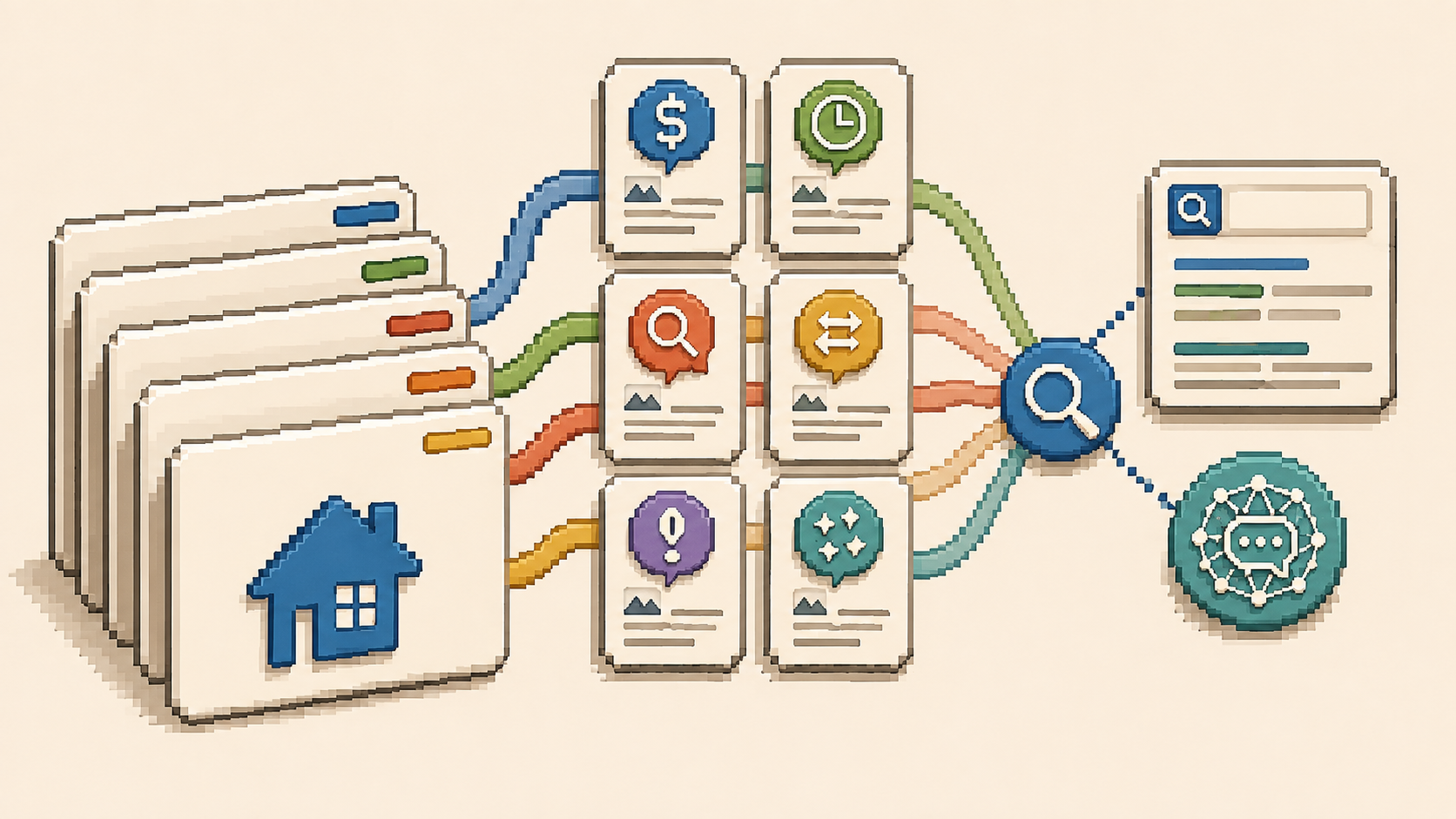
Static pages explain the business and its services. Articles allow the website to answer the wider questions potential clients ask before they are ready to contact someone.
For example, a web design company may publish articles about:
- Website pricing
- Redesign timelines
- SEO problems
- Platform comparisons
- Conversion issues
- AI search visibility
A family law firm may answer questions about:
- Child custody
- Divorce timelines
- Legal fees
- Mediation
- Property division
A dentist may publish information about:
- Dental emergencies
- Implant costs
- Tooth pain
- Insurance
- Recovery time
Helpful articles can increase the number of relevant searches a website can appear for. They can also help search engines and AI systems understand the business’s expertise.
A blog should not exist simply because someone said every website needs one.
It only helps when the content is useful, original, relevant, and maintained consistently.
Does an FAQ Page Help?
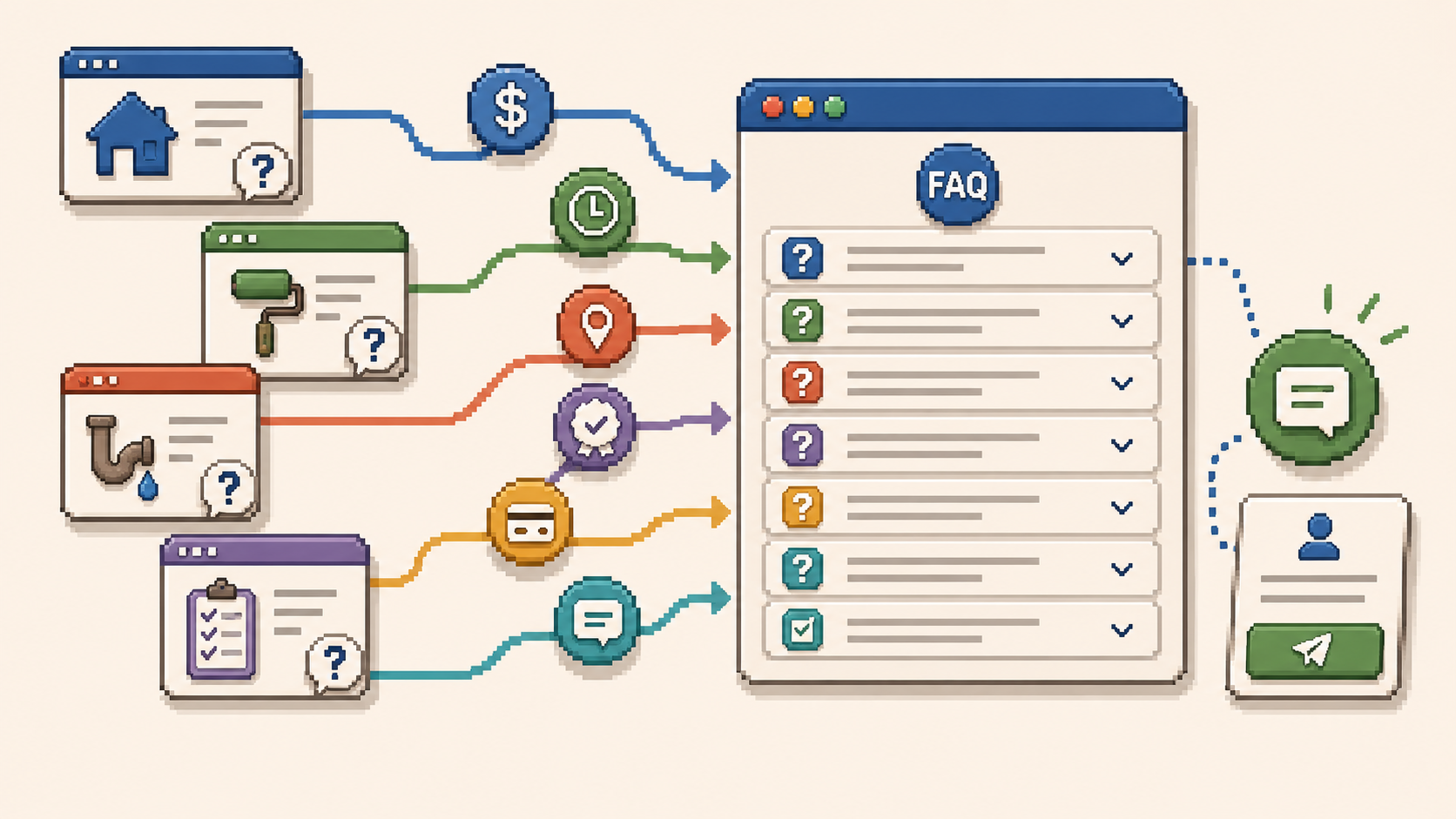
An FAQ page can help when sales conversations repeatedly return to the same questions.
Publishing clear answers can reduce hesitation before a visitor calls, submits a form, or books an appointment.
Useful FAQ topics may include:
- Pricing
- Timelines
- Service areas
- Qualifications
- Payment options
- What happens after contacting the business
- Who the service is for
- What is included
Frequently asked questions do not always need their own page.
In many cases, placing relevant questions directly on service pages creates a better experience because visitors see the answers at the moment they need them.
A separate FAQ page works best when the questions apply to the business as a whole.
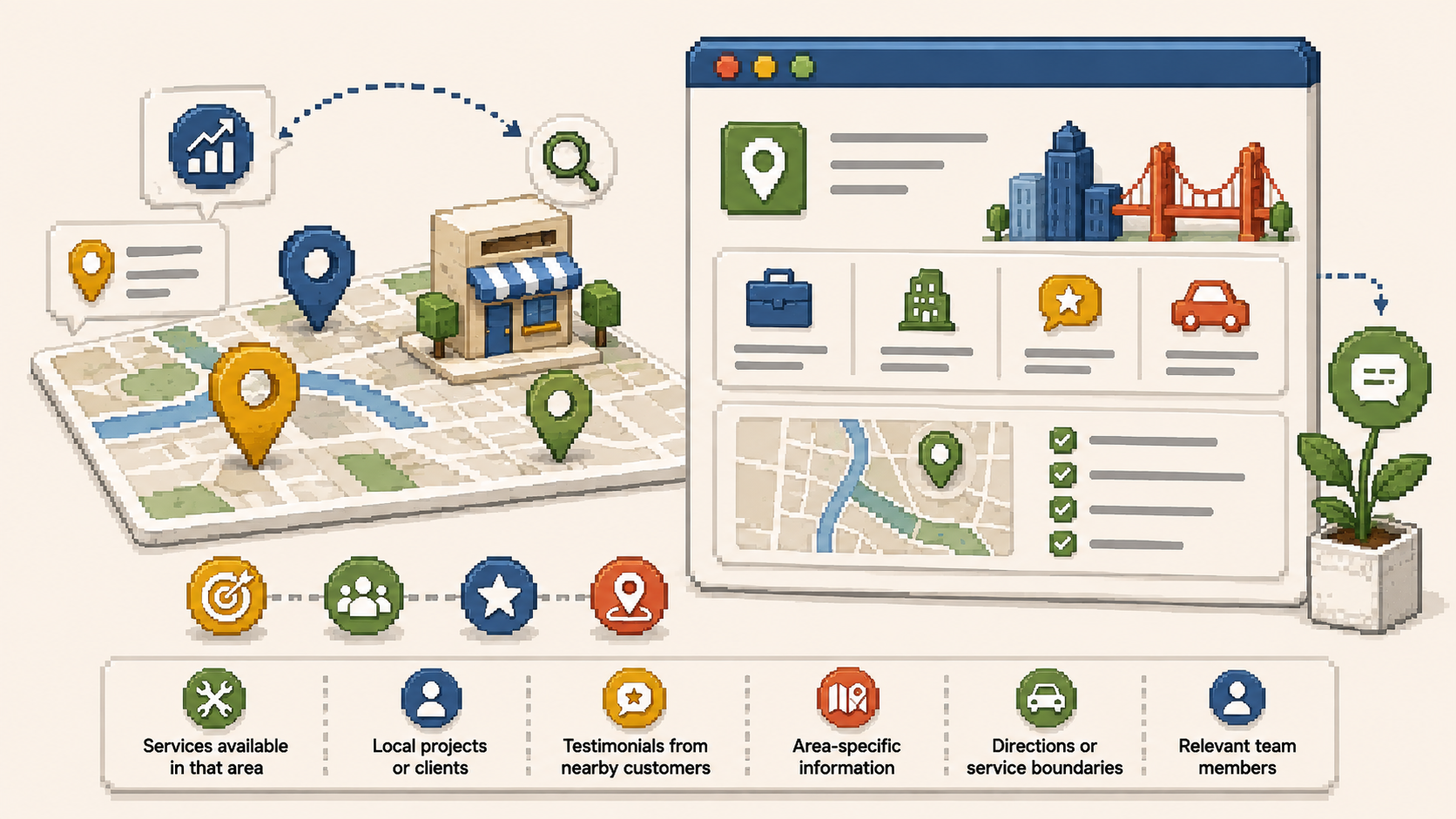
Do Location Pages Help Local SEO?
Location pages can help businesses serving multiple cities or regions, but only when each page provides genuinely useful local information.
Changing the city name across otherwise identical pages rarely creates a strong visitor experience.
A useful location page may include:
- Services available in that area
- Local projects or clients
- Testimonials from nearby customers
- Area-specific questions
- Travel or service boundaries
- Local regulations or conditions
- Directions or appointment details
- Relevant team members
For example, a contractor serving San Francisco and San Jose may need separate pages when the services, projects, regulations, or client needs differ meaningfully between those locations.
Location pages should help local visitors, not simply repeat the same sales copy with a different city name.
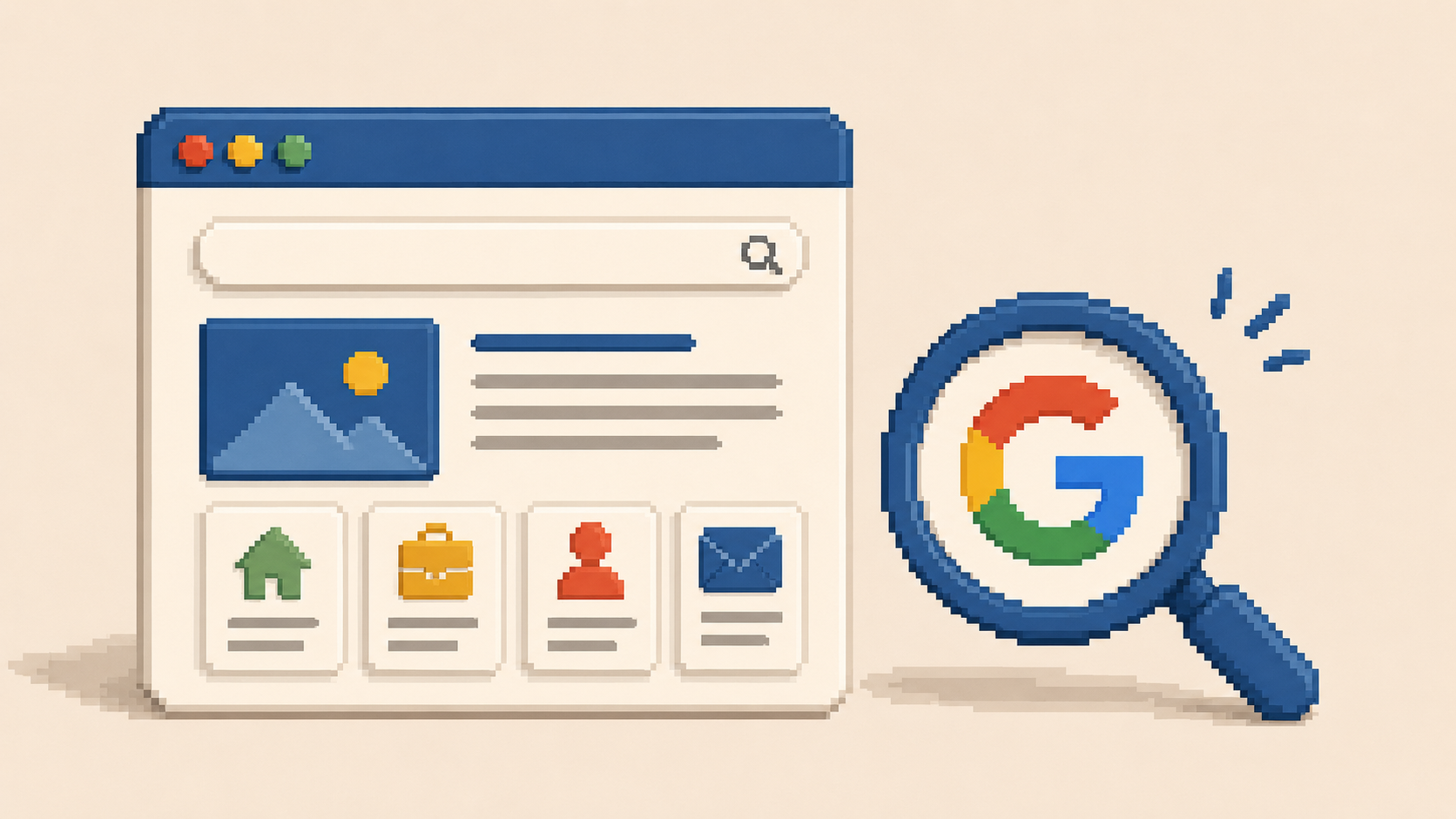
Can a Four-Page Website Perform Well in Google Search?
Yes.
Google does not specify a required page count for a small business website.
A focused four-page website can still perform well when its pages are:
- Relevant to the search
- Useful and well written
- Technically accessible
- Fast and mobile friendly
- Internally linked
- Supported by credible business information
- Backed by sufficient authority and trust
However, a small website naturally has fewer opportunities to target different services, questions, and locations.
That does not mean the business should add weak pages. It means the website may need additional useful content as the business’s search strategy grows.
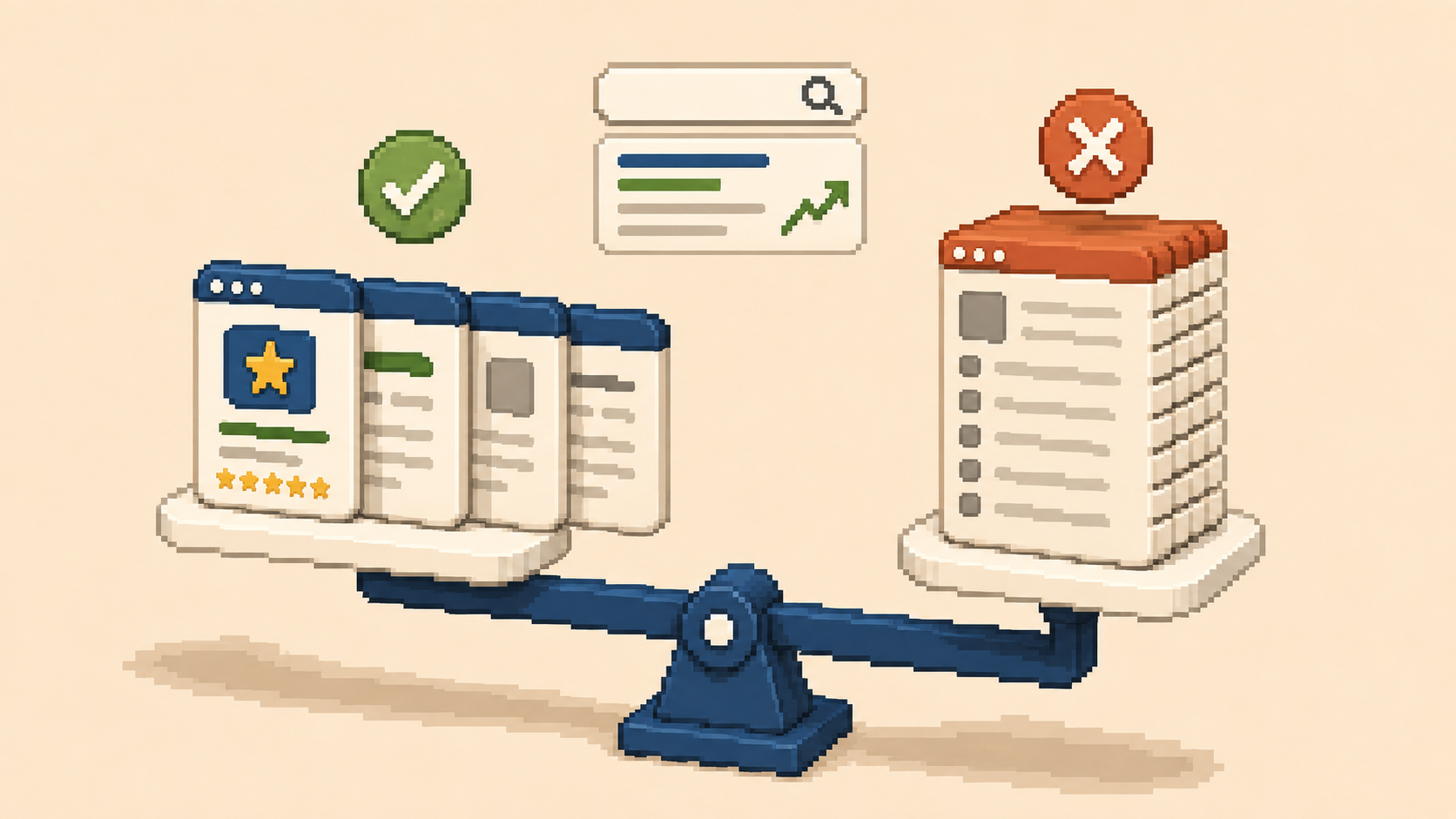
More Pages Do Not Automatically Mean Better SEO
Adding pages does not automatically improve search visibility.
Every additional page needs:
- A clear purpose
- Distinct content
- Relevant internal links
- Useful information
- Ongoing maintenance
- A reason to appear in search
A website with fourteen vague, repetitive pages may perform worse than a website with six strong pages.
The issue is rarely page count alone.
In many website reviews, the bigger problems are:
- Several pages repeating the same message
- Service pages that do not target a distinct need
- Thin location pages
- Weak calls to action
- Outdated information
- Visitors being sent through too many steps
- Important answers being buried
More content only helps when it adds clarity, relevance, proof, or usefulness.
The Mistake Worth Avoiding
Adding pages merely to appear more established usually backfires.
Every additional page creates another place where visitors can lose the thread. It is also another page that needs useful content, internal links, updates, and a clear role in the customer journey.
A focused website that is clear, credible, and current can outperform a much larger website that is vague, repetitive, or half-finished.
When deciding whether a new page deserves a place on your website, ask:
Does this page help a visitor understand, trust, or contact the business?
It may also deserve a place when it answers an important search question or supports a distinct service, audience, or location.
When a page exists only because “websites are supposed to have one,” it probably does not need to be there.
At The PixelSeed Studio, we use this framework when planning website revamps and new builds. We also consider page purpose, audience, clarity, and next steps during a PixelView™ assessment.
The goal is not to build the biggest website.
It is to build the clearest path from being found to being understood, trusted, and chosen.
Frequently Asked Questions