
If you've searched for website pricing recently, you already know the problem. The answers range from a few hundred dollars to tens of thousands, and nothing in between tells you what you actually need to spend or why.
That confusion is not an accident. Website pricing is genuinely variable because websites are genuinely different from each other. A site that displays basic information about a local business is a different product from a site designed to generate qualified leads, establish credibility, and convert visitors into paying clients.
Website pricing reflects the cost of the work and the thinking behind it. Two quotes at the same price are almost never the same product. Understanding why is how you stop comparing apples to oranges and start making an informed decision.
This guide explains what actually drives website costs, what you get at different price points, what people consistently forget to budget for, and how to decide what your business actually needs. No sales pitch. Just an honest framework.

The Short Answer First
How much does a website cost for a small business in 2026?
Based on current market data across multiple independent sources, here is where most small business websites land in 2026:
DIY platforms (Squarespace, Wix, etc.):
$200 to $600 per year, not including your time to build and maintain it.
Entry-level freelancer:
$1,500 to $4,000 for the build, depending on complexity and scope. Strategy and SEO are often minimal at this tier.
Professional freelancer or boutique studio:
$4,000 to $10,000 for a strategically designed, custom-built site with proper SEO structure, mobile optimization, and conversion thinking built in from the start.
Mid-size agency:
$10,000 to $25,000 for more complex scopes, multiple service lines, or industry-specific requirements.
Large agency:
$25,000 and above. Rarely appropriate for most small businesses.
Industry data from 2026 suggests professional design package prices have climbed 8 to 12% compared to 2025. Most service businesses serious about using their website to generate clients invest between $4,000 and $10,000 for the initial build, with $100 to $300 per month in ongoing costs.
The number that matters more than the build cost, though, is the return. A website that consistently generates one additional client per month, at your average client value, pays for itself within weeks or months. A website that generates nothing costs you the build price plus every client you didn't get.

What Actually Makes Websites Cost Different Amounts
What drives website pricing up or down?
Two websites quoted at the same price are almost never the same thing. Understanding what drives cost helps you evaluate quotes properly.
Strategy and discovery.
Professional web designers spend time understanding your business, your clients, your competitors, and your goals before touching the design. That work takes time and costs money. Designers who skip it give you faster quotes and faster builds, and sites that often don't perform because they were built around assumptions instead of understanding.
Custom design versus templates.
A template adapted with your colors and logo takes hours. A site designed from scratch for your specific audience and goals takes weeks. Both can look good. Only one is built specifically for your business.
Number of pages and complexity.
A five-page service website costs less than a fifteen-page site with industry-specific landing pages, a blog, a case studies section, and a resource library. Scope drives price.
Content creation.
Many quotes cover design and development but not the words on the page. If you're providing your own copy, photography, and content, the build cost drops. If the designer or their team is writing the content and sourcing imagery, that work has a cost attached to it.
SEO foundation.
A properly built website has SEO structure baked in from the beginning: clean heading hierarchy, properly labeled pages, fast load times, correct metadata, and a sitemap. Some low-cost builds skip this entirely, meaning you'll pay to fix it later or simply never rank in search.
Timeline compression.
A website built in three weeks costs more than one built in eight weeks. Compressing a timeline forces rushed decisions, fewer revision cycles, and higher pressure on everyone involved.

The Hidden Costs Most People Don't Plan For
What ongoing costs come with a website?
The build price is the beginning, not the total. Most business owners budget for the initial build and are surprised by what comes after.
Hosting:
$5 to $150 per month depending on quality. Shared hosting is cheap and often slow. Managed hosting is faster, more secure, and more reliable. For a website you're counting on to generate business, reliable hosting is not a place to save money.
Domain:
$10 to $20 per year. An annual renewal, not a one-time cost.
Maintenance and updates:
Websites require ongoing updates to remain secure and functional. Either your designer offers a maintenance retainer, or you manage this yourself. Ignoring it creates security vulnerabilities and performance problems over time.
Content updates:
Any time your services change, you add a team member, or you want to refresh a page, someone has to make those changes. If you can't do it yourself through a content management system, you'll pay your designer for the time.
The rebuild nobody plans for.
Businesses that invest in professional website design see an average ROI of 200% within the first year. Businesses that go the cheap route spend an average of three times their initial investment fixing problems and eventually rebuilding. A common pattern runs like this: a $1,500 budget site at launch, followed by $800 in piecemeal fixes over eighteen months, followed by a full rebuild at $7,000 once it's clear the original site can't do what the business needs. Total spent ends up higher than a proper build would have cost, with the added cost of eighteen months of lost leads during that time.
Budget calculator: estimate your realistic total cost.
Take your quoted build cost and add these estimates: domain $15/year, hosting $50/month, maintenance retainer $100/month, content updates $50/month average. Multiply monthly costs by 12. Add to the build cost. That is your true first-year cost of ownership. Compare quotes on this number, not just the build price.
What You Actually Get at Each Price Point
Is a cheap website worth it for my business?
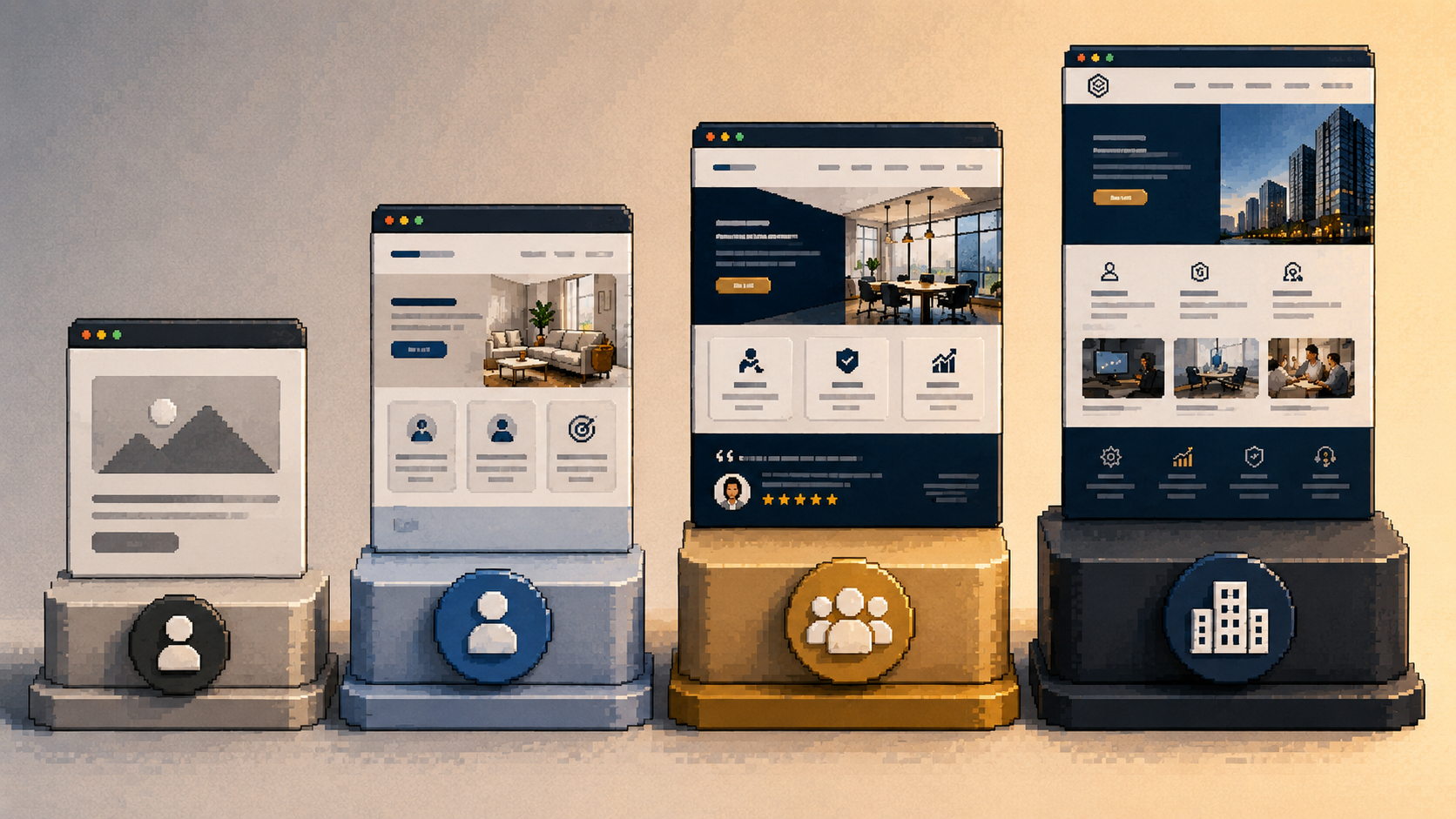
Under $500 (DIY):
You build it yourself. Appropriate for a business just starting out, testing a concept, or with no budget. Rarely appropriate for a business that depends on its website to generate clients consistently.
$1,500 to $4,000 (entry-level freelance):
A professionally designed site, usually built from a customized template. Quality varies significantly. Strategy and SEO are often minimal. Works well for businesses with simple needs.
$4,000 to $10,000 (professional design):
This is where strategy, custom design, proper SEO structure, conversion thinking, and real content development come together. The designer spends time understanding your business before building anything. The result is a site built for your clients, not just a site that looks like a business website. This is the range most service businesses should be thinking in when their website is a meaningful part of how they get clients.
$10,000 and up:
Complex functionality, multiple service lines, industry-specific landing pages, or advanced integrations. Not necessary for most small businesses but appropriate for specific complex needs.
The Question Worth Asking Before Any Other
How do I decide how much to spend on a website?
Stop thinking about what a website costs and start thinking about what it should return.
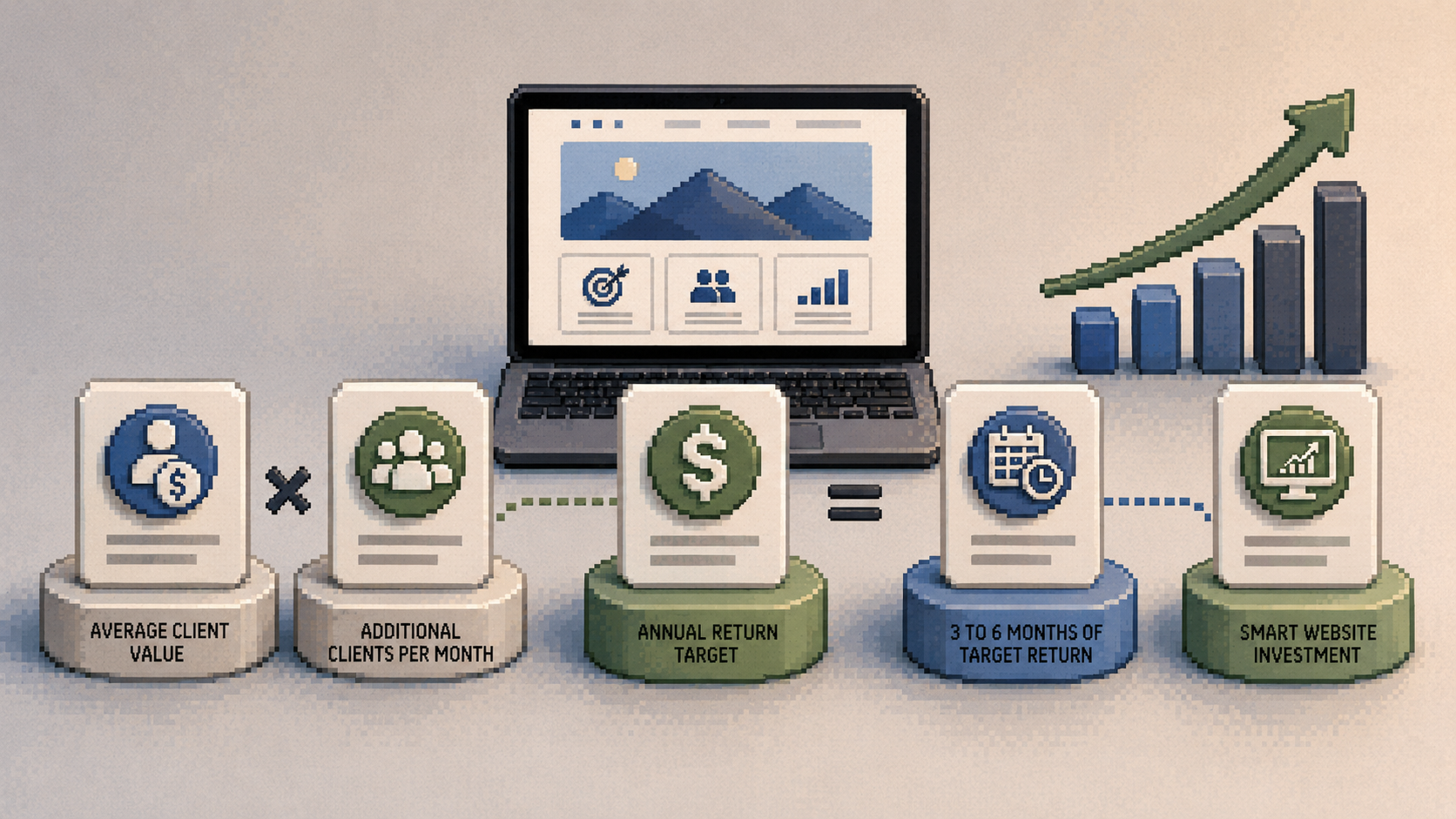
If your average client is worth $3,000 to your business, and a properly built website generates one additional client per month, that site generates $36,000 in revenue in its first year. Against a build cost of $6,000 to $8,000, that is a reasonable investment with a measurable return.
If your average client is worth $300 and you close one or two a month from web inquiries, the math is different. Your website still needs to work, but the scale of investment should match the scale of return.
Do this calculation before your first designer meeting:
- What is your average client value in revenue?
- How many additional clients per month would make this website worthwhile?
- Multiply those two numbers. That is the annual return target.
- A reasonable website investment is typically three to six months of that target return.
Let that number guide your budget conversation rather than going in blind and reacting to whatever quote lands in your inbox.
What to Confirm Before You Pay Anyone Anything
What should a web design contract include?
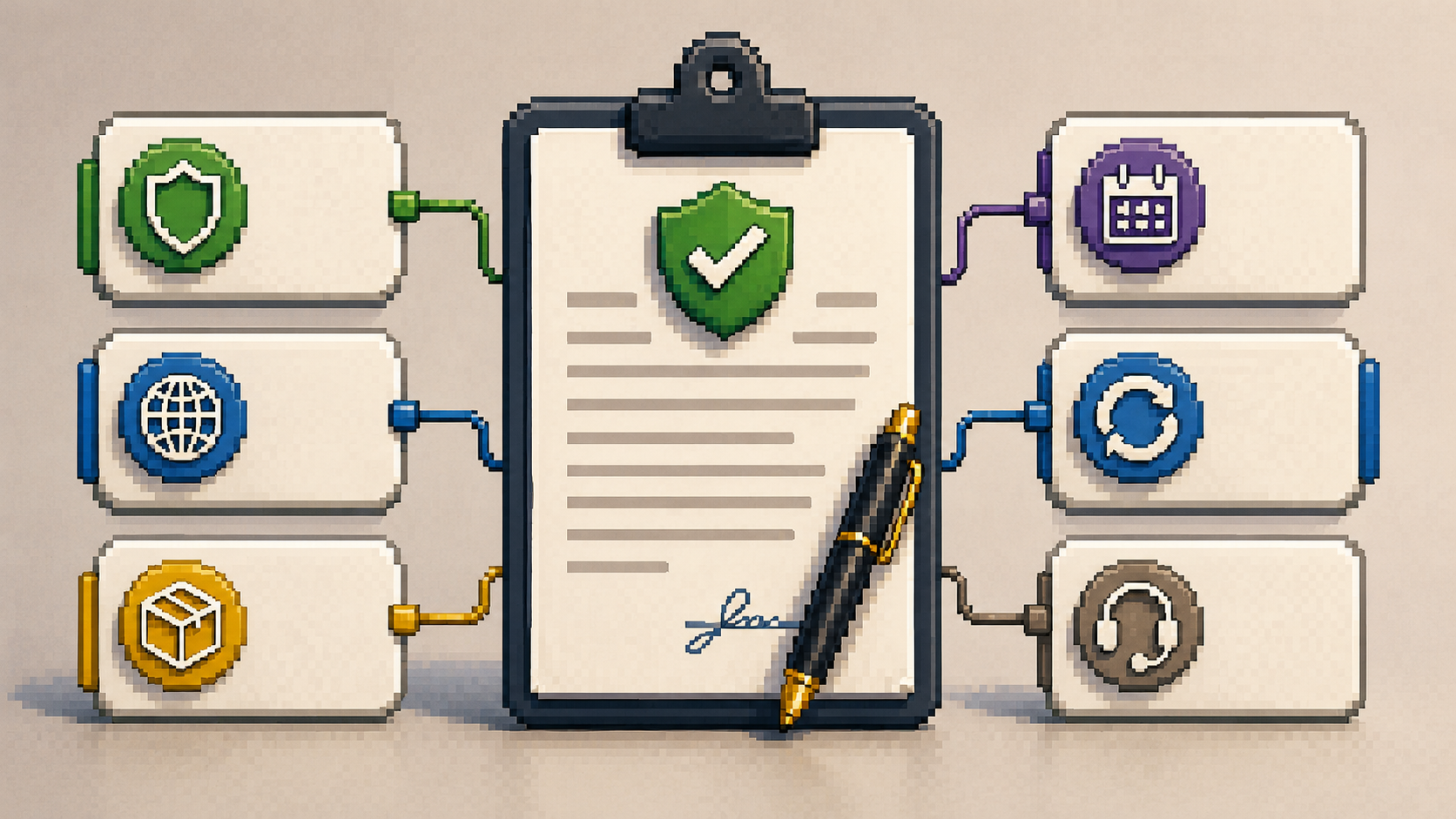
Before you pay a deposit to any web designer or agency, get written confirmation of these things:
Ownership.
You own the domain, the website files, and all content upon final payment. The site is registered in your name, not the agency's.
Portability.
You can take your site to a different host or work with a different designer in the future without losing your content or design.
Scope.
What is included in the price, what is not, and what triggers additional costs.
Timeline.
A real schedule with milestones, not just a promised launch date.
Revision process.
How many rounds are included and what happens if you need more.
Post-launch support.
What's covered after the site goes live, for how long, and at what cost.
A designer who is confident in their work and transparent in their process will have clear answers to all of these. Vague answers, or discomfort with the questions, tell you something important before you commit.

Frequently Asked Questions