Choosing a web designer is one of the most important decisions a business owner makes about their online presence. It is also one of the easiest to get wrong.
The problem is not a shortage of options. The problem is that most options look the same from the outside. Every designer has a portfolio, a professional-looking website, and a list of services. Some of them are exceptional. Some will cost you far more than their fee, in time, frustration, and a site that doesn't do what you needed it to do.
The right web designer is not the one with the most impressive portfolio or the lowest price. It is the one who understands your business before touching the design, works through a clear and efficient process, and builds something that performs for your clients, not just something that looks good in a screenshot.
This guide helps you tell the difference before you sign anything.

Start Here: Know What You Actually Need
What should I know before hiring a web designer?
Before you talk to a single designer, answer one question honestly: what do you want this website to do for your business?
Not how you want it to look. What you want it to do.
Do you want it to generate inquiries from new clients? Explain your services clearly to people who've already heard of you? Sell products directly? Build enough credibility that people trust you before they even call?
The answer to that question determines everything. It determines what kind of designer you need, what questions to ask them, and whether a quote is actually appropriate for your situation. A designer who doesn't ask this question in your first conversation is already telling you something important about how they work.
Do this first:
Write down in one sentence what success looks like for your website twelve months from now. Bring that sentence to every designer conversation. The ones who respond to it with more questions are the ones worth continuing to talk to.

The Three Types of Designers and Who They Are For
What is the difference between a freelancer and a web design agency?
When you start looking for a web designer, you will encounter three main types of providers. They are not interchangeable.
Freelancers are individuals working independently. They tend to be more affordable and can be genuinely excellent. The risk is variability. Some freelancers are strategic partners who understand business deeply. Others are technically capable but will build exactly what you ask for, even if what you asked for isn't what you need. The difference is hard to see from the outside until you know what to look for.
Boutique studios are small teams, typically two to eight people, combining design, strategy, and development under one roof. For most service businesses, this is the sweet spot. You get enough expertise and resources to do the work properly without being handed off to junior staff or lost in a queue of larger clients.
Large agencies have full teams, impressive offices, and correspondingly large fees. They are well-suited to enterprise clients with complex needs and sizeable budgets. For most small and medium businesses, the reality is that you often pay for overhead you don't need, get passed between account managers, and end up working with a junior designer while the senior people you met in the pitch have moved on to the next new client.
None of these is inherently better. The right choice depends on your budget, your goals, and how much strategic input your project actually needs.
How to Read a Portfolio Without Getting Fooled
How do I evaluate a web designer's portfolio?
Most business owners look at portfolios the way they look at art. They decide whether they like how it looks. That is the wrong lens entirely.
The right question is not "does this site looks good?" It is "can I tell what this website was trying to do, and does it seem like it is doing it?"
When you review a web design portfolio, look for these things:
Variety in client types.
If every site looks nearly identical with different logos, the designer is working from a template and calling it custom. A strong portfolio shows sites that feel distinctly designed for each specific business.
Evidence of strategic thinking.
Visit the live sites, not just the screenshots. Ask yourself: do I immediately understand what this business does? Is there a clear path to contacting them? Is the messaging specific and client-focused, or is it vague and generic?
Relevance to your audience.
A designer who has worked with businesses similar to yours understands the conversion logic, the trust signals, and the client journey that applies to your situation.
The designer's own website.
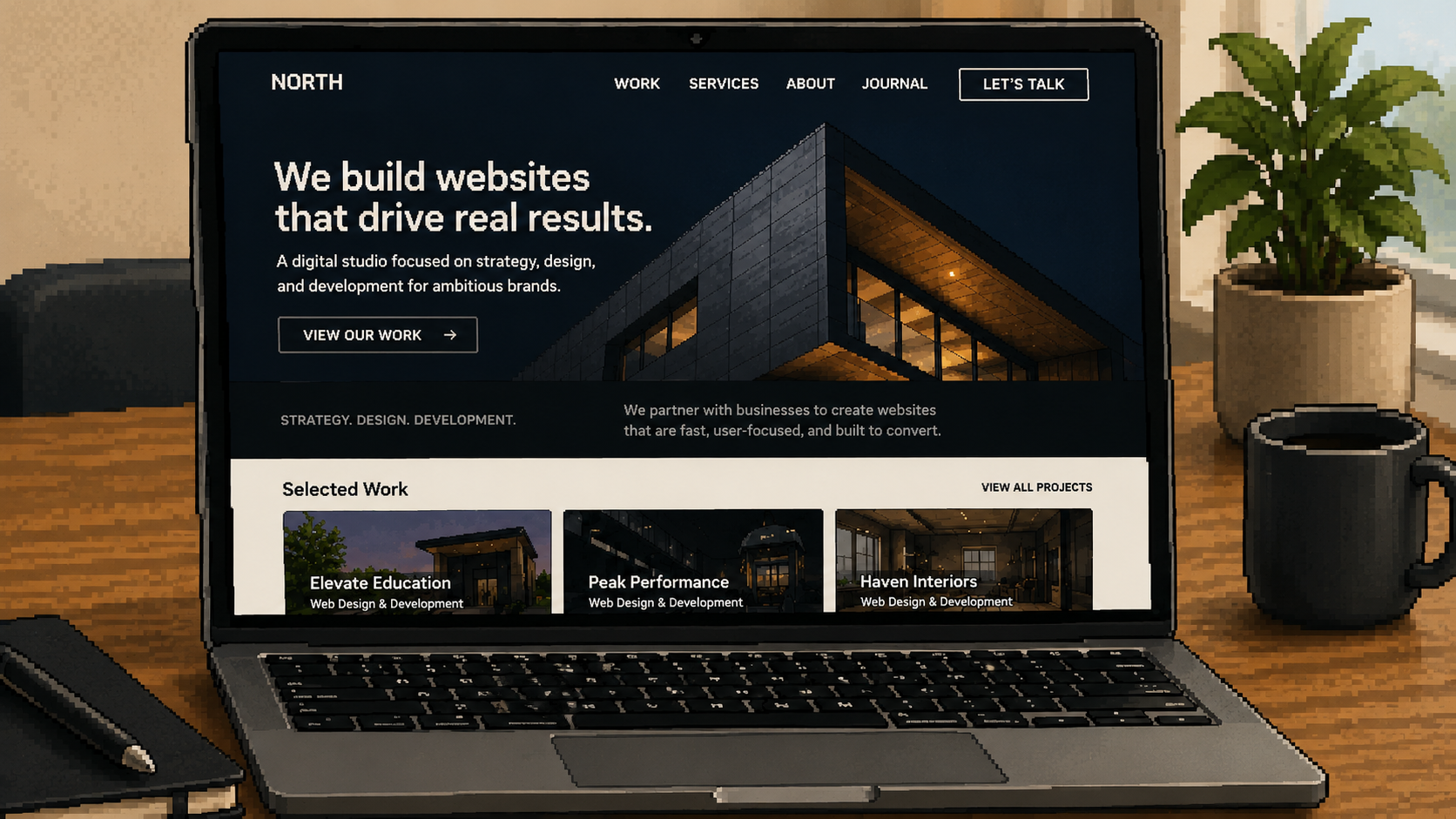
This is often the most revealing thing you can look at. If a studio can't build a clear, fast, credible website for themselves, that is a direct demonstration of the quality you can expect.
The live speed test.
Go to pagespeed.web.dev and run any portfolio site through the free speed test. A professionally built website should score above 70 on mobile. If portfolio sites consistently score below 50, the designer is not prioritizing performance. Neither will they on yours.
Portfolio self-audit exercise:
Pick three sites from any designer's portfolio. Visit each one on your phone. Ask: does it load quickly? Is the headline immediately clear? Is there a visible call to action? Can I find the contact page in under ten seconds? Score each site yes or no on all four. A designer who scores twelve out of twelve across three sites knows what they are doing.
The Questions That Reveal Everything
What questions should I ask a web designer before hiring them?
The first conversation with a web designer tells you most of what you need to know. Not from the presentation they give you, but from the questions they ask you, and how clearly they answer yours.
A designer who is genuinely good at their job will spend the first conversation asking about your business, your clients, and your goals. They want to understand the problem before they start talking about the solution. If someone is already describing what your site will look like before they understand what it needs to do, that is a meaningful warning sign.
Beyond that, here are the questions worth asking directly:
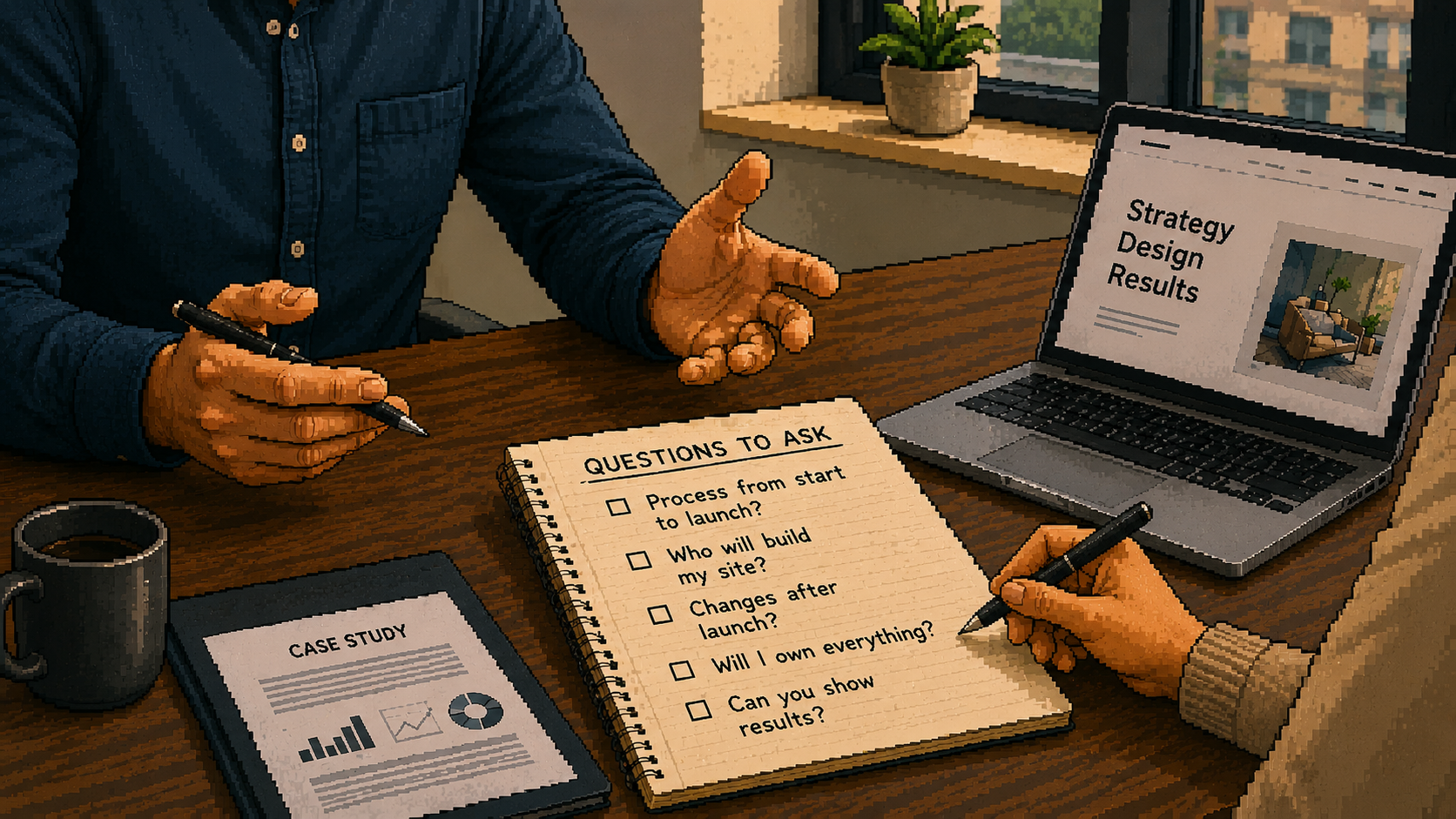
"Can you walk me through your process from first meeting to launch, step by step?"
A professional with real experience can describe this in specific terms. A vague answer about collaboration and creativity without any specific stages means no real process exists.
"Who will actually be building my site?"
At larger agencies, the person you meet in the pitch is often not the person doing the work. Ask directly.
"What happens if I want to make changes after launch?"
Understanding what support looks like after the project ends tells you whether you are entering a relationship or a transaction.
"Will I own the site, the domain, and all the files when we're done?"
The answer should be an unequivocal yes. Full ownership of your website, your domain, and your content is non-negotiable.
"Can you show me a case study with results, not just a finished design?"
A designer who can show you that a client saw more inquiries, better search visibility, or improved engagement after working with them understands that websites are business tools, not visual projects.

Red Flags That Are Easy to Miss
What are the warning signs when hiring a web designer?
A quote that seems unusually low. A professional designer has to make a living. If someone quotes you a complete website for a price that makes you wonder how they stay in business, something is being left out. Budget pricing almost always means a template adapted for your logo, not a site designed for your clients and your goals.
They talk about design before understanding your business.
The sequence matters. A good process starts with discovery, not visuals. If a designer is sketching layouts before asking a single question about your clients, they are building the wrong thing efficiently.
No written proposal before work begins.
A professional relationship needs clear terms in writing before anyone does any work. Without this, you have no protection if the project goes sideways.
Platform lock-in.
Some providers build your site on a proprietary system that makes it impossible to leave. Before you agree to anything, confirm that your domain is registered in your name, your content is exportable, and the site can be moved to a different host if needed.
They can't give you a real timeline.
Not an estimate. An actual breakdown of what happens when, when they need content from you, and when the site launches. A designer without a real timeline doesn't have a real process.

What Good Actually Looks Like
How do I know if a web designer is the right fit?
Beyond skills and process, there is a fit question. The designer who is best on paper is not always the best choice for your specific situation.
A good working relationship requires clear communication, aligned expectations, and mutual respect. The best designers will push back when a decision is likely to hurt the end result. They will tell you when your content needs work, when your expectations about timeline are unrealistic, or when a feature you want will create a worse experience for your clients.
That kind of honesty is a feature, not friction.
The clearest signal that a designer is the right fit is that the first conversation feels more like a strategy session than a sales pitch. They are trying to figure out whether they can actually help you. That is the kind of professionalism worth paying for.
Your Designer Selection Checklist
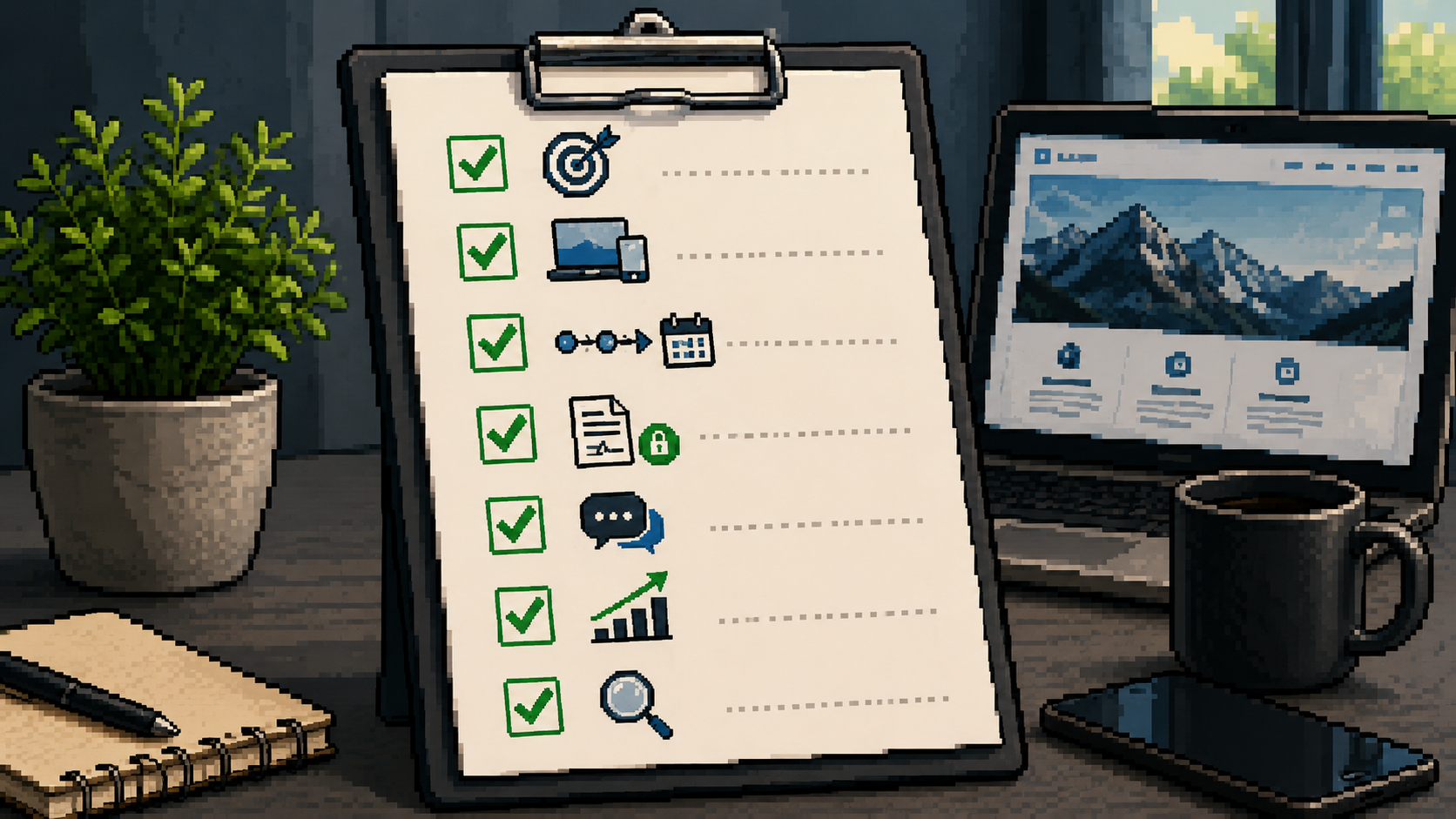
Before signing with any designer, run through this list.
Every answer should be yes.
- Did they ask about my business goals before talking about design?
- Can they show me live, working portfolio sites I can visit on my phone?
- Can they describe their process in specific steps with a real timeline?
- Do ownership terms confirm I get everything outright on final payment?
- Did they respond to my initial enquiry promptly and clearly?
- Can they point to at least one website project where they can speak to a business outcome, not just a finished design?
If two or more answers are no, keep looking.

Frequently Asked Questions