Every time someone asks ChatGPT, Perplexity, or Google's AI Overviews a question and gets a direct answer with a cited source, that source earned its placement through AEO.
Answer engine optimization is structuring content so AI platforms like ChatGPT, Perplexity, and Google AI Overview can extract, trust, and cite it as a direct answer.
AEO is the practice that determines whether your content becomes the answer, or whether a competitor's content does. Not the link someone clicks to find the answer. The answer itself, extracted from your page and presented directly to the buyer before they ever visit your website.
This article is the complete plain-language guide to what AEO is, how it works at the content level, how it differs from traditional SEO, and exactly what you need to change on your existing pages to make them AEO-compliant.

The Core Difference Between SEO and AEO
What is the difference between AEO and SEO?
SEO optimizes content to rank on search engine results pages and drive clicks. AEO optimizes content to be cited in AI-generated answers. SEO works at the page level (titles, keywords, backlinks), while AEO works at the fact level (clear definitions, citable statistics, structured sections). Both are essential for a complete search strategy.
In traditional SEO, the goal is to appear as a link in a list of results. The user sees your link, clicks it, arrives at your page, and finds the answer. Success is measured in clicks and rankings.
In AEO, the goal is different. The AI reads your page, extracts the relevant answer, and presents it directly to the user in its response. Your content becomes the answer, with a citation link back to your page. Success is measured in citations and mentions inside AI-generated responses, not just in clicks.
If traditional SEO is about ranking in search results, AEO is about becoming the answer itself.
This distinction matters for strategy. SEO optimization asks: does this page rank well? AEO optimization asks: can an AI extract a complete, direct answer from a specific section of this page without needing to read the whole thing?

How Answer Engines Actually Extract Content
How do AI tools decide what to extract from a page?
The goal of AEO is extractability: making it easy for AI to locate, understand, and attribute your content. This requires front-loading direct answers, using atomic paragraph structures, implementing schema markup, and maintaining fresh citations that signal credibility.
When an AI tool receives a query and retrieves your page as a candidate source, it evaluates the page in a specific way. It looks for the section most relevant to the query. It then looks for whether that section contains a complete, direct answer that can be extracted without requiring the surrounding text to make sense. If the answer is complete and extractable, it becomes a citation candidate. If it requires inference or combination with other sections, it usually gets skipped.
Provide the answer upfront: place a direct, complete answer of 40 to 60 words at the beginning of the relevant section. Structure content with headings and lists: break information into digestible chunks with clear H2s and H3s.
This 40 to 60 word guideline is worth internalizing. AI tools extract at the sentence and short-paragraph level. An answer that runs to three paragraphs before reaching its conclusion is not extractable. An answer that leads with the complete conclusion in the first one or two sentences and supports it in the following sentences is extractable.

The AEO Content Formula
What is the exact content structure that earns AI citations?
AEO-compliant content follows a consistent structural pattern at every level of the page. The pattern applies to every section, every FAQ answer, and every definition on the page.
The heading is phrased as a question. Not a topic label like "Our Services" or "About SEO." A specific question that a real buyer would type or ask: "What is AEO and how does it work?" or "How long does it take to build AI visibility?"
The first sentence is the complete answer. Complete means it makes full sense without reading anything else on the page. A buyer could read just that sentence and walk away with a usable answer to the question in the heading.
The following sentences provide supporting detail. Evidence, statistics, examples, nuance. These add depth for human readers and provide the additional context that helps AI tools evaluate the authority of the answer.
Specific statistics are cited inline. Add statistics with source citations every 150 to 200 words. Specific, cited data signals credibility to AI systems evaluating whether to use your content as a source.
This pattern should be applied consistently across every major section of your service pages and homepage, and with particular precision in FAQ sections.

The FAQ Section: AEO's Most Powerful Tool
Why are FAQ sections so important for AEO?
FAQ sections are the highest-leverage AEO element available to most businesses for a simple reason: they are explicitly structured as question-and-answer pairs, which is exactly the format AI tools are looking for when generating responses to user queries.
FAQPage schema has the highest citation potential of any schema type. AI systems pull FAQ content directly to answer user queries. If you have one schema to implement today, make it this one.
A well-structured FAQ section with proper FAQ schema markup gives AI tools a set of clearly labeled questions and answers that are pre-formatted for extraction. The AI does not have to guess where the question is and where the answer is. It reads the schema, identifies the pairs, evaluates the quality of each answer, and uses the most relevant ones as citations.
The questions in your FAQ section should come directly from the real questions your ideal clients ask. Not the questions you wish they asked. Not the questions that make your business look best. The questions they actually type into Google, ChatGPT, and Perplexity when they are in the research phase of considering a business like yours.
Content that answers specific questions performs best: definitions, comparisons, how-to guides, decision-stage FAQs, and expert explainers. Pages that lead with a direct answer and support it with evidence consistently outperform pages that bury the response.
AEO Audit: Check Your Own Pages Right Now
How do I know if my existing content is AEO-compliant?
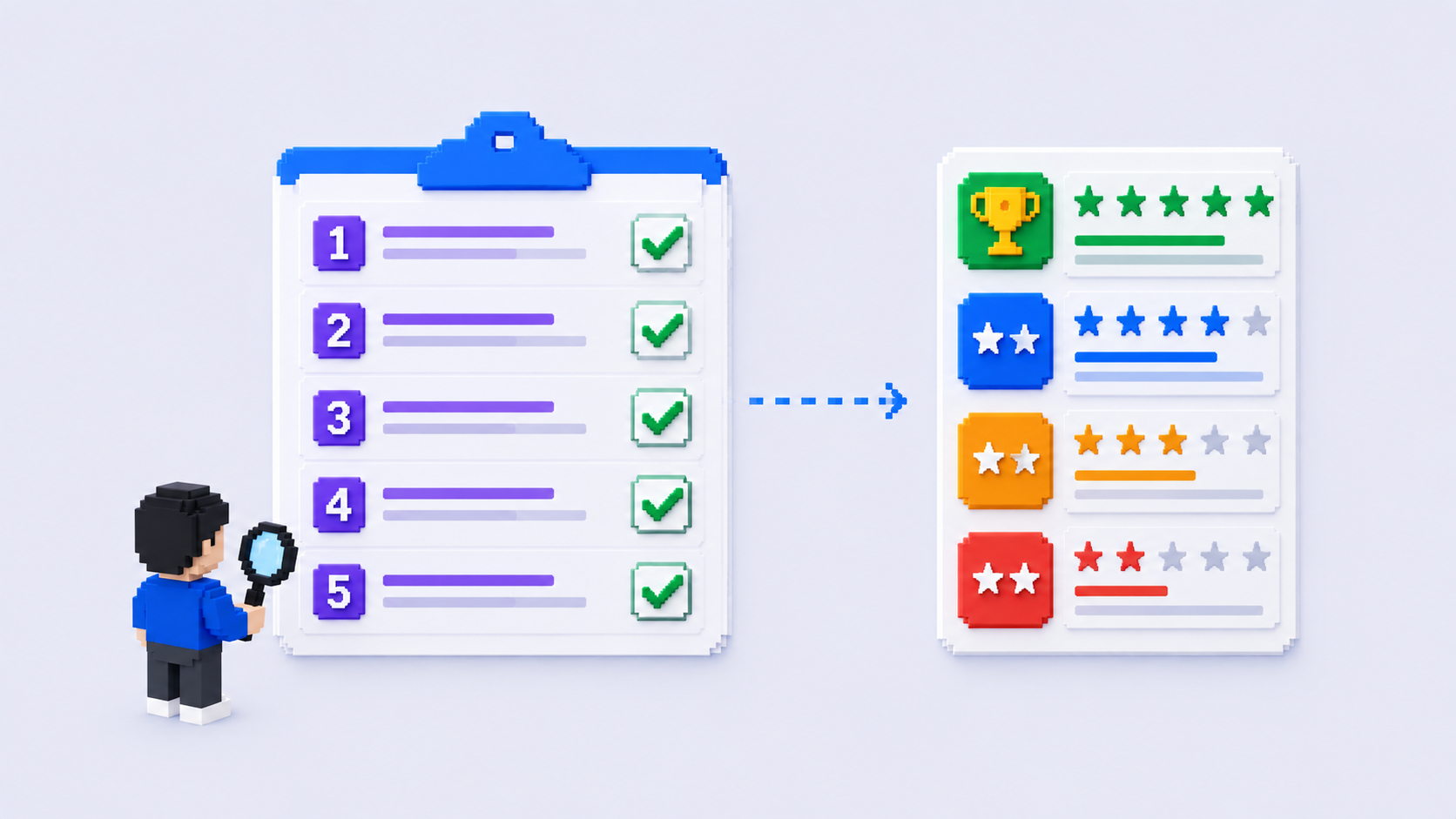
Run this five-point check on your homepage and your primary service pages. Score one point for each yes.
1. Does every major section heading on the page ask a specific question rather than label a topic?
2. Does the first sentence of every major section answer that question completely, in a way that makes full sense without reading the rest of the section?
3. Do you have a FAQ section on this page with at least five questions that reflect what your clients actually search for?
4. Is each FAQ answer complete in the first sentence?
5. Does the page contain at least two or three specific statistics or verifiable data points cited inline?
Score 5: Your page is AEO-compliant. Focus on building authority and expanding your FAQ coverage.
Score 3 to 4: One or two targeted rewrites will significantly improve your citation eligibility.
Score 2 or below: Your page is structured for human readers but not for AI extraction. A systematic rewrite using the formula above will produce measurable improvement in AI citations within weeks of implementation.
The Difference Between AEO and GEO
Is AEO the same as GEO?
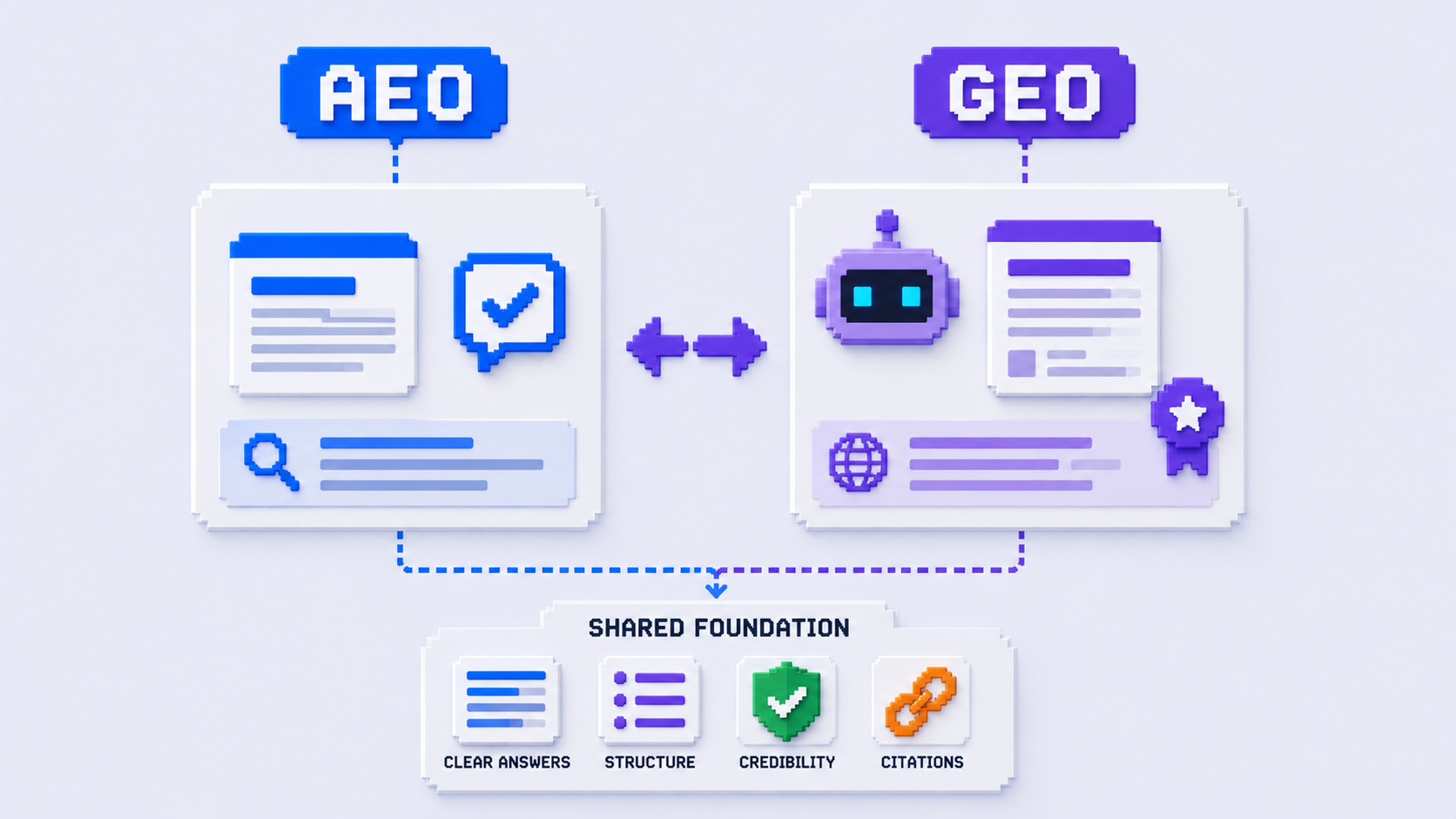
Related but not identical. Generative engine optimization focuses on getting cited by large language models like ChatGPT and Claude in their generated responses, while answer engine optimization optimizes for AI-powered search features like Google's AI Overviews, featured snippets, and direct answer boxes. In practice, AEO is a subset of GEO, and a strong AEO foundation makes GEO implementation significantly easier.
The practical distinction: AEO is primarily about content structure, making your answers extractable. GEO is broader, encompassing content structure but also content authority, the depth and specificity that earns citation as a named source rather than just an anonymous extraction. AEO gets you into answers. GEO gets your name attached to those answers.
Both work from the same structural foundation. If your content passes the AEO audit above, it is already better positioned for GEO than most content on the web.

How to Measure Whether AEO Is Working
How do I track AEO performance?
AEO success is measured by how often AI engines cite or mention a brand, not by rankings alone. Teams track citation frequency, share of AI voice against competitors, and referral traffic from AI platforms.
The manual tracking method: run ten to fifteen relevant queries in ChatGPT, Perplexity, and Google AI Overviews monthly. Record whether your content is cited in any response. Track this number over time. Consistent month-over-month improvement in citation frequency indicates AEO is working.
The analytics method: in GA4, monitor referral traffic from chatgpt.com, perplexity.ai, gemini.google.com, and claude.ai. Growing referral traffic from these sources is a direct indicator that AI citations are driving visitors to your website.
AEO results are faster than most people expect. Content structured with direct answers and proper FAQ schema tends to earn its first citations within days of going live, not months. The cumulative effect, where multiple pages are all optimized, typically becomes measurable in your citation tracking within four to six weeks.

Frequently Asked Questions