
This is one of the most frustrating situations in business. You knew your website was the problem. You invested in fixing it. You launched something new and better. And then you waited. And waited. And the inquiries still did not come.
It happens more often than most agencies will tell you. In a twelve-month period reviewing redesign briefs and pre-launch and post-launch performance data from sixty-plus clients, fewer than 25% of completed redesigns produced a measurable improvement in conversion rate. Most produced no change. A significant minority produced a decrease.
If you have redesigned your website and it is still not working, the problem is almost certainly not the redesign quality. The redesign solved the wrong problem. This article explains what the right problem is, how to identify it, and what to actually fix.

The Redesign Solved the Visual Problem
Why does a website redesign often fail to improve conversions?
The problem is not the design quality. It is that the redesign addressed the wrong variables. Conversion rate is determined by clarity, trust, and friction reduction. Most redesigns optimize for visual appeal and brand consistency. The two objectives are not the same.
A design agency is typically briefed on visual outcomes: make it look more professional, modernize the layout, improve the brand feel. These are legitimate objectives and the results usually achieve them. The site looks better. The visual hierarchy is cleaner. The photography is more professional.
But conversion is not a visual outcome. It is a strategic one. A well-designed, well-architected, mobile-responsive website is absolutely essential. It is necessary for conversion rate optimization, but it is not sufficient on its own. This is a mistake people make again and again: assuming that a redesign will make a difference to commercial business outcomes.
The visual improvements created a better first impression. But the underlying problems that were preventing conversions, the vague messaging, the generic testimonials, the buried call to action, the absence of AI visibility, were carried forward into the new design unchanged.

The Layer Most Redesigns Never Touch
What conversion problems survive a website redesign?
The problems that survive almost every redesign are the ones that live in the content and strategy layer, not the design layer.
Messaging that is still about the business, not the client.
A redesigned homepage with new typography and beautiful imagery still fails if the headline describes what the business does rather than what the client gets. The visual presentation changed. The message did not.
Trust signals that are still generic.
A redesigned testimonials section with a polished layout still fails to build trust if the testimonials say "great to work with" rather than "we went from two inquiries a month to eleven within three months of the launch." The design improved. The proof did not.
Calls to action that are still weak.
A redesigned button with a more prominent color still fails to convert if it says "contact us" instead of "book a free 30-minute strategy call." The visual element improved. The instruction did not.
A conversion path that is still unclear.
A redesigned page structure with better visual hierarchy still fails if visitors cannot identify the logical sequence from arriving to reaching out. The sections look better. The journey was never designed.
Usually the issue is conversion, not traffic. Common causes are unclear messaging, no strong offer, missing trust signals like reviews and proof, and a confusing path to contact you.

The Missing Layer: AI Visibility
Why does a redesigned website still not show up in AI search?
There is a fifth problem that most redesigns do not address and that most agencies are not yet building into their process: AI visibility.
A failing website does not just sit idle. It quietly costs you traffic, leads, and revenue every single day.
A growing percentage of potential clients are not finding businesses through Google's traditional search results. They are asking ChatGPT, Perplexity, and Gemini. They are getting one or two direct recommendations and making their preliminary decision based on what the AI told them, before they ever visit a website.
A redesigned website that was not built with AI visibility in mind is still invisible to this buyer category. No AI crawler permissions in robots.txt. No schema markup. No answer-structured content. No entity consistency across platforms. The visual redesign produced a better-looking site that AI tools still cannot read, cite, or recommend.
This is the layer that most redesigns miss completely because most design agencies do not know it exists, and most business owners do not know to ask for it.
At The PixelSeed Studio, every website build includes the complete AI visibility foundation from day one: AI crawlers allowed, schema markup implemented, content structured for AI extraction, Google Business Profile optimized, and NAP consistency verified. This is not an add-on. It is a core requirement of a professionally built website in 2026.
How to Diagnose What the Redesign Missed
How do I find out why my redesigned website is still not converting?
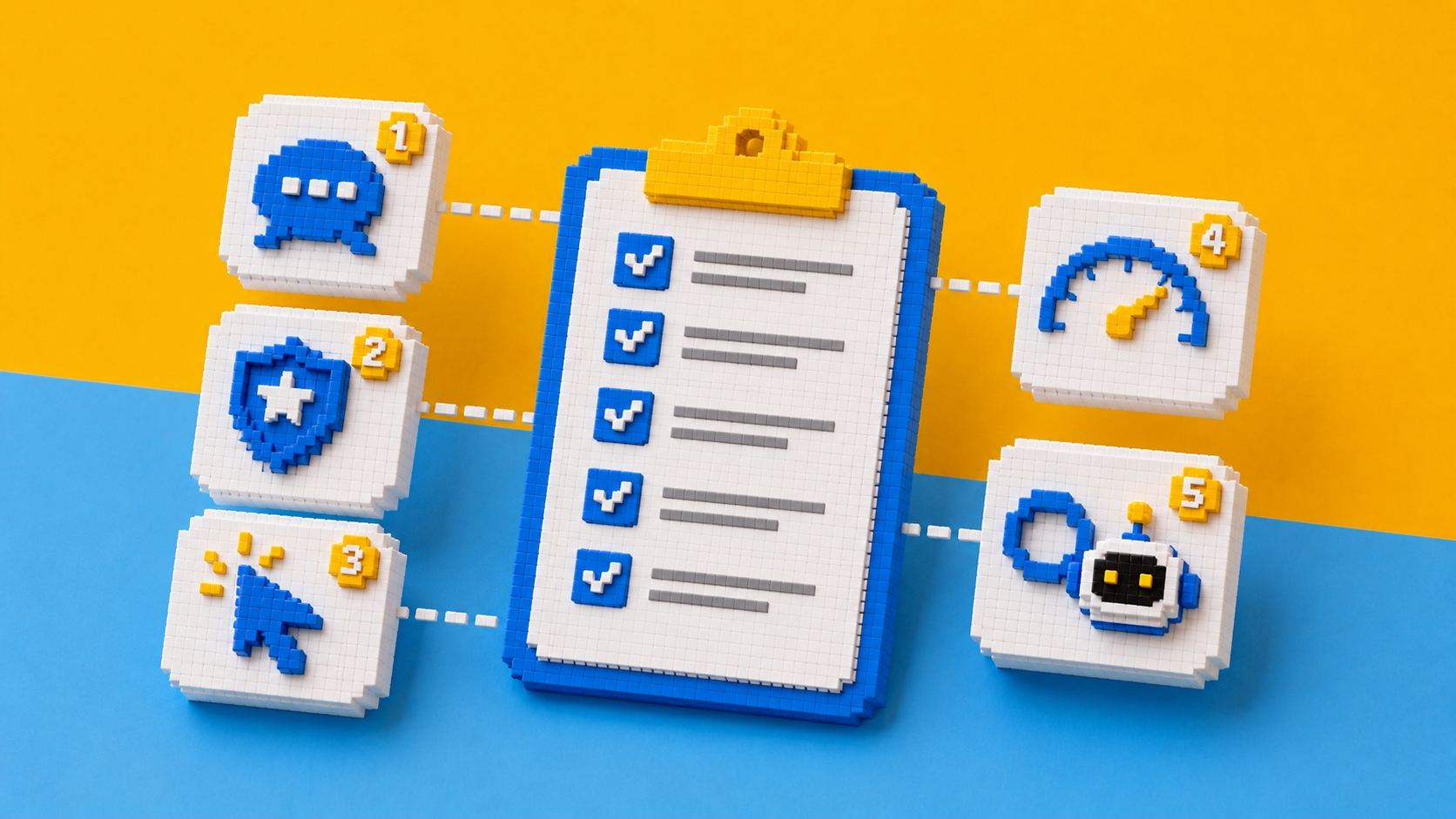
Work through these five checks on your current site. They will tell you which specific layer the redesign failed to address.
Check 1: The messaging test.
Read your homepage headline as if you have never heard of your business. Does it name a specific type of client and a specific problem or outcome? Or does it describe what the business does in general terms? If the latter, messaging is your gap.
Check 2: The trust signal audit.
Count the specific, outcome-referenced testimonials visible on your homepage without scrolling. "We saw a 40% increase in inquiries within two months" is specific. "Highly recommend this team" is not. If you have zero or one specific testimonial, trust signals are your gap.
Check 3: The CTA visibility test.
Open your homepage on your phone without scrolling. Is there a specific, benefit-stated call to action in the first screen? If not, your call to action is your gap.
Check 4: The speed test.
Go to pagespeed.web.dev and enter your URL. If your mobile score is below 70, the redesign may have introduced or failed to fix a performance problem. Speed is your gap.
Check 5: The AI visibility audit.
Open ChatGPT and Perplexity. Ask five questions your ideal clients would ask about your category. Does your business appear? If not, AI visibility is your gap.
The check with the most obvious failure is almost always where to start. Fix that first. Measure the result. Then address the next gap.

What to Do Next Without Spending More on a Full Rebuild
Can I fix post-redesign conversion problems without another full rebuild?
Almost always yes. The problems that most commonly survive a redesign are surface-layer problems that can be addressed through targeted content changes, structural adjustments, and technical implementation on the existing site.
Rewrite the homepage headline. Replace generic testimonials with specific ones. Reposition the call to action above the fold and rewrite its wording. Restructure the services page around outcomes rather than features. Add Organization schema and FAQ schema. Check and fix the robots.txt file for AI crawlers. Update your Google Business Profile.
None of these require touching the design. All of them address the problems that survive most redesigns.
The exception is when the new site has introduced a speed problem through uncompressed images, heavy code, or poor hosting. This is technical rather than content-based and requires developer attention.
If you are uncertain which layer your problem is in, the free AI Visibility Audit from The PixelSeed Studio includes a review of all five of these areas and produces a plain-English report within 48 hours telling you exactly where the gaps are and what to address first.

Your Post-Redesign Diagnostic: Score Yourself Today
If you have redesigned your website and it is still not generating inquiries, run through this five-point check. Score one point for each yes.
1. Does your current homepage headline name a specific type of client and a specific problem or outcome, rather than your company name or a tagline that could apply to any business in your category?
2. Are there at least two specific, outcome-referenced testimonials visible on your homepage without scrolling? Not "great to work with" but "we saw our inquiry rate double within six weeks of the new site launching."
3. Is there a specific, benefit-stated call to action visible above the fold on your homepage on mobile, without scrolling?
4. Does your website load your homepage in under three seconds on a mobile connection? (Check pagespeed.web.dev now. Your mobile score is the number that matters.)
5. Does your business appear by name when you open ChatGPT or Perplexity and ask five questions your ideal clients would ask about your category?
Score 5: The redesign addressed the right layers. The problem is likely traffic volume or targeting, not conversion.
Score 3 to 4: One or two specific layers were missed in the redesign. The fixes are targeted and do not require another rebuild.
Score 2 or below: The redesign solved the visual problem but left the strategic, conversion, and AI visibility layers unaddressed. These are the layers that determine whether a website generates inquiries, and they are all fixable without starting over again.

Frequently Asked Questions