
If you have ever opened ChatGPT, typed a question about your industry, and watched a competitor's name appear in the answer while yours was nowhere to be found, you have experienced the recommendation algorithm firsthand. It felt random. It is not.
ChatGPT does not pick businesses at random. It does not flip a coin between equally credible options. It follows a specific decision process based on identifiable signals that, once you understand them, you can work to improve. AI assistants like ChatGPT, Perplexity, and Google AI do not pick businesses at random. They follow a specific decision process based on source quality, brand authority, and structured data.
This article explains exactly what that process looks like, in plain language, and what it means for your business.

The First Thing to Understand: ChatGPT Uses Two Different Systems
How does ChatGPT generate business recommendations?
ChatGPT operates from two distinct sources of information, and understanding the difference between them is essential before anything else makes sense.
The first is its training data. The base ChatGPT model was trained on an enormous corpus of text from across the internet, including websites, articles, directories, forums, reviews, and publications. Everything the model learned about your business category, including which businesses are credible and authoritative in it, came from that training data. If your business appeared frequently and positively in authoritative sources before the training cutoff, your brand has a stronger presence in the model's base knowledge.
The second is real-time browsing. When ChatGPT Search is active, the model can retrieve live web content at the time of the query. ChatGPT recommends brands based on training data representation, entity recognition, content structure, third-party authority, and retrieval augmentation through live web search when browsing is enabled. It does not use Google rankings or backlink counts.
This means that getting recommended by ChatGPT requires working on both layers simultaneously. Training data presence is built over months through consistent, high-quality content and third-party mentions. Real-time retrieval is influenced by your current website structure, your schema markup, and how well your content answers the query being asked right now.

The Three Primary Signals That Drive Recommendations
What signals does ChatGPT use to decide which business to recommend?
ChatGPT recommends brands based on three primary factors: entity recognition from training data, authoritative list mentions which account for 41% of recommendations, and third-party credibility signals like awards and reviews.
Here is what each one means in practice.
Entity recognition.
Before ChatGPT can recommend your business, it needs to know your business exists as a distinct, recognizable entity associated with your specific category. Entity recognition is built through consistent mentions of your business name alongside relevant category terms across multiple credible sources. If your business name appears repeatedly in the context of web design, AI visibility, and service business websites, ChatGPT builds a strong association between your brand and that category. If it has only encountered your name once or twice, or in contexts unrelated to your core service, that association is weak.
If your brand consistently appears in training data contexts discussing specific concepts and approaches, those associations strengthen your chances of being recommended when users signal those priorities, even if they do not use those exact phrases.
Authoritative list mentions.
Authoritative list mentions account for 41% of recommendations. When reputable industry publications, review platforms, directories, or roundup articles list your business among credible options in your category, those mentions become strong signals in both the training data and the real-time retrieval layer. Being mentioned on a credible industry blog, appearing in a "best web design agencies" roundup on a reputable site, or being listed in a well-maintained professional directory all contribute to this signal.
Third-party credibility signals.
Reviews, awards, press mentions, testimonials on third-party platforms, and any recognition your business has received outside its own website all signal to ChatGPT that independent sources have validated your authority. The brands that show up favorably in AI results are the ones with the strongest trust footprint across three categories: website trust signals, inbound trust signals which are what the rest of the internet says about you and matter most, and SEO trust signals which influence where Google ranks your content, shaping what gets crawled and included in the data AI learns from.

Why Traditional SEO Signals Matter Less Than You Think
Does my Google ranking affect whether ChatGPT recommends me?
Less than most people assume. Traditional SEO signals like backlinks, domain authority, and keyword optimization have near-zero influence on AI recommendations.
This is one of the most important things to understand about AI recommendation logic. A business can rank number one on Google for its primary keyword and be completely absent from ChatGPT's recommendations. The signals that earn Google rankings and the signals that earn AI citations are related but not identical, and in several areas they diverge significantly.
Where they overlap: technical crawlability, content quality, and mobile performance all matter for both. Where they diverge: Google rewards keyword placement and backlink quantity in ways that AI tools do not. AI tools reward entity clarity, content extractability, and cross-platform consistency in ways that traditional SEO does not address.
Only 38% of pages cited in AI Overviews also rank in the top 10 of traditional search, down from 76% just seven months prior. This means SEO rank no longer guarantees AI visibility. You need both strategies running in parallel.
How the Real-Time Retrieval Layer Works
How does ChatGPT decide what to show when it searches the web?
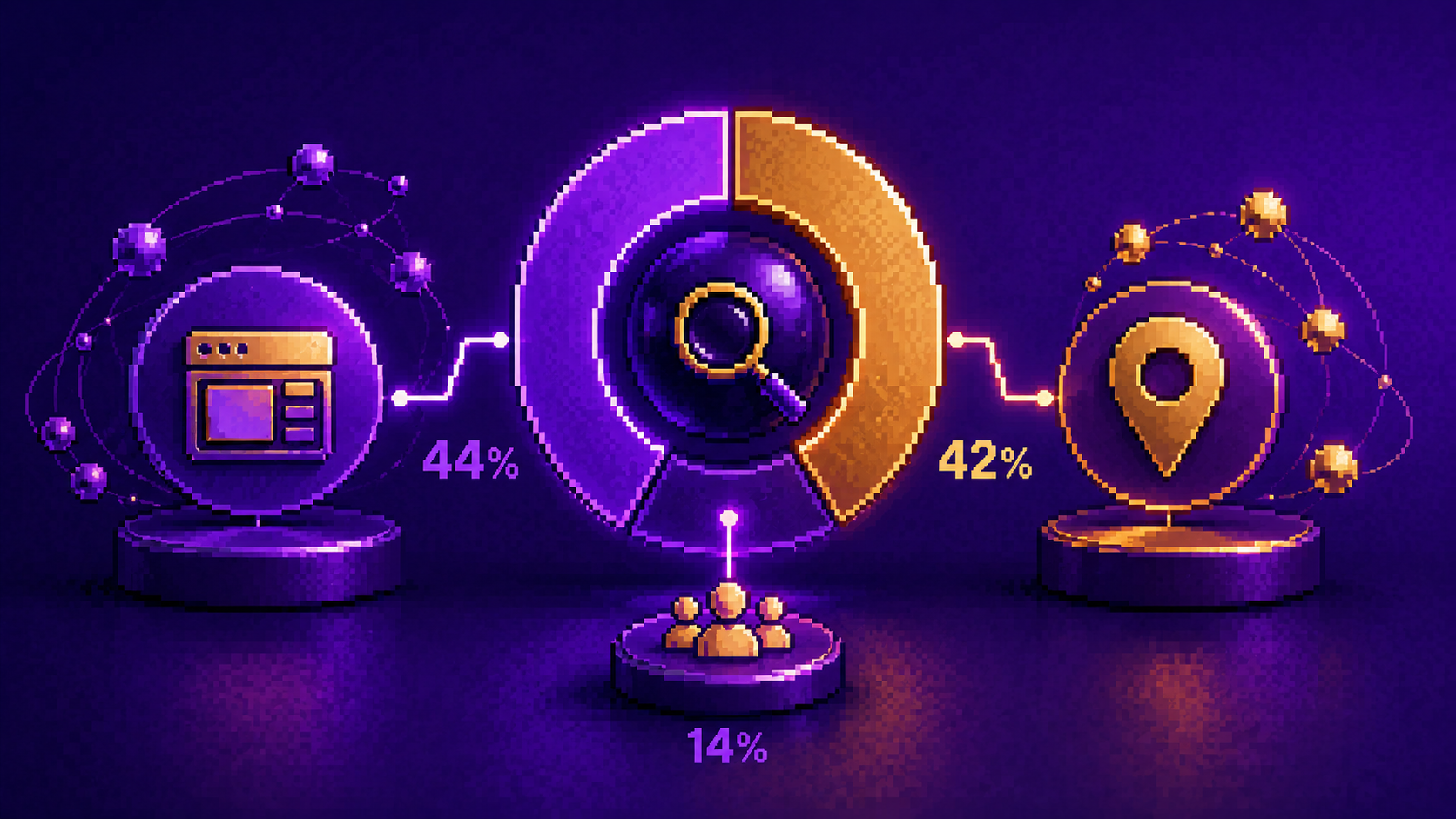
When ChatGPT Search is active, the model retrieves live web content before generating its response. A study by Yext analyzing 6.8 million AI citations found that 86% of citations come from brand-managed sources. The breakdown: 44% from first-party websites and 42% from business listings and directories. That is worth repeating. Nearly half of all AI citations come from your own website. Another 42% come from the directories and listings you have control over.
This breakdown has significant strategic implications. The majority of what ChatGPT cites when generating a recommendation comes from sources you directly control or can directly influence. Your own website is the largest single source. Your directory and listing presence is nearly as large. And the remaining 14% from third-party sources, while important for credibility validation, is not the dominant factor most businesses assume it is.
What this means practically: your first-party website needs to be optimized for AI extraction (clear structure, direct answers, proper schema), and your directory listings need to be complete, consistent, and current. These two categories together account for 86% of the citation sources ChatGPT draws from when recommending a business.

The Winner-Take-All Dynamic
Why does ChatGPT only recommend one or two businesses instead of a list?
The 3-4 brand citation limit per response creates winner-take-all dynamics where established market leaders can lose ground to smaller competitors who understand these new rules.
Unlike Google, which shows ten results per page and gives multiple businesses a chance at the click, ChatGPT gives between one and four recommendations per response. In most cases, it is one or two. This means the stakes of AI visibility are significantly higher than the stakes of traditional search rankings. Being on page one of Google means appearing in the top ten. Being recommended by ChatGPT means appearing in the top one or two.
The winner-take-all dynamic also means that smaller businesses with strong AI visibility signals can displace larger, more established competitors who have not optimized for this channel. The problem is not your marketing team or your SEO agency. The 3-4 brand citation limit per response means smaller, AI-optimized competitors can appear in answers while larger established brands remain invisible.
This is the window that currently exists for businesses willing to invest in AI visibility now, before it becomes as competitive as traditional search.
What You Can Do About It
How do I improve my chances of being recommended by ChatGPT?
The actions that most directly influence ChatGPT recommendations map directly to the signals described above.
Build entity clarity.
Make sure your business name, category, service descriptions, and location are stated clearly and consistently across your website, your Google Business Profile, your LinkedIn page, and every directory your business appears in. AI tools build their entity model of your business from these combined signals.
Optimize your website for AI extraction.
Structure every page so that questions are answered directly in the first sentence of each section. Add Organization schema and FAQ schema markup. Allow GPTBot to crawl your site by checking and updating your robots.txt file. Submit your sitemap to Bing Webmaster Tools since ChatGPT Search uses Bing's index.
Build your directory and listing presence.
Claim and complete your presence in relevant industry directories. Ensure every listing uses identical business name, address, phone number, and service descriptions.
Earn third-party mentions.
Collect reviews on Google and relevant third-party review platforms. Seek mentions in industry publications and credible roundup articles. Each mention in a source ChatGPT considers authoritative strengthens your recommendation probability.
Publish specific, answer-structured content.
ChatGPT's recommendations can change frequently because of its real-time search capability. New content, updated directory listings, fresh reviews, and recent third-party mentions can all influence what ChatGPT recommends within days or weeks.

Frequently Asked Questions