If you built your website three or more years ago, there is a very high probability it is missing something important. Not because the design is outdated. Not because the content is wrong. Because it was built before AI search existed as a meaningful channel, and the structural elements that make a website visible to AI tools were never considered, let alone implemented.
AI has created a parallel surface of visibility that determines which brands are seen inside AI answers before a user ever clicks. Understanding and optimizing for this new surface is the next frontier of digital visibility.
The businesses that built their websites in 2021 or 2022 built them for Google. That was the right strategy at the time. In 2026, building only for Google means being invisible in a channel that is growing faster than any other, serving buyers who convert at five times the rate of traditional search visitors.
The Numbers That Tell the Story
Why is ranking on Google no longer enough for a business website in 2026?
90% of B2B buyers now use generative AI tools during their purchasing journey and half of them start their research in ChatGPT or similar platforms instead of Google.
73% of B2B buyers now use AI tools like ChatGPT and Perplexity in their research process.
Across all Google searches, 43% now end without any click to an external website, a figure that rises to 93% when Google's AI Mode is active.
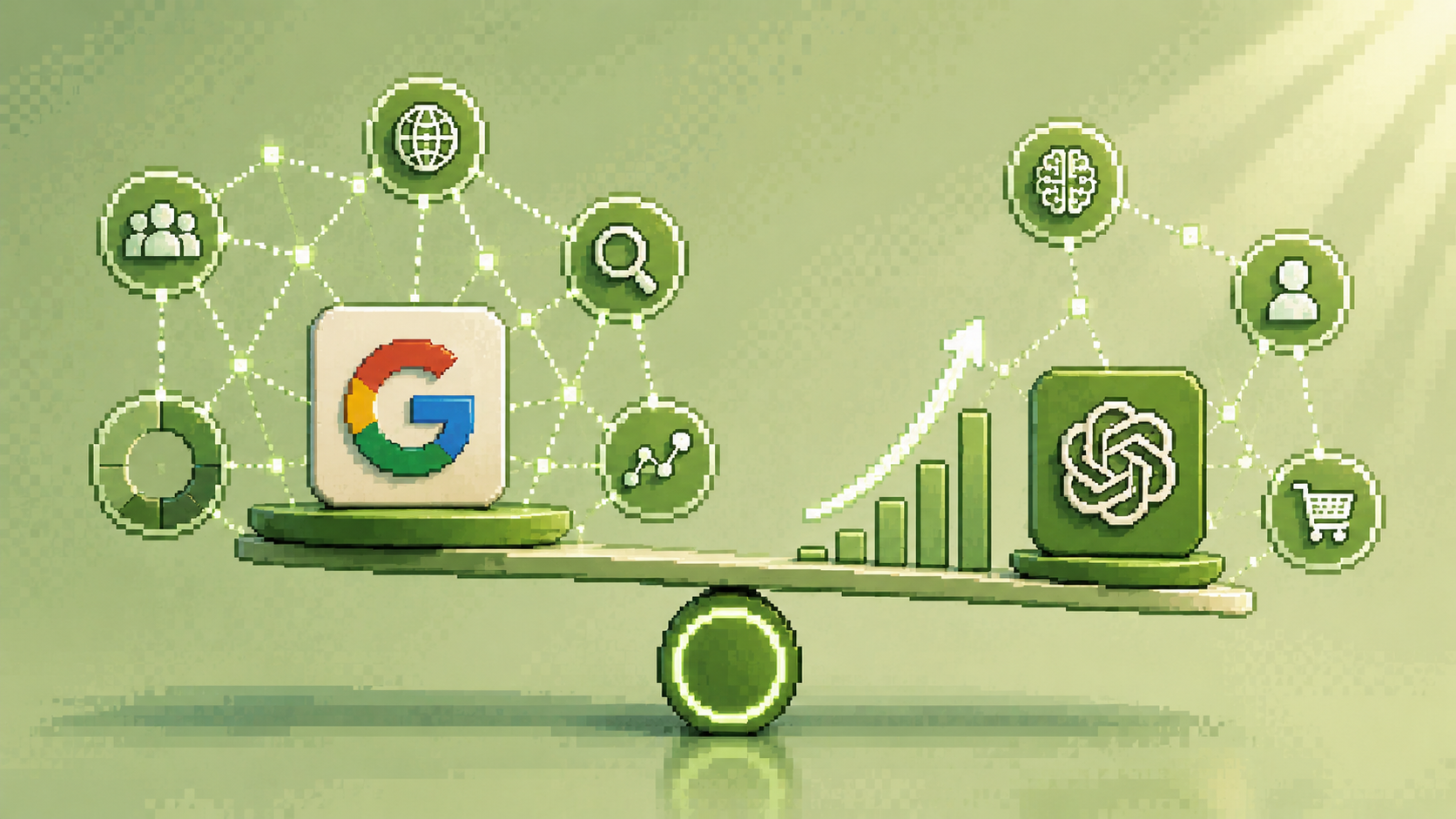
AI search traffic converts at 14.2% compared to Google organic's 2.8%, a 5.1x advantage.
A business that appears in Google but not in AI search is visible to the general population of searchers but invisible to the highest-converting segment of that population. That is not a minor gap. It is a structural competitive disadvantage that grows larger every month.
What an AI-Ready Website Has That Most Websites Do Not
What does a website need to be visible in AI search?
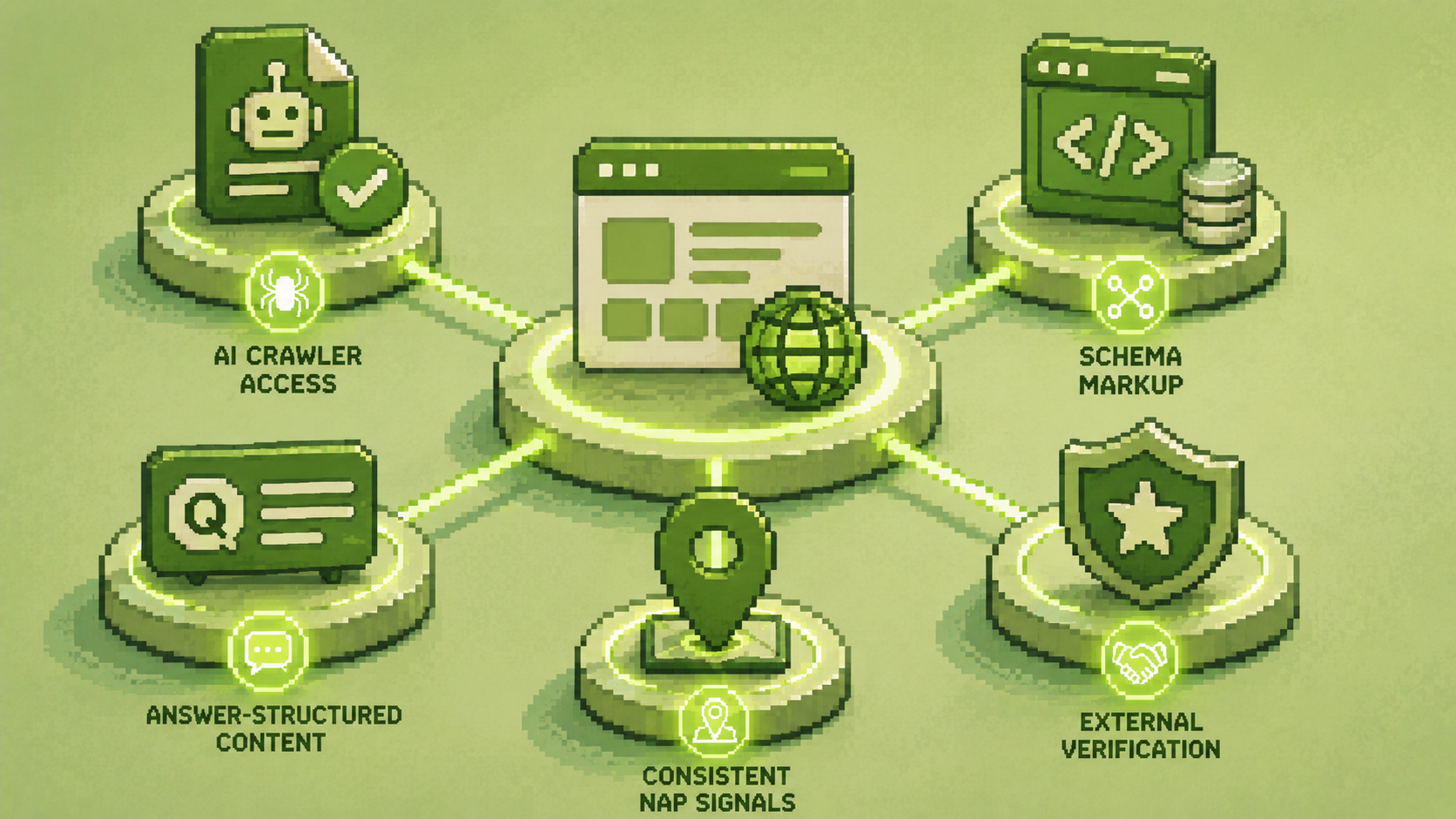
AI crawler access.
A file on your website called robots.txt tells crawlers which pages they are allowed to visit. Many older websites block all unrecognized bots. AI crawlers (GPTBot, ClaudeBot, PerplexityBot) were added to this list after most of these sites were built. If they are blocked, AI tools cannot read your content regardless of how good it is.
Schema markup.
Schema is code that tells AI tools explicitly what your content represents. Without structured data, AI systems have to guess. With it, they can classify your content far more accurately. In 2026, schema is not optional anymore. It is foundational infrastructure.
Answer-structured content.
AI tools extract content by looking for sections where a complete, direct answer to a specific question appears in the first sentence of the section. Most websites are written for human readers who will read an entire page sequentially. That is not how AI tools read.
Consistent NAP signals.
AI tools read your Google Business Profile, directory listings, LinkedIn page, and any other platform where your business appears alongside your website. When all of these say the same thing, AI tools build a confident, consistent model of your business.
External verification.
AI tools are significantly more likely to recommend businesses that are mentioned or cited by sources they already consider authoritative: review platforms, industry directories, press mentions, and credible third-party websites.
How to Tell If Your Current Website Is AI-Ready
How do I know if my website was built for AI visibility?
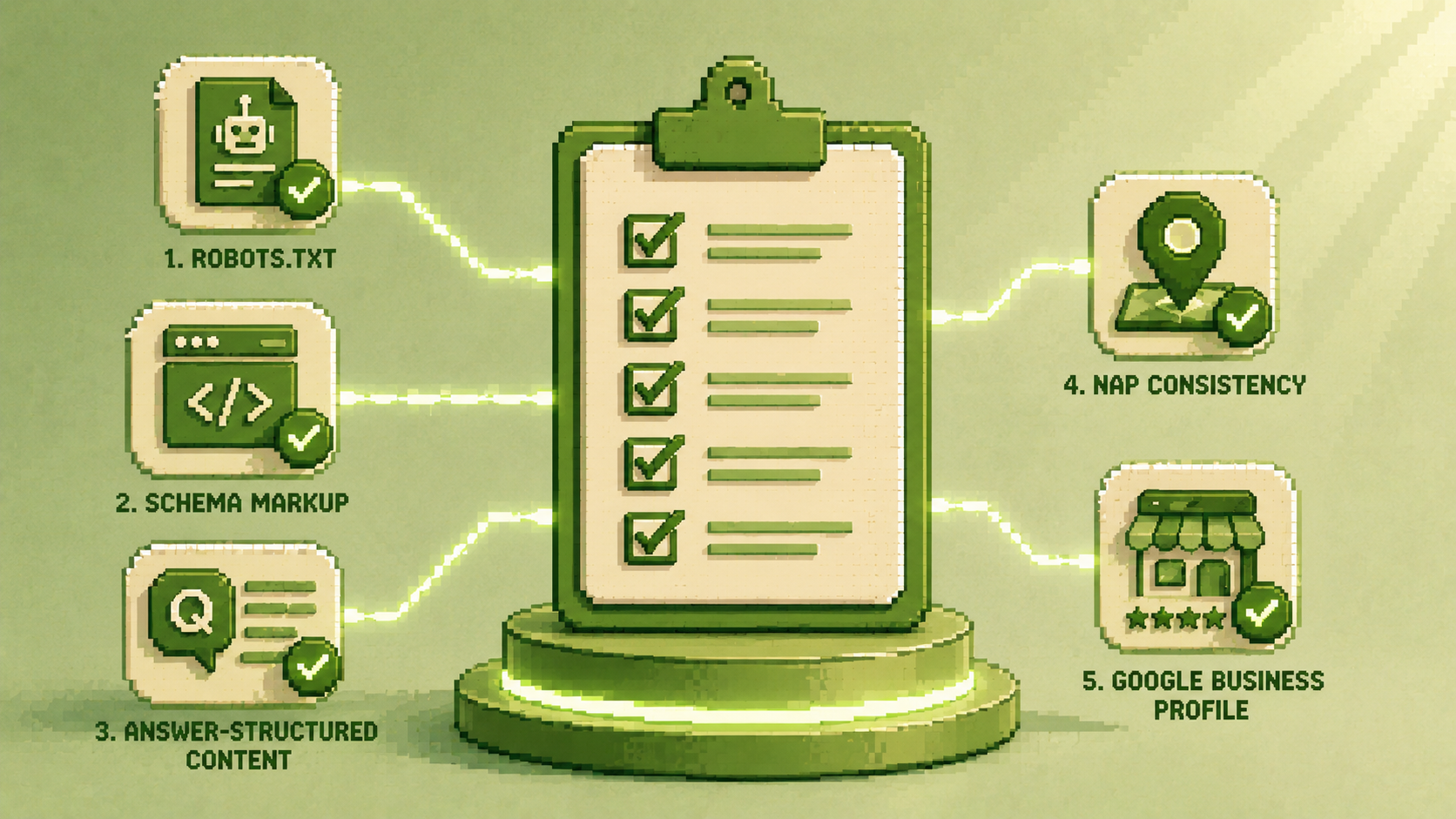
Check 1: Robots.txt
Go to yourwebsite.com/robots.txt. Look for any Disallow rules under GPTBot, ClaudeBot, or PerplexityBot. If any AI crawlers are blocked, your website is invisible to the corresponding AI tools regardless of your content quality.
Check 2: Schema markup
Go to search.google.com/test/rich-results and enter your homepage URL. If no structured data is detected, AI tools are guessing about what your business is.
Check 3: Answer-structured content
Read the first sentence of any major section on your homepage or service pages. Does this sentence completely answer a specific question a client would ask without needing the rest of the section? If most first sentences are topic introductions rather than direct answers, your content is not structured for AI extraction.
Check 4: NAP consistency
Search your business name in Google. Compare how your name, address, phone number, and service description appear across your website, Google Business Profile, and the first three directory listings. Any inconsistency is an AI visibility problem.
Check 5: Google Business Profile
Check: is your service category accurate and specific? Is your description complete and consistent with your website? Do you have recent photos? Are you actively receiving and responding to reviews?
Your score:
5 out of 5 yes: your website has the structural foundation for AI visibility.
3 to 4 yes: you have partial AI readiness. The nos are your priorities.
0 to 2 yes: your website was not built for AI search.
What It Costs to Build This In From Scratch vs Add It Later
Is it cheaper to build AI visibility into a new website or add it to an existing one?
Both are possible. If your current website is on a modern, well-maintained platform, adding AI visibility elements is usually more cost-effective than rebuilding. Robots.txt configuration, schema markup implementation, and content restructuring can be applied to an existing site.
If your current website is on an outdated platform, has poor technical performance, or was built on a proprietary system that makes changes difficult, rebuilding with AI visibility built in from the start is often more efficient.
At The PixelSeed Studio, every website we build in 2026 includes the complete technical AI visibility foundation from day one: AI crawlers allowed in robots.txt, Organization and FAQ schema implemented on key pages, content structured for AI extraction across all core pages, Google Business Profile optimization guidance, and NAP consistency review.

The Window That Is Currently Open
Is it too late to build AI visibility for my business?
Visibility in AI search is still in its early stages, which means you are not late to the game. You are actually early. Most businesses have not even started tracking their AI mentions, let alone optimizing for them. This creates a genuine first-mover advantage for those who act now.
Only 18% of brands have an active AI visibility strategy. The other 82% are invisible by default.
That 82% includes most of your competitors. The businesses building AI visibility now are not catching up. They are establishing a position that their competitors will spend years trying to match.

Frequently Asked Questions